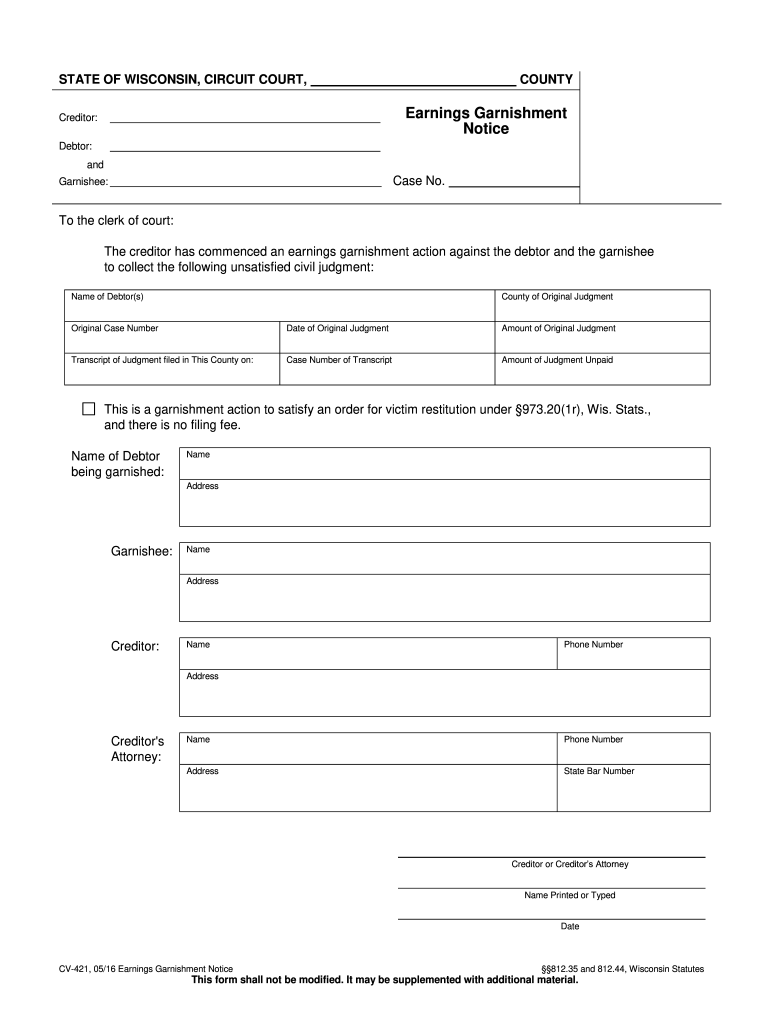
STATE OF WISCONSIN, CIRCUIT COURT, COUNTY For Official Use Earnings Garnishment Notice Creditor: Debtor: and Case No. Garnishee: To the clerk of court: The creditor has commenced an earnings garnishment.
Loading

Open form follow the instructions

Easily sign the form with your finger

Send filled & signed form or save
How to fill out the WI CV-421 online
Filling out the WI CV-421 form is an essential step in the earnings garnishment process in Wisconsin. This guide provides a clear and user-friendly approach to completing the form online, ensuring that users understand each section and field.
Follow the steps to complete the WI CV-421 form with ease.
- Press the ‘Get Form’ button to access the WI CV-421 form, which will open it in your preferred online editor.
- Begin by filling in the creditor's name in the designated field. This should be the individual or entity that has initiated the garnishment action.
- Next, enter the debtor's name. This refers to the person or entity whose earnings are being garnished to satisfy the judgment.
- Indicate the case number associated with the garnishment action. This number is essential for tracking and reference purposes.
- Detail the garnishee's name and address. The garnishee is the individual or entity that holds the debtor's earnings.
- In the section labeled 'To the clerk of court,' fill in the name of the debtor(s) and the related county where the original judgment was issued.
- Provide the original case number, the date the original judgment was entered, and the total amount of the original judgment.
- Include information on the transcript of judgment filed in the current county, specifying the case number of the transcript and the amount of judgment unpaid.
- For the section concerning the creditor, include their phone number and complete address to facilitate communication.
- If applicable, list the creditor's attorney's name, phone number, address, and state bar number for further legal correspondence.
- Finally, ensure that the printed or typed name of the creditor or creditor’s attorney is included, along with the date of completion. Review all entries for accuracy.
- Upon finalizing the form, you can save any changes made, download the document for your records, print it for submission, or share it as necessary.
Start completing your WI CV-421 form online today to ensure a smooth garnishment process.
Experience a faster way to fill out and sign forms on the web. Access the most extensive library of templates available.
Related content
IT IS ORDERED AND ADJUDGED that judgment is entered irt favor of plaintiffs Wi1liam...
C. Device Name. Trade Name: Smith & Nephew ElectroThermal® 20S Spine Generator. Common...
Get answers to your most pressing questions about US Legal Forms API.
Can you stop a wage garnishment in Wisconsin?
Yes, you can stop a wage garnishment in Wisconsin, but it requires action on your part. Engaging with the court and providing substantial evidence of your situation can lead to a favorable outcome. Resources from uslegalforms can guide you through the process of addressing issues related to WI CV-421 and stopping the garnishment effectively.
How to file an exemption for wage garnishment in Wisconsin?
To file an exemption for wage garnishment in Wisconsin, submit a written request to the court alongside appropriate documentation. This request must clearly articulate the basis for your exemption, such as financial hardship or specific income types that are protected. Utilize uslegalforms to efficiently prepare and file your exemption using templates relevant to WI CV-421.
How to stop a wage garnishment in Wisconsin?
To stop a wage garnishment in Wisconsin, you can file a motion with the court that issued the garnishment order. This often involves reviewing the case details and presenting valid reasons for the garnishment to be lifted. Using resources available through uslegalforms can simplify this process, especially when dealing with forms like WI CV-421.
What makes you exempt from garnishment in Wisconsin?
In Wisconsin, certain income and property types are exempt from garnishment. For instance, Social Security benefits, unemployment compensation, and some pensions are generally protected. Understanding the exemptions listed under WI CV-421 can help you safeguard your financial resources from being seized.
What is the maximum garnishment allowed in Wisconsin?
In Wisconsin, the maximum garnishment allowed generally depends on your disposable earnings and cannot exceed 20% of your weekly disposable income. This maximum is outlined in the WI CV-421, which details how garnishment amounts are calculated. If you have further questions about garnishment limits, resources like UsLegalForms can provide tailored insights and additional resources.
How to collect on a judgment in Wisconsin?
To collect on a judgment in Wisconsin, you can start by garnishing the debtor’s wages or bank accounts post-judgment. It's important to follow the procedures outlined in the WI CV-421 to ensure compliance with local laws. If you find the process overwhelming, consulting UsLegalForms can simplify your collection efforts with the right legal documents.
What is the best way to stop wage garnishment?
To stop wage garnishment effectively, communicating with your creditor may help in negotiating a settlement. You can also file for bankruptcy or seek an exemption, which is detailed in the WI CV-421 guide. Using resources like UsLegalForms can assist you in finding the right forms and advice to stop garnishment successfully.
How long does a garnishment last in Wisconsin?
In Wisconsin, a garnishment can last up to 90 days, but it may be extended if the creditor provides evidence of ongoing debt. To understand the complete process, you can refer to the WI CV-421 form, which outlines the rules and timelines for garnishments. If you need to manage your obligations effectively, consider leveraging platforms like UsLegalForms.
How much can they garnish my wages in Wisconsin?
Wisconsin law puts limits on how much of a person's wages a creditor may garnish. In general, a creditor may not take more than 20 percent of a person's net income, and only one creditor may garnish a person's wages at a time.
What is the garnishment exemption in WI?
By law, you are entitled to an exemption of not less than 80% of your disposable earnings. Your "disposable earnings" are those remaining after social security and federal and state income taxes are withheld.
Use professional pre-built templates to fill in and sign documents online faster. Get access to thousands of forms.
If you believe that this page should be taken down, please follow our DMCA take down process here.