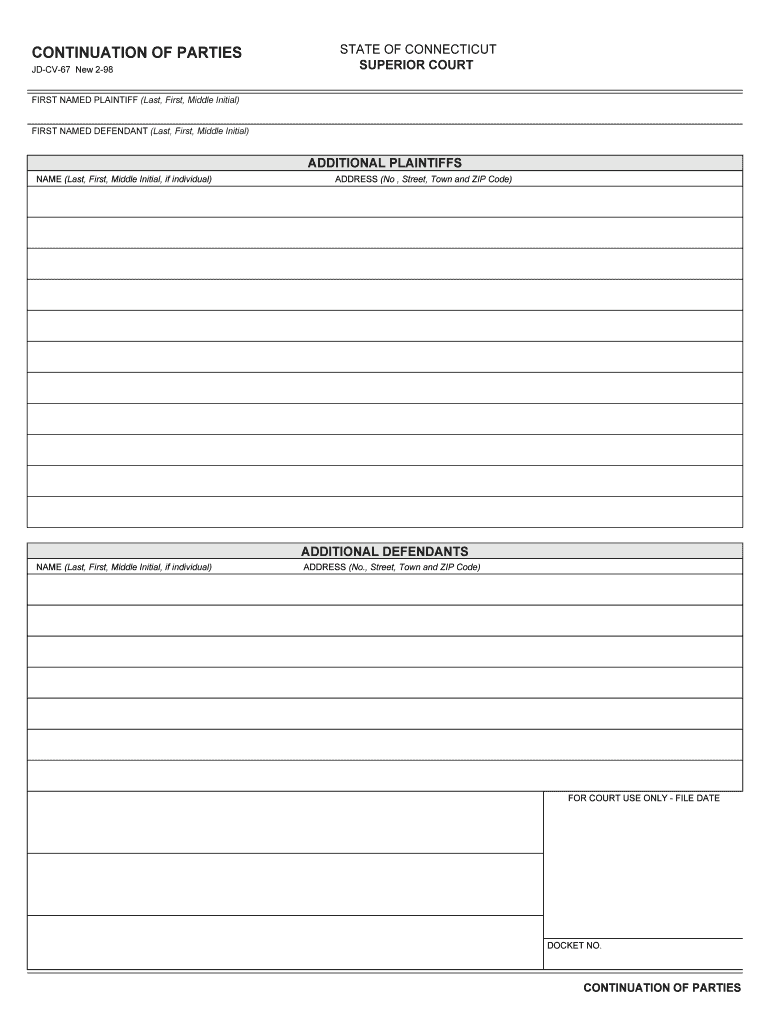
FFS NAME (Last, First, Middle Initial, if individual) ADDRESS (No , Street, Town and ZIP Code) ADDITIONAL DEFENDANTS NAME (Last, First, Middle Initial, if individual) ADDRESS (No., Street, Town and ZIP Code) FOR COURT USE ONLY - FILE DATE DOCKET NO. PRINT RESET CONTINUATION OF PARTIES.
Loading

Open form follow the instructions

Easily sign the form with your finger

Send filled & signed form or save
How to fill out the CT JD-CV-67 online
Filling out the CT JD-CV-67 form is a crucial step in the legal process for documenting parties involved in a case. This guide will provide you with clear, step-by-step instructions to complete this form efficiently online.
Follow the steps to successfully complete the CT JD-CV-67 form.
- Click ‘Get Form’ button to obtain the form and open it in the editor.
- Begin by entering the first name of the plaintiff in the designated field, followed by their last name and middle initial, if applicable. This should accurately represent the lead plaintiff in your case.
- Next, proceed to the section for the first named defendant. Fill in their last name, first name, and middle initial, ensuring this information is precise as it will reflect in court documentation.
- If there are additional plaintiffs, use the corresponding fields to enter their names, starting with the last name followed by the first name and middle initial. Make sure to include all individuals pertinent to the case.
- For each additional plaintiff, provide their complete address, including street number, street name, town, and ZIP code. This information is vital for legal notices and documentation.
- Now, turn to the section for additional defendants. Input their names in the same format as for the plaintiffs, ensuring to capture all necessary identification.
- Similar to the plaintiffs, provide the complete addresses for all additional defendants using the same structured format.
- Remember to leave the fields designated for court use blank. These sections include the file date and docket number and are meant for official court use only.
- Once all fields are completed, review the entire form for accuracy. Make any necessary corrections to ensure all information is correct and up-to-date.
- Finally, you can save your changes, download the completed form, print it for physical submission, or share it as needed.
Start completing your CT JD-CV-67 form online today for a smooth filing experience.
Experience a faster way to fill out and sign forms on the web. Access the most extensive library of templates available.
Related content
JD-CV-67 Rev. 5-21. Additional Plaintiffs. Additional Defendants. Name (Last, first...
Feb 26, 2025 — Domestic Violence and Functional Parent Doctrines, 30 VIRGINIA JOURNAL OF...
Design Circumaural Supra-auricular de Costas. Fechadas • Curva de EQ para Música e...
Get answers to your most pressing questions about US Legal Forms API.
How long do you have to file a lawsuit in CT?
In Connecticut, the timeframe to file a lawsuit, known as the statute of limitations, varies depending on the type of claim. Generally, you have up to six years for breach of contract cases and two years for personal injury claims. It's crucial to be mindful of these deadlines to ensure your right to file is preserved. If you're uncertain, uslegalforms can help clarify these timelines and other important details.
How long after an injury can you sue in CT?
In Connecticut, you generally have 2 years from the date of injury to file a lawsuit. This time limit applies to personal injury claims, and failing to file within this period could result in losing your right to pursue compensation. Knowing this timeline helps you prepare effectively. The CT JD-CV-67 form is readily available to assist you in initiating the legal process.
How to serve a small claims writ and notice of suit in CT?
Serving a small claims writ and notice of suit involves a few basic steps in Connecticut. You must first complete the forms, and then have them delivered to the defendant, typically by a constable or process server. Proper service is crucial for the case to proceed in court. For guidance, the CT JD-CV-67 can provide clarity on all necessary steps involved.
How long do you have to sue someone in CT?
You typically have between 1 to 6 years to sue someone in Connecticut, depending on the specific type of claim. For instance, personal injury cases usually have a 2-year limit, while breaches of contract can extend to 6 years. It’s essential to be aware of these deadlines to protect your rights. The CT JD-CV-67 form streamlines the filing process, helping you stay organized.
What is the longest you can wait to sue someone?
In Connecticut, the law allows varying time limits to file a lawsuit, often referred to as statutes of limitations. These time limits can depend on the nature of the case, but generally range from 1 to 6 years. Delaying action can jeopardize your claims, so it’s crucial to act promptly. The CT JD-CV-67 form can guide you through the initial steps of filing.
How long does a judge have to rule on a motion in CT?
In Connecticut, a judge typically has 120 days to rule on a motion. This time frame ensures that cases continue to move forward efficiently while providing all parties involved with timely responses. However, specific circumstances may impact this timeline. Utilizing resources like CT JD-CV-67 can help clarify the rulings and processes involved.
How do I get court documents in CT?
To obtain court documents in Connecticut, you can visit the court clerk's office where the case was filed or use the online case lookup system if available. Many documents, including those relevant to your CT JD-CV-67 filing, can be requested by following the appropriate procedures outlined by the court. If you need assistance with the process, consider using uslegalforms for streamlined access.
What is the maximum for small claims court in CT?
In Connecticut, small claims court allows you to seek up to $5,000 for disputes. This limit is intended to provide a simple, less formal avenue for resolving issues without the need for extensive legal representation. When filing your case, use the appropriate CT JD-CV-67 form to ensure compliance with court requirements.
Can you sue for pain and suffering in CT?
Yes, in Connecticut, you can sue for pain and suffering as part of your damages in personal injury cases. This compensation addresses physical pain, emotional distress, and loss of enjoyment of life. To pursue these claims effectively, file your CT JD-CV-67 with the necessary evidence to support your case.
How much can you sue for in Connecticut?
In Connecticut, the amount you can sue for generally depends on the type of case. For personal injury claims, there is no statutory limit, but you should consider your damages in a reasonable range. Conversely, small claims cases limit you to $5,000. Remember to file the appropriate CT JD-CV-67 form to ensure your claim meets jurisdictional requirements.
Use professional pre-built templates to fill in and sign documents online faster. Get access to thousands of forms.
If you believe that this page should be taken down, please follow our DMCA take down process here.