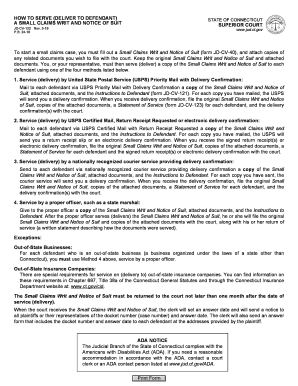
Served). Exceptions: Out-of-State Businesses: For each defendant who is an out-of-state business (a business organized under the laws of a state other than Connecticut), you must use Method 4 above, service by a proper officer. Out-of-State Insurance Companies: There are special requirements for service on (delivery to) out-of-state insurance companies. You can find information on these requirements in Chapter 697, Title 38a of the Connecticut General Statutes and through the Connecticut Insuran.
Loading
Open form follow the instructions
Easily sign the form with your finger
Send filled & signed form or save
How to fill out the CT JD-CV-122 online
The CT JD-CV-122 form is essential for initiating a small claims case in Connecticut. This guide provides step-by-step instructions to assist users in completing the form efficiently and accurately online.
Follow the steps to fill out the CT JD-CV-122 form online.
- Click the ‘Get Form’ button to access the CT JD-CV-122 form and open it in the online editor.
- Enter the information required in the top section of the form, including your name and contact details as the plaintiff.
- Fill in the details regarding the defendant, ensuring accuracy in their name and address to ensure proper service.
- Specify the date and the nature of the claim you are filing, selecting the appropriate options that pertain to your case.
- Attach any relevant documents that support your claim and include them with the form.
- Review all entered information for accuracy and completeness before proceeding.
- Save your changes and choose to download, print, or share the completed form as necessary.
Complete your documents online for a smooth filing experience.
Experience a faster way to fill out and sign forms on the web. Access the most extensive library of templates available.
Related content
To start a small claims case, you must fill out a Small Claims Writ and Notice of Suit...
by TOM VILSACK — In 2004, the Animal and Plant Health Inspection Service (APHIS), housed...
Design Circumaural Supra-auricular de Costas. Fechadas • Curva de EQ para Música e...
Get answers to your most pressing questions about US Legal Forms API.
What is the maximum amount you can sue for in civil court?
The maximum amount you can sue for in civil court in Connecticut is generally determined by the specific court where you file your case. For small claims, the limit is typically around $5,000. For larger civil cases, you may pursue higher amounts depending on the nature of your claim. Always refer to CT JD-CV-122 for details related to the process to ensure you are informed about your options.
When to file certificate of closed pleadings CT?
You should file a certificate of closed pleadings in Connecticut once the formal pleadings have concluded. This usually occurs when all parties have submitted their relevant documents, including responses and motions. Submitting this certificate, as outlined in CT JD-CV-122, is crucial to ensure that your case moves forward without unnecessary delays. Being proactive about this step can help you stay on track.
What percentage of people win in small claims court?
Winning percentages in small claims court can vary depending on the circumstances, but many plaintiffs find success. Statistics indicate that a significant number of claimants achieve favorable outcomes when they present clear evidence. Utilizing forms like CT JD-CV-122 can help streamline your claims process, giving you the clarity you need to present your case effectively. Preparation is key to maximizing your chances.
What is the lowest amount for small claims court?
The lowest amount you can typically bring to small claims court varies by state, but in Connecticut, it is often around $5. This means the small claims process is designed for smaller disputes. For cases concerning amounts like $500, you'll find that the CT JD-CV-122 guides you on how to proceed seamlessly in court. Understanding this threshold helps you decide if small claims court is right for your situation.
Should I sue for 500 dollars?
Whether to sue for $500 depends on the situation and your potential return. If you’ve tried to resolve the issue without success, taking legal action might be a viable option. Small claims court, guided by CT JD-CV-122, allows individuals to pursue claims without extensive legal involvement. Ensure you weigh the time and effort against the amount you hope to recover.
Is it worth going to small claims court for $500?
Going to small claims court for $500 can be worth your time, especially if you believe you have a strong case. The process is typically faster and less formal than other court proceedings. You can often represent yourself without an attorney, which saves costs. Remember, CT JD-CV-122 outlines the necessary procedures for filing.
What happens if you don't go to court for a judgement?
Failing to attend court for a judgment can have serious consequences, including a default judgment against you. This means the court may rule in favor of the plaintiff without hearing your side. It's vital to understand your rights and respond promptly to any legal summons, and tools like CT JD-CV-122 can guide you through the process.
How to fill out back of CT title?
To fill out the back of a CT title, first locate the section designated for the transfer of ownership. Here, you will provide details such as the buyer’s information and the sale amount. Make sure to date and sign the title appropriately, and using forms like CT JD-CV-122 can help simplify this task.
How to serve a small claims writ and notice of suit in CT?
Serving a small claims writ and notice of suit in Connecticut requires following specific legal guidelines. You must deliver these documents to the defendant, ensuring they are notified properly of the lawsuit. For convenience, reference CT JD-CV-122 for templates and instructions to streamline the process.
How can I avoid paying a judgement?
Avoiding payment of a judgment is best approached through legal advice and support. You may explore options like negotiating repayment terms or disputing the judgment itself if grounds exist. Utilize resources like CT JD-CV-122 to understand your rights and responsibilities regarding judgments.
Use professional pre-built templates to fill in and sign documents online faster. Get access to thousands of forms.
If you believe that this page should be taken down, please follow our DMCA take down process here.