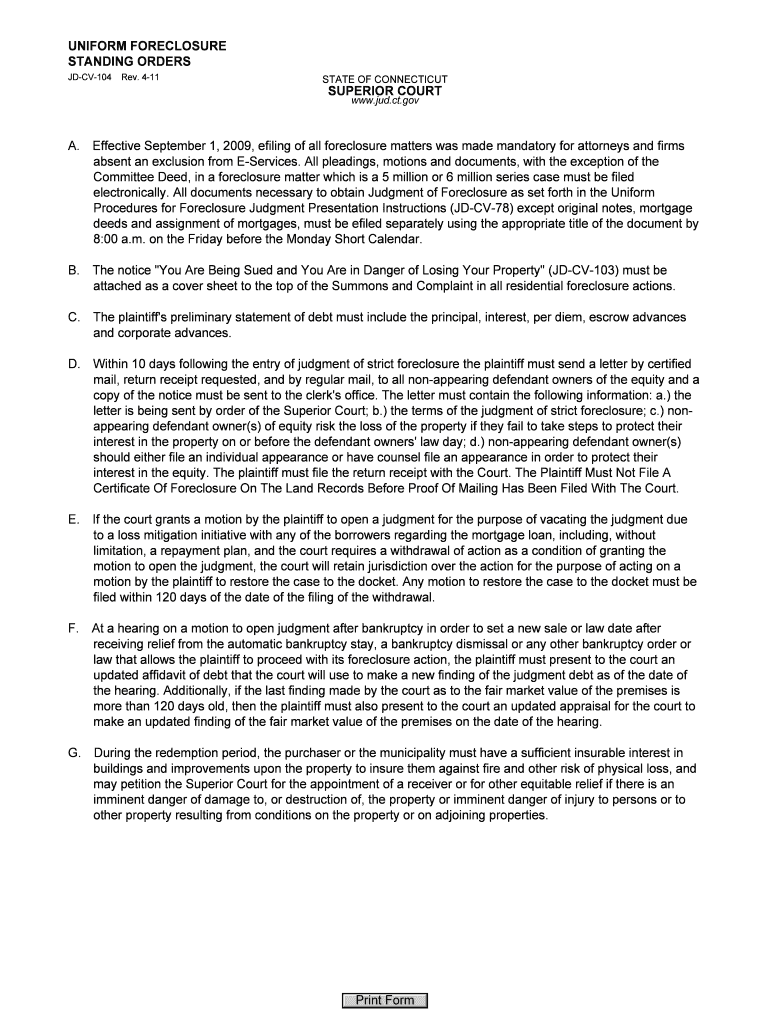
Ry for attorneys and firms absent an exclusion from E-Services. All pleadings, motions and documents, with the exception of the Committee Deed, in a foreclosure matter which is a 5 million or 6 million series case must be filed electronically. All documents necessary to obtain Judgment of Foreclosure as set forth in the Uniform Procedures for Foreclosure Judgment Presentation Instructions (JD-CV-78) except original notes, mortgage deeds and assignment of mortgages, must be efiled separately usin.
Loading

Open form follow the instructions

Easily sign the form with your finger

Send filled & signed form or save
How to fill out the CT JD-CV-104 online
The CT JD-CV-104 is an essential document for individuals involved in foreclosure matters in Connecticut. This guide provides clear, step-by-step instructions to assist users in completing this form online with confidence.
Experience a faster way to fill out and sign forms on the web. Access the most extensive library of templates available.
Related content
JD-CV-104 Rev. 11-20. A. Effective September 1, 2009, e-filing of all foreclosure matters...
by KS Cook · 2012 — The court of appeals relied on subsection (d) of the statute to...
ATTENTION: This drive contains ESD (Electrostatic Discharge) sensitive parts and...
Get answers to your most pressing questions about US Legal Forms API.
How to serve a small claims writ and notice of suit in CT?
To serve a small claims writ and notice of suit in Connecticut, you must deliver the documents to the defendant personally or by using a proper service method. The process requires attention to the rules to ensure proper notification. If you find this overwhelming, using platforms like uslegalforms to access the CT JD-CV-104 can simplify preparing and filing your documents.
When to file certificate of closed pleadings CT?
In Connecticut, you need to file a certificate of closed pleadings after all parties have completed their court filings in a foreclosure case. This certificate indicates that no further responses will be submitted, allowing the process to move forward. Using the CT JD-CV-104 form can streamline this filing to keep your case progressing smoothly.
How long do you have to move out after foreclosure in CT?
After a foreclosure sale in Connecticut, you usually have a short period to vacate the property. The new owner may provide a notice to quit, allowing a few days to move out. It’s essential to stay informed about your rights and to utilize documents like the CT JD-CV-104 if you need assistance during this transition.
Is there a statute of limitations on foreclosure in CT?
Yes, Connecticut has a statute of limitations that applies to foreclosure actions. Typically, lenders have six years to initiate a foreclosure after a default occurs. Knowing this deadline is crucial for homeowners facing foreclosure, and using forms like CT JD-CV-104 can assist in addressing any legal disputes.
How do foreclosures work in Connecticut?
In Connecticut, the foreclosure process typically begins when a lender files a lawsuit against the borrower. The court holds hearings where both parties present their cases, and if the lender prevails, a foreclosure sale may occur. Homeowners should be aware of their rights and the forms they need, such as the CT JD-CV-104, to navigate this process effectively.
What is the foreclosure mediation statute in CT?
The foreclosure mediation statute in Connecticut aims to help borrowers and lenders communicate effectively during the foreclosure process. It offers homeowners the opportunity to address their financial difficulties and explore alternatives to foreclosure through mediation sessions. Engaging in this mediation process can enhance your understanding of the options available using forms like CT JD-CV-104.
Is there a foreclosure redemption period in Connecticut?
Yes, Connecticut law provides a foreclosure redemption period. This period allows homeowners to redeem their property after the sale, generally ending about five months after the judgment of foreclosure. During this time, you can reclaim your property by paying the total amount owed. Using the CT JD-CV-104 form can help facilitate this process.
How many missed payments before foreclosure in CT?
In Connecticut, a lender typically initiates foreclosure proceedings after three consecutive missed mortgage payments. However, lenders may start the process earlier, depending on their policies. Staying in communication with your lender is crucial to avoid foreclosure. Accessing legal resources like CT JD-CV-104 can help you understand your responsibilities and options.
How can I avoid paying a judgement?
Avoiding payment on a judgement is difficult, but you can negotiate with the creditor for a settlement amount. You may also explore options such as filing for bankruptcy, which could potentially discharge some debts. Staying informed about your rights is essential, and utilizing resources like the CT JD-CV-104 format on USLegalForms can help you navigate your options.
What happens if you don't go to court for a judgement?
If you don’t go to court for a judgement, the court may issue a default judgement against you. This means the plaintiff wins automatically, and you will owe the full amount they claim. Ignoring the court can lead to further legal actions such as wage garnishment or property liens. To better navigate these situations, consider using the CT JD-CV-104 form available on USLegalForms.
Use professional pre-built templates to fill in and sign documents online faster. Get access to thousands of forms.
If you believe that this page should be taken down, please follow our DMCA take down process here.