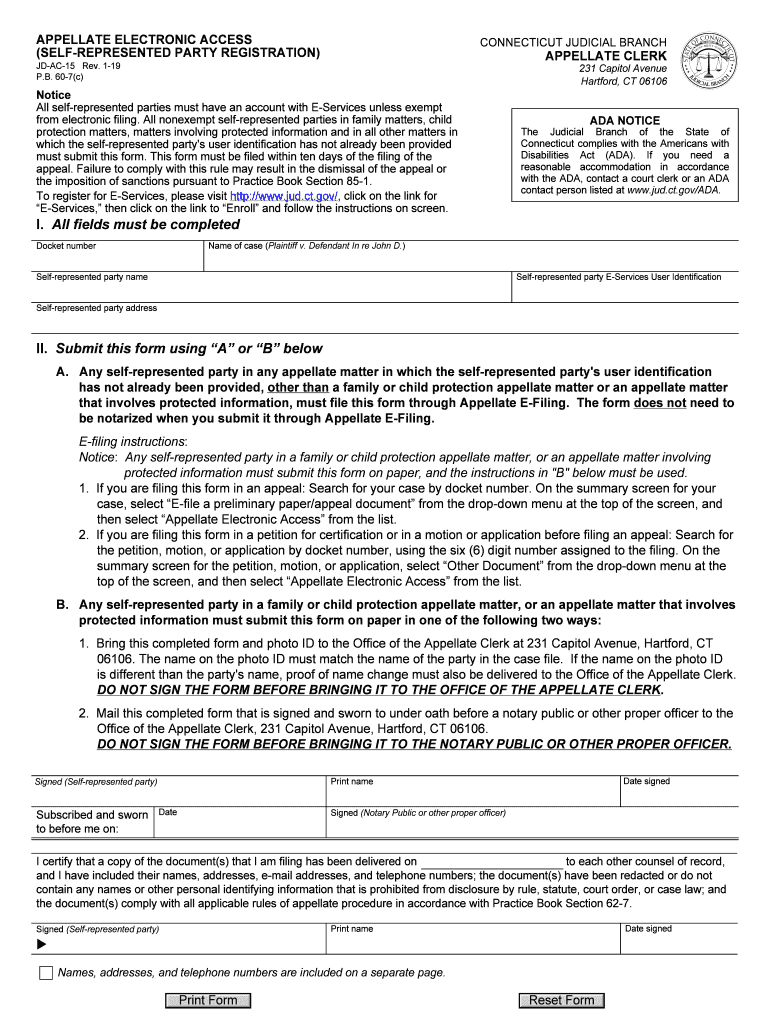
APPELLATE ELECTRONIC ACCESS (SELFREPRESENTED PARTY REGISTRATION)CONNECTICUT JUDICIAL BRANCHAPPELLATE CLERKJDAC15 Rev. 119 P.B. 607(c)Notice All selfrepresented parties must have an account with EServices.
Loading

Open form follow the instructions

Easily sign the form with your finger

Send filled & signed form or save
How to fill out the CT JD-AC-15 online
This guide provides clear and supportive instructions for completing the Connecticut JD-AC-15 form online. Designed for self-represented parties, it outlines the necessary steps to ensure proper registration for appellate electronic access.
Follow the steps to fill out the CT JD-AC-15 form online.
- Click the ‘Get Form’ button to access the Connecticut JD-AC-15 form and open it for editing.
- Begin filling out the form by entering the name of your case, formatted as 'Plaintiff v. Defendant In re [Name].'
- Next, input the docket number associated with your case. Ensure the number is accurate to avoid any filing issues.
- Provide your name as the self-represented party. This should correspond to the name on the appeal.
- Enter your E-Services user identification. If you do not have one, you will need to create an account before submission.
- Fill in your address clearly. This information is essential for correspondence related to your case.
- Review the filing requirements detailed in sections A and B. Depending on your case type, follow the appropriate submission method.
- If applicable, submit the form electronically via Appellate E-Filing by following the given instructions, or prepare for paper submission if required.
- Once all fields are completed, save your changes, and either download, print, or share the form as needed.
Complete your CT JD-AC-15 registration online for efficient management of your appellate proceedings.
Experience a faster way to fill out and sign forms on the web. Access the most extensive library of templates available.
Related content
Self-represented parties must have an E-Services account, file this form within ten days...
by DT Santos · 2006 — The present study is aimed at develop- ing a protocol utilizing...
PowerFlex 7000 medium voltage AC drives offer drive configurations and control options...
Get answers to your most pressing questions about US Legal Forms API.
How to file pro se in CT?
Filing pro se in Connecticut starts with understanding the legal process specific to your case. You need to complete the necessary forms, which often include the CT JD-AC-15, and submit them to the appropriate court. It’s crucial to follow all local rules and guidelines to ensure your filings are accepted and handled correctly.
How do you request leave to amend a complaint in CT?
To request leave to amend a complaint in Connecticut, you typically need to file a motion with the court that details your reasons for the amendment. The court will review your request to ensure it meets proper legal standards. Familiarizing yourself with the CT JD-AC-15 can clarify the required procedures and enhance your chances of approval.
How long do you have to file small claims in CT?
In Connecticut, you generally have six years to file a small claims case, reflecting the statute of limitations for most civil actions. However, it's important to keep track of specific deadlines that may apply to your unique situation. Utilizing forms such as CT JD-AC-15 can streamline your filing process and help ensure you meet the necessary deadlines.
Has anyone ever won a Pro SE case?
Yes, there have been many instances of pro se litigants achieving success in their cases. Winning a pro se case often depends on the preparation and understanding of the relevant laws, including utilizing forms like CT JD-AC-15 effectively. While challenges exist, with careful documentation and strategy, pro se litigants can and do find success.
How do I submit evidence to Pro Se?
Submitting evidence as a pro se litigant involves adhering to specific court rules and procedures. Generally, you will need to compile your evidence, organize it clearly, and file it with the court according to deadlines set forth by local rules. Consulting the CT JD-AC-15 form can guide you through this process to ensure you present your evidence correctly and timely.
How successful are pro se litigants?
Success rates for pro se litigants can vary widely based on the complexity of the case and the litigant's understanding of legal procedures. Studies show that individuals who prepare thoroughly and utilize tools like CT JD-AC-15 tend to perform better in court. However, having legal assistance often increases the chances of a favorable outcome significantly. It is important to be well-prepared and informed.
Why do judges not prefer pro-se defendants?
Judges may find pro se defendants challenging due to their lack of legal expertise. This can lead to procedural misunderstandings and inefficiencies in the court. While pro se filings are allowed, judges often appreciate cases where both parties have legal representation, making the proceedings smoother and more straightforward. Using resources like CT JD-AC-15 can help bridge the gap in understanding courtroom procedures.
How long do you have to file an appearance in CT?
In Connecticut, you generally have a specific time frame to file an appearance after being served with legal documents. For most cases, you must file your appearance within 30 days. Using the CT JD-AC-15 form streamlines this process, helping you meet deadlines and fulfill requirements effectively.
Use professional pre-built templates to fill in and sign documents online faster. Get access to thousands of forms.
If you believe that this page should be taken down, please follow our DMCA take down process here.