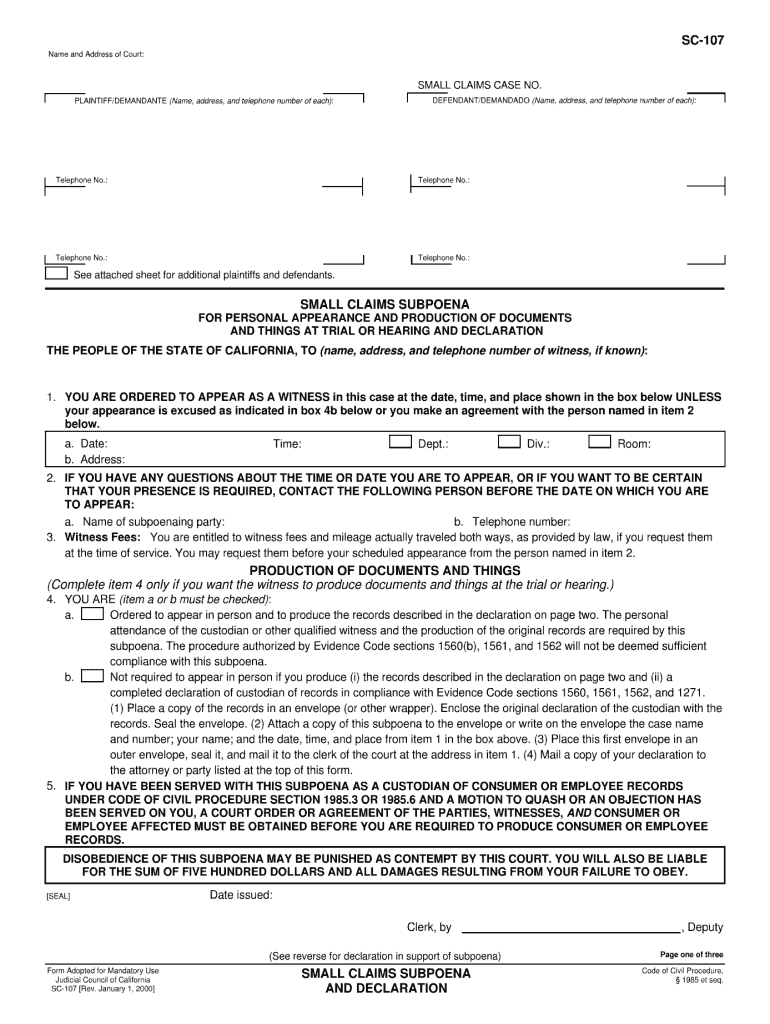
Name and Address of Court: To keep other people from seeing what you entered on your form, please press the Clear This Form button at the end of the form when finished. SMALL CLAIMS CASE NO. SC-107.

Open form follow the instructions

Easily sign the form with your finger

Send filled & signed form or save
How to fill out the CA SC-107 online
The CA SC-107 is a crucial form used for special procedures in California courts. This guide will help users understand and complete the form online with ease, ensuring that they provide all necessary information accurately.
Follow the steps to efficiently complete the CA SC-107 online.
- Click ‘Get Form’ button to access the CA SC-107 and open it in the editing interface.
- Begin by filling out your personal information, including your full name, address, and contact details in the designated fields. Ensure that the information is accurate to avoid any processing delays.
- In the next section, provide details about the case associated with the CA SC-107. This may include the case number, the name of the court, and any other relevant information required for your situation.
- Next, review any declarations or statements that need to be made. Clearly outline the reasons for your request as per the requirements of the form. Each statement should be concise and directly related to your case.
- After completing the necessary information, review the form for accuracy. Make any necessary corrections to ensure clarity and correctness.
- Finally, save your changes to ensure all entered information is retained. You may choose to download, print, or share the completed form as per your needs.
Complete your CA SC-107 online today to facilitate your legal process.
Experience a faster way to fill out and sign forms on the web. Access the most extensive library of templates available.
Related content
Jan 1, 2000 — SC-107 [Rev. January 1, 2000]. SMALL CLAIMS SUBPOENA. AND DECLARATION...
The fair use of a copyrighted work, including such use by reproduction in copies or...
Jan 1, 2025 — To obtain the judgment debtor's financial records from another person or a...
Get answers to your most pressing questions about US Legal Forms API.
What happens if you are subpoenaed and don't want to testify in California?
If you are subpoenaed in California and wish to avoid testifying, it is crucial to understand the legal implications. You may have options, such as filing a motion to quash the subpoena. Consulting legal professionals familiar with CA SC-107 is advisable to explore your rights and responsibilities.
Can you subpoena without a lawsuit?
Yes, it is possible to issue a subpoena without an active lawsuit in certain situations, such as during an investigation. This process is often used to collect evidence or witness testimony. Understanding how this fits with CA SC-107 can help you better navigate these legal waters.
Why did I get a check with my subpoena?
A check that arrives with your subpoena could signify that you are being compensated for your time or expenses related to the case. It's essential to check the details provided in the subpoena to ensure you understand the context. Utilizing resources available through CA SC-107 can help clarify your obligations.
Why did I get a check with a subpoena?
Receiving a check alongside a subpoena can be confusing. This often indicates that you are entitled to compensation or reimbursement as part of a legal settlement. Review the details carefully and consider reaching out for legal advice to understand how CA SC-107 applies to your specific case.
Why would a bank receive a subpoena?
A bank may receive a subpoena to provide financial records related to an ongoing legal matter. This could involve a case where someone's financial history is relevant, such as debt collections or fraud investigations. Understanding this process can help you navigate the implications of CA SC-107.
How to dismiss a Small Claims case in California?
To dismiss a Small Claims case in California, you generally must file a request for dismissal with the court. This process is straightforward and often requires completing specific forms, which you can find on the CA SC-107 website or through resources like USLegalForms. Always ensure that you follow the necessary guidelines to avoid complications.
What to do if you are served with a subpoena?
If you receive a subpoena, it is important to read it carefully and understand what is being requested. You may need to gather documents or prepare to appear in court. If you feel uncertain about your situation, consider consulting a legal professional who can guide you through the CA SC-107 process.
What does notice for trial mean?
A notice for trial is a document that indicates when a case is scheduled to be heard by a judge or jury. It serves as a formal notification to all parties involved, allowing them to prepare accordingly. Understanding this notice is crucial because it outlines the timeline and expectations for your case, and USLegalForms can provide helpful templates, including CA SC-107, to assist in your preparation.
Do you have to appear for trial?
Generally, you are required to appear for trial unless you have received permission from the court to be absent. Your presence can significantly affect the outcome of your case, as it allows you to present your side effectively. If you have concerns about appearing, consulting with resources from USLegalForms can provide you with options and advice tailored to your situation.
What is a notice to appear at a trial in California?
A notice to appear at a trial in California is a formal document that informs the court and other parties that you will be present for the proceedings. This notice is crucial for maintaining order and ensuring that all relevant parties can prepare adequately. For clarity and accuracy, consider referencing CA SC-107 and other resources by USLegalForms to assist you with this documentation.
Use professional pre-built templates to fill in and sign documents online faster. Get access to thousands of forms.
If you believe that this page should be taken down, please follow our DMCA take down process here.