Loading
Get Ca Pld-pi-001(6) 2007-2026
How it works
-

Open form follow the instructions
-

Easily sign the form with your finger
-

Send filled & signed form or save
How to fill out the CA PLD-PI-001(6) online
This guide provides a step-by-step approach to successfully completing the CA PLD-PI-001(6) form, known as the exemplary damages attachment. Whether you are a person with limited legal experience or a seasoned individual, this resource will assist you in filling out the form accurately and efficiently.
Follow the steps to complete the CA PLD-PI-001(6) form online.
- Click ‘Get Form’ button to obtain the form and open it in the online editor.
- Enter the case number in the designated field. This number is vital for identifying your case within the legal system.
- Fill in the short title of the case as it appears in your court documents. This title helps to summarize the nature of the case at a glance.
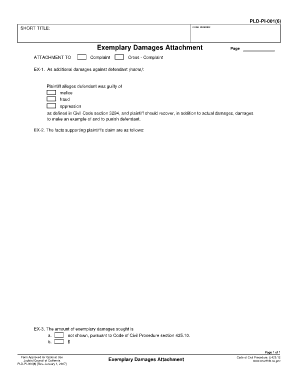
- In the section titled 'Exemplary damages attachment', begin by providing the name of the defendant for whom you are alleging exemplary damages.
- Specify the grounds for alleging exemplary damages. You can choose from the options provided: malice, fraud, or oppression as defined in Civil Code section 3294.
- In the next section, describe the facts supporting your claim. Clearly detail how the defendant's actions warrant exemplary damages.
- Indicate the amount of exemplary damages sought. You have two options to select from: either not shown, pursuant to Code of Civil Procedure section 425.10, or specify a dollar amount in the provided field.
- Review all entered information for accuracy and completeness.
- Once you have filled out the form, you can save your changes, download the form, print it for your records, or share it as needed.
Start filling out your CA PLD-PI-001(6) form online today!
The standard of proof for awarding punitive damages under CA PLD-PI-001(6) is known as 'clear and convincing evidence.' This is a higher standard than the 'preponderance of the evidence' required for compensatory damages. Meeting this standard is crucial to successfully argue for punitive damages, as it reflects a strong case against the defendant's wrongful behavior.