Loading
Get Ca Laciv 230 2011-2026
How it works
-

Open form follow the instructions
-

Easily sign the form with your finger
-

Send filled & signed form or save
How to fill out the CA LACIV 230 online
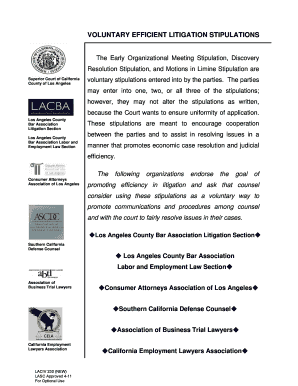
Filling out the CA LACIV 230 form online can streamline the process of submitting voluntary stipulations. This guide provides clear, step-by-step instructions to help you complete the form accurately and efficiently.
Follow the steps to successfully complete the CA LACIV 230 form online.
- Click ‘Get Form’ button to obtain the form and open it in the editor.
- Review the introduction section of the form, which details the purpose of the stipulations and allows you to understand the options available. Ensure you are familiar with the Early Organizational Meeting Stipulation, Discovery Resolution Stipulation, and Motions in Limine Stipulation.
- Fill in your personal information and details relevant to the stipulations being entered into, including the names of the parties involved and the nature of the case.
- Carefully select the stipulations you wish to enter into. You may choose one, two, or all three stipulations; however, do not alter the wording as provided in the form to maintain uniformity.
- In the designated sections, provide any additional necessary information or modifications to the stipulations as required by your case specifics.
- Once all sections are completed, review the entire form for accuracy and completeness, ensuring all fields are filled out properly.
- Finally, save your changes and choose to download, print, or share the completed form as per your filing needs.
Complete your CA LACIV 230 form online today for a more efficient litigation process.
Tenant rights under California Civil Code include protections against unlawful eviction, the right to habitable premises, and rights to privacy. These protections assist tenants in maintaining secure living conditions and have important applications in light of CA LACIV 230, which also addresses job security. Tenants should be aware of these rights to advocate effectively for their living situations.