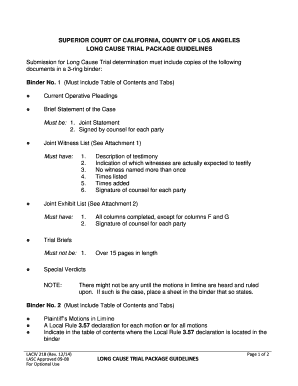
Binder No. 1 (Must include Table of Contents and Tabs) Current Operative Pleadings Brief Statement of the Case Must be: 1. Joint Statement 2. Signed by counsel for each party Joint Witness List (See Attachment 1) Must have: 1. 2. All columns completed, except for columns F and G Signature of counsel for each party Trial Briefs Must not be: 1. Description of testimony Indication of which witnesses are actually expected to testify No witness named more than once Tim.
Open form follow the instructions
Easily sign the form with your finger
Send filled & signed form or save
How to fill out the CA LACIV 218 online
Filling out the CA LACIV 218 form is an essential step in the Long Cause Trial Package guidelines within the Superior Court of California, County of Los Angeles. This guide will provide you with a clear and structured approach to completing this form successfully.
Follow the steps to complete the CA LACIV 218 form online.
- Use the ‘Get Form’ button to obtain the CA LACIV 218 online and open it for editing.
- Begin by entering the required case information at the top of the form, including the case number and the names of all parties involved.
- Fill out the brief statement of the case. Ensure that it is a joint statement signed by counsel for each party involved.
- Complete the joint witness list by entering witness names alphabetically, including necessary details such as the expected length of direct and cross-examination for each witness.
- Prepare and include trial briefs, indicating the expected testimony and ensuring no witness is named more than once. Signatures from counsel for each party are required.
- Compile a joint exhibit list, ensuring it is comprehensive and includes all necessary documentation.
- Review the motions in limine, making sure each motion is accompanied by the appropriate Local Rule 3.57 declaration.
- After filling out the form, save your changes. You can choose to download, print, or share the CA LACIV 218 form as needed.
Complete your documents online today for a smooth submission process.
Experience a faster way to fill out and sign forms on the web. Access the most extensive library of templates available.
Related content
Jan 1, 2020 — LACIV218. Long Cause Trial Package Guidelines. 11/3/2014. NO. Optional...
LACIV-CS, Louisiana Civil Rights Cases. 3238, LACML-CS, Louisiana Commercial Law...
Get answers to your most pressing questions about US Legal Forms API.
What is a motion to stay writ of possession in California?
A motion to stay a writ of possession seeks to pause the enforcement of a court order regarding property possession. In California, this motion may involve forms such as CA LACIV 218, which helps streamline the process. When filing this motion, you must demonstrate valid reasons for the stay, often relating to ongoing legal matters. Legal platforms like US Legal Forms can assist you in preparing and filing the necessary documents.
How to fill out GC 210 CA?
To fill out the GC 210 CA form, start by obtaining the latest version from a trusted legal source. Carefully follow the instructions provided and fill in all required fields accurately. If applicable, reference CA LACIV 218 to guide your entries. After completing the form, review it thoroughly for any errors before submitting it to the appropriate court.
What is a stay of enforcement in California?
A stay of enforcement is a legal timeout that prevents a judgment from being enforced while an appeal is pending. In California, this process often involves submitting forms like CA LACIV 218 along with your application. By obtaining a stay of enforcement, you can effectively pause any collection activities or actions related to the judgment during the appeal period. This ensures that your rights are protected while your case is reviewed.
How does a stay of execution work?
A stay of execution halts the enforcement of a court judgment temporarily, allowing the losing party to appeal or seek further legal action. Under CA LACIV 218, you can request this relief by demonstrating solid grounds for the stay. The court will consider your motion and may issue a stay if they find sufficient reasons. It’s crucial to comply with all legal requirements during this process.
How to file a stay of execution in California?
Filing a stay of execution in California requires you to complete the appropriate forms, one of which may involve the CA LACIV 218. You typically need to submit a motion to the court along with supporting documentation, such as proof of the grounds for your request. Ensure you provide the court with all necessary information to facilitate your request. Don't forget to serve a copy to the opposing party.
How to fill out California resale certificate?
To fill out a California resale certificate, start by downloading the CA LACIV 218 form from a reliable source. Complete all required fields, including your name, address, and seller's permit number. Make sure to specify the types of goods you will resell. Finally, sign the certificate to validate it, and keep a copy for your records.
How to file California corporate disclosure statement online?
Filing a California corporate disclosure statement online is a streamlined process. Visit the appropriate California government website, complete the required forms, and submit them electronically. For detailed steps and support, CA LACIV 218 offers valuable resources to guide you through the filing process efficiently.
What is the difference between a writ of garnishment and a writ of execution?
A writ of garnishment allows a creditor to take funds directly from a debtor's bank account or wages, while a writ of execution permits the seizure of the debtor's property. Both serve to enforce a judgment, but they target different assets. Understanding these differences can be crucial in legal proceedings, and resources like CA LACIV 218 can clarify when to use each.
How long do you have to file a writ in California?
In California, you generally have a limited time to file a writ after obtaining a judgment, often within ten years. However, this can depend on the type of writ you are filing, as different rules apply. For clarity, referring to CA LACIV 218 can provide vital information regarding your specific situation.
How long do I have to move after a writ of possession in California?
After a writ of possession is issued in California, you typically have five days to move out of the property. This timeframe gives you an opportunity to gather your belongings and vacate the premises. If you need assistance navigating this process, consider checking resources like CA LACIV 218 to understand your rights better.
Use professional pre-built templates to fill in and sign documents online faster. Get access to thousands of forms.
If you believe that this page should be taken down, please follow our DMCA take down process here.