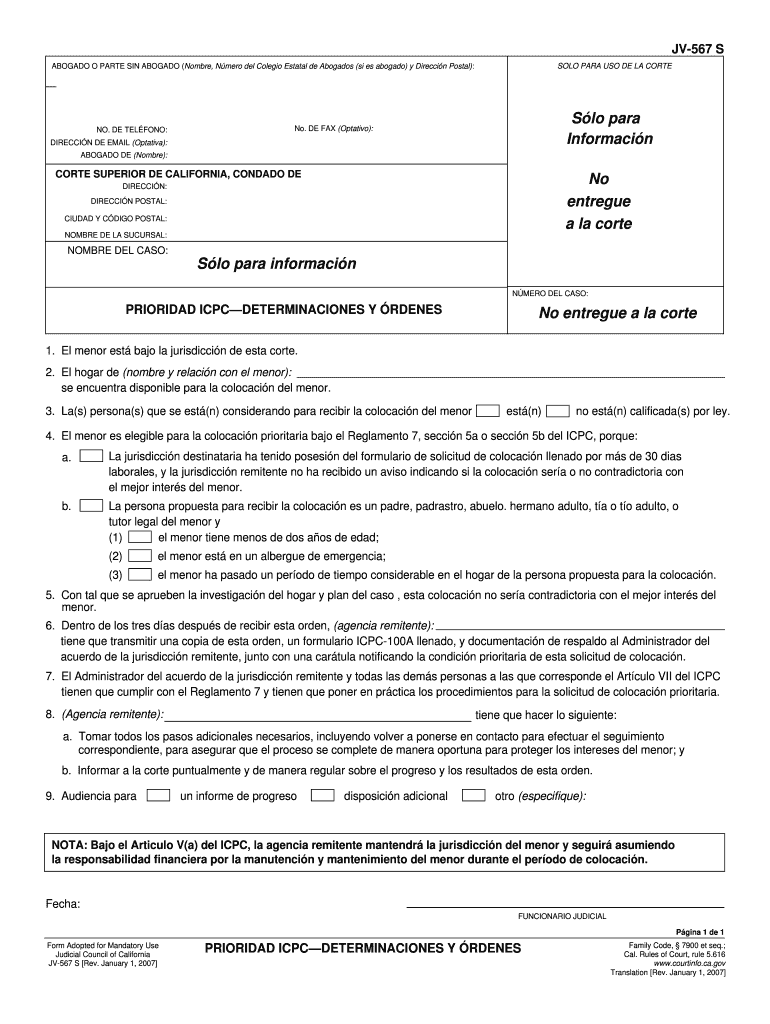
O. DE FAX (Optativo): DIRECCI N DE EMAIL (Optativa): ABOGADO DE (Nombre): CORTE SUPERIOR DE CALIFORNIA, CONDADO DE No entregue a la corte DIRECCI N: DIRECCI N POSTAL: CIUDAD Y C DIGO POSTAL: NOMBRE DE LA SUCURSAL: NOMBRE DEL CASO: S lo para informaci n N MERO DEL CASO: PRIORIDAD ICPC DETERMINACIONES Y RDENES No entregue a la corte 1. El menor est bajo la jurisdicci n de esta corte. 2. El hogar de (nombre y relaci n con el menor): se encuentra disponible para la colocaci.
Loading

Open form follow the instructions

Easily sign the form with your finger

Send filled & signed form or save
How to fill out the CA JV-567 S online
The CA JV-567 S form is essential for establishing priority placement determinations under the Interstate Compact on the Placement of Children. This guide provides clear instructions on how to complete this form online, ensuring that users can navigate each section with confidence.
Follow the steps to accurately complete the CA JV-567 S online.
- Click 'Get Form' button to obtain the CA JV-567 S and open it in your preferred online format.
- Enter the name, State Bar number (if applicable), and mailing address in the designated fields for the attorney or self-represented party.
- Provide a contact telephone number and, if applicable, a fax number and email address for communication purposes.
- Fill in the name of the attorney representing the case, if any, and specify the court's address, postal address, city, and zip code.
- Indicate the name of the case and corresponding case number in the specified sections.
- Answer the questions under the 'Priority ICPC—Determinations and Orders' section, ensuring all statements regarding the child's jurisdiction and placement availability are accurately completed.
- Review the eligibility criteria for placement priority, ensuring that all necessary conditions are met, as outlined in the form.
- Make sure to detail any additional agency actions required, including timelines for reporting back to the court and ensuring timely processing.
- Specify any required hearings or progress reports in the final fields, noting typical additional provisions or requirements.
- Once all sections are completed, take the time to review your entries for accuracy, then save your changes. You may now download, print, or share the form as needed.
Start completing your forms online today to ensure a smooth filing process.
Experience a faster way to fill out and sign forms on the web. Access the most extensive library of templates available.
Related content
Oct 26, 2012 — CA is a de-centralized ICPC state, each county has a central point of...
JV–567. ICPC Priority—Findings and. Orders. JV–060. Information for Parents. JV...
Nov 19, 2024 — ... (s) is important. A 2015 systematic review of quantitative studies...
Get answers to your most pressing questions about US Legal Forms API.
How to file full custody in California?
To file for full custody in California, you must first gather the necessary forms, including the CA JV-567 S, to articulate your request. Then, file these documents at the local court, along with any additional paperwork required, such as the CA FL-300. After filing, prepare for a potential court hearing where both parents can present their case. Utilizing services like uslegalforms can simplify this process, providing the forms and guidance needed.
Can you get full custody without going to court?
While it is challenging to obtain full custody without going to court in California, it is possible through mutual agreement with the other parent. If both parents can negotiate arrangements, you may formalize this agreement with the help of legal documents like the CA JV-567 S. However, it's essential to file this agreement with the court for it to become enforceable. Consulting with an attorney can clarify this process.
What qualifies for full custody in California?
In California, full custody qualifications depend on demonstrating that it is in the child's best interest. Factors include the child's safety, the emotional and physical well-being, and the ability of each parent to provide care. Courts often look for evidence showing stability and consistent involvement in the child's life. If you are pursuing full custody, using documents like the CA JV-567 S can help clarify your position.
What forms do I need to file for full custody in CA?
To file for full custody in California, you typically need to complete several forms, including the CA JV-567 S, which outlines your request for custody. You may also need the CA FL-300 form for requesting orders for custody and visitation. Additionally, consider filing the CA FL-320 for the declaration of disclosure. It's wise to check with the local court or an attorney to ensure you have the correct documentation.
Who pays court costs in child custody cases?
In child custody cases, the responsibility for court costs typically falls on the parties involved, which can include filing fees and other related costs. However, the court may order one parent to cover the costs if the other parent faces financial hardship. Being aware of potential fees upfront can be helpful. Using the CA JV-567 S form can also aid in organizing your case and understanding any associated costs.
How to get full custody of a child as a mother in California?
To secure full custody of your child in California, you should gather evidence to show that you provide a stable, nurturing environment. Filing the correct legal documents, including using form CA JV-567 S, will help support your case. Additionally, demonstrating the other parent's limitations or inability to meet the child's needs can strengthen your position. The court will ultimately base its decision on the child's best interests.
How to get temporary guardianship of a child in California?
To obtain temporary guardianship of a child in California, you must file a petition using CA JV-567 S. This legal form outlines your request and reasons for guardianship. You will need to provide evidence that the guardianship serves the child's best interests and attend a court hearing. After the court approves the temporary guardianship, you will have the rights to make decisions for the child while the arrangement is in place.
What is included in a notice of appeal?
A notice of appeal typically includes essential details such as the names of the parties involved, the judgment or order being appealed, and the specific court where the appeal will be filed. Additionally, it must state the intent to appeal and may include the date of the original judgment. Completing this notice accurately is crucial for a successful appeal process. For support, consider using CA JV-567 S and similar resources to assist with your documentation.
What is regulation 7 of the ICPC?
Regulation 7 of the ICPC pertains to the interstate placement of children, emphasizing the need for proper procedures and safeguards when placing children across state lines. This regulation aims to ensure that the best interests of the child are prioritized and that compliance with legal standards is met. If you are navigating child placement issues, resources like CA JV-567 S can provide valuable guidance.
What does it mean to preserve the record for appeal?
Preserving the record for appeal means ensuring that all relevant documents, evidence, and transcripts from the trial are maintained for review by the appellate court. This process is vital, as it allows the court to consider the full context of the case when making its decision. Failing to preserve the record can lead to complications or unfavorable outcomes. Using CA JV-567 S can assist in organizing and preserving these essential documents.
Use professional pre-built templates to fill in and sign documents online faster. Get access to thousands of forms.
If you believe that this page should be taken down, please follow our DMCA take down process here.