Get Ca Fl-192 S 2015-2026
How it works
-

Open form follow the instructions
-

Easily sign the form with your finger
-

Send filled & signed form or save
How to fill out the CA FL-192 S online
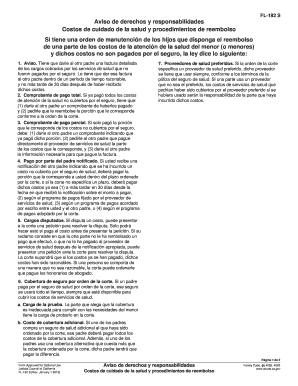
The CA FL-192 S form provides crucial information regarding health care costs and reimbursement procedures related to child support. Understanding how to complete this form online can streamline the process and ensure compliance with legal requirements.
Follow the steps to fill out the CA FL-192 S efficiently.
- Click ‘Get Form’ button to access the CA FL-192 S document and open it in your preferred editor.
- Begin by entering your personal information, including your name, address, and contact details, in the designated fields. Make sure all information is accurate to avoid delays.
- Provide details regarding the other parent, including their name and contact information. This is important for notices related to child support costs.
- Fill out sections regarding health care costs accrued for your child or children that are not covered by insurance. Be specific about the types of services and the associated costs.
- Indicate whether you have provided a detailed invoice for the health care services to the other parent within the mandated time frame of 30 days.
- If applicable, include proof of payment for health care costs that you have already covered. This proof may include receipts or documents showing the amount paid.
- Review your entries to ensure all information is complete and accurate. Pay special attention to any fields that are marked as required.
- Once you have filled out the form thoroughly, save your changes, and choose your next action; you can download, print, or share the form as needed.
Complete your CA FL-192 S document online today to manage your child support responsibilities effectively.
Yes, the non-custodial parent may be required to contribute to medical expenses in California. Under the guidelines set out in CA FL-192 S, this responsibility is often included in the child support order, which covers not only basic support but also health insurance and medical costs. Understanding these obligations is crucial for non-custodial parents to ensure compliance and support their children's needs effectively.