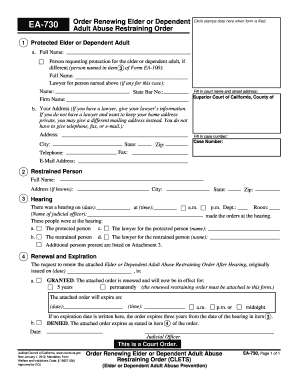
He Clear This Form button at the end of the form when finished. Protected Elder or Dependent Adult a. Full Name: Person requesting protection for the elder or dependent adult, if different (person named in item 3 of Form EA-100): Full Name: Lawyer for person named above (if any for this case): Name: Firm Name: State Bar No.: Fill in court name and street address: Superior Court of California, County of b. Your Address (If you have a lawyer, give your lawyer s information. If you do not ha.
Open form follow the instructions
Easily sign the form with your finger
Send filled & signed form or save
How to fill out the CA EA-730 online
Filling out the CA EA-730 form online can seem daunting, but with clear guidance, you can complete it confidently. This document is essential for renewing an elder or dependent adult abuse restraining order, ensuring protection for vulnerable individuals.
Follow the steps to successfully complete the CA EA-730 form online.
- Press the ‘Get Form’ button to obtain the document and open it in the online editor.
- Begin by providing the full name of the protected elder or dependent adult in the designated field. If you are applying on behalf of someone else, fill out the name of the person requesting protection in the next field.
- If applicable, enter the name of the lawyer representing the protected person. Include their firm name and state bar number.
- Fill in the court name and street address as required for submission. Ensure that the details match the jurisdiction handling your case.
- In the address section, provide your mailing address. If you have legal representation, enter your lawyer's address; otherwise, you may provide a different mailing address to protect your privacy.
- Enter the case number, ensuring it’s accurate as it is critical for tracking your submission.
- Following this, fill in the full name and address of the restrained person if known. This helps the court identify the individual related to the order.
- In the hearing section, record the date of the court hearing, the name of the judicial officer who presided over the case, and a list of individuals who were present at that hearing.
- Indicate whether the request to renew the restraining order is granted or denied. If granted, specify the duration—either 5 years or permanently—and provide the expiration date if applicable.
- Finally, review all entries for accuracy and completeness. You can then save your changes, download, print, or share the completed form as needed.
Take action and complete your documents online today!
Experience a faster way to fill out and sign forms on the web. Access the most extensive library of templates available.
Related content
Person requesting protection for the elder or dependent adult, if different (person named...
Use this tool to track the status of an immigration application, petition, or request. The...
Cuidado: para evitar ruído, manter as antenas longe das partos metálicas do CA-D3S, do...
Get answers to your most pressing questions about US Legal Forms API.
What happens if you violate a restraining order in California?
If you violate a restraining order in California, the court can enforce several punitive actions, including criminal charges. This may lead to a court hearing, fines, or jail time, based on the severity of the violation. Additionally, such actions can have adverse effects on your personal and legal standing, especially in cases related to CA EA-730. It's wise to consult with a legal professional to understand your rights and obligations.
How much time do you get for breaking a restraining order in California?
The time someone may serve for breaking a restraining order in California varies based on the specifics of the incident. Typically, the penalties can include a minimum of five days to a maximum of one year in county jail. For repeat offenders, the sentences may be harsher, emphasizing the importance of compliance with CA EA-730. Seeking guidance is essential to navigate these laws effectively.
What is the penalty for breaking a restraining order in California?
In California, breaking a restraining order can lead to serious penalties, including fines and potential jail time. The exact consequences depend on the nature of the violation and whether it is a first-time offense or a recurring issue. Violating a restraining order under CA EA-730 can also impact custody arrangements and future legal proceedings. Knowing the legal ramifications can motivate individuals to adhere to court orders.
What is the Evidence Code 730 in California?
The Evidence Code 730 in California, commonly referred to as CA EA-730, allows the court to appoint a neutral expert to provide testimony in certain cases, especially those involving mental health issues. This code aids in ensuring that the court receives objective information to make informed decisions. When parties present conflicting evidence, the CA EA-730 procedure can help clarify complex issues through expert insights. Understanding this code can enhance your legal strategy.
Where can I get state and federal tax forms?
State and federal tax forms are readily available online. You can access California forms through the Franchise Tax Board and federal forms through the IRS website. Utilize the information provided by CA EA-730 to simplify your search for the right documents for your tax filing needs.
How to get California state tax form?
You can obtain California state tax forms online through the California Franchise Tax Board's website. They offer a wide range of forms for different tax purposes, which you can conveniently download and print. Using the CA EA-730 information can direct you to the specific forms you might need.
How do I get my EA license in California?
To obtain your EA license in California, you must pass the IRS Special Enrollment Examination, demonstrating your expertise in federal tax matters. Following this, you should apply to the IRS and meet the continuing education requirements. For more structured guidance, the CA EA-730 can provide useful information and links to the necessary resources.
Where can I get physical copies of tax forms?
You can find physical copies of tax forms at local tax offices, libraries, and post offices in California. Additionally, the California Franchise Tax Board offers downloadable forms online, which you can print at home. If you need assistance, consider using the resources from the CA EA-730 to guide you towards the right forms.
How do I get a copy of my California state tax return?
To obtain a copy of your California state tax return, you can request one directly from the California Franchise Tax Board. They offer options for both online requests and mail requests. Having your previous returns can aid in completing the CA EA-730, especially if you need tax information for applications or credits.
Do I need to file a California state tax return?
If you are a resident of California and meet certain income thresholds, you generally need to file a California state tax return. This includes various income sources such as wages and interest. Filing helps ensure compliance with state tax laws and may even qualify you for potential refunds. For detailed guidance, check the CA EA-730 resources.
Use professional pre-built templates to fill in and sign documents online faster. Get access to thousands of forms.
If you believe that this page should be taken down, please follow our DMCA take down process here.