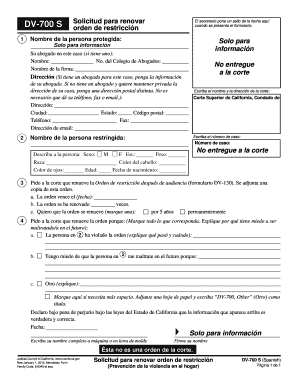
A informaci n Su abogado en este caso (si tiene uno): Nombre: No. del Colegio de Abogados: Nombre de la firma: No entregue a la corte Direcci n (Si tiene un abogado para este caso, ponga la informaci n de su abogado. Si no tiene un abogado y quiere mantener privada la direcci n de su casa, ponga una direcci n postal distinta. No es necesario que d su tel fono, fax o email.): Direcci n: Estado: Ciudad: C digo postal: Fax: Tel fono: Direcci n de email: 2 Escriba el nombre y la direc.
Open form follow the instructions
Easily sign the form with your finger
Send filled & signed form or save
How to fill out the CA DV-700 S online
The CA DV-700 S is a crucial form for individuals seeking to renew a restraining order in California. This guide provides a clear and supportive approach to completing the form online, ensuring that all necessary details are accurately submitted.
Follow the steps to successfully fill out the CA DV-700 S.
- Click the ‘Get Form’ button to obtain the form and open it in the editor.
- Start by entering the name of the protected person in the designated field. This refers to the individual who is seeking the renewal of the restraining order.
- If applicable, provide the details of your attorney, including their name and bar number, as well as the law firm name. Complete this section if you have legal representation.
- Fill in the address fields carefully. If you do not wish to disclose your home address, you may enter a different mailing address. Providing your phone number, fax, or email is optional.
- Specify the court name where the application will be submitted, along with the case number related to the restraining order.
- Enter the details of the restrained person, including their name and descriptive information such as sex, race, eye color, age, weight, hair color, and date of birth.
- Indicate your request for renewing the restraining order by checking the appropriate options regarding the expiration date and renewal type.
- Provide explanations for your request to renew the order by marking relevant reasons and elaborating on any fears you have regarding potential harm from the restrained individual.
- If additional space is needed, you may attach a separate sheet of paper titled 'DV-700, Other' with your explanations.
- Finally, declare under penalty of perjury that the information provided is true and correct, and include the date, along with your printed name and signature.
- Once all sections are completed, ensure to save your changes, and choose to download, print, or share the completed form as necessary.
Take the next step in your process by completing the CA DV-700 S online today.
Experience a faster way to fill out and sign forms on the web. Access the most extensive library of templates available.
Related content
Instrucciones. Use este formulario para renovar una Orden de restricción después de...
This paper presents a converter that allows the operation as rectifier or inverter, with...
AVISOS: ○ Esta câmera de vídeo foi projetada para ser utilizada com sinais de...
Get answers to your most pressing questions about US Legal Forms API.
What is the burden of proof for a civil harassment restraining order in California?
In California, the burden of proof for obtaining a civil harassment restraining order lies with the petitioner, meaning you must provide enough evidence to support your claims. You need to demonstrate, through documentation and testimony, that the harassment occurred and affected your well-being. The CA DV-700 S form assists you in organizing your evidence properly. Using a reliable legal resource can make navigating this process smoother.
What qualifies as civil harassment in California?
Civil harassment in California encompasses behaviors such as stalking, threats, or any intentional harassment that causes emotional distress. Actions that disrupt your peace or create fear may also fall under this definition. Understanding what qualifies as civil harassment is essential when completing your CA DV-700 S application. If you believe you are experiencing such behaviors, it may be beneficial to explore legal options available to you through platforms like US Legal Forms.
What are the grounds for a civil harassment restraining order in California?
In California, grounds for a civil harassment restraining order, documented on the CA DV-700 S form, include repeated acts of harassment such as stalking, threats, or unwanted communication. The harassment must cause you significant distress or fear for your safety. It is crucial to demonstrate that such behavior has occurred, contributing to the need for legal protection. You can seek assistance from legal resources to better understand your options.
How does a restraining order affect your life in California?
A restraining order can significantly impact your life in California, influencing personal relationships, employment, and travel. It may restrict your contact with certain individuals, which can lead to complications. If you navigate this using tools like CA DV-700 S effectively, you can manage its effects better. Always seek guidance from platforms like uslegalforms to help you understand your rights and options.
Does a restraining order show up on a background check in California?
Yes, a restraining order generally appears on a background check in California. This can affect employment opportunities and other aspects of life. If you have a restraining order filed through the CA DV-700 S, it is crucial to understand how this may impact your future. Consulting with professionals can provide tailored solutions to mitigate negative repercussions.
Why would a restraining order be dismissed in California?
A restraining order may be dismissed for various reasons, including lack of evidence or a change in circumstances. If the parties involved reach an agreement or if the petitioner decides not to pursue the order, it can also be dismissed. In cases filed with CA DV-700 S, demonstrating that the threat no longer exists can support dismissal. Engaging a legal advisor can help clarify your situation.
Can a restraining order be expunged in California?
Yes, a restraining order can be expunged in California, but specific criteria must be met. After a certain period, you can file a petition to expunge the order if you have complied with its terms and maintained a clear record. Utilizing resources like the CA DV-700 S can help in navigating this process effectively. Always consider consulting legal services such as uslegalforms for assistance.
How long does a restraining order stay on your record in California?
In California, a restraining order typically remains on your record until it is officially dismissed or expunged. The duration can vary based on the type of order and the circumstances surrounding your case. If you filed a CA DV-700 S, the order could impact your record for a significant time, affecting certain aspects of your life. It's important to consult with a legal professional to understand your options.
How do I write a letter to remove a restraining order?
To write a letter requesting the removal of a restraining order, start with a formal greeting and clearly state your request at the beginning. Include compelling reasons for your request and any changes in circumstances since the order was issued. Reference the CA DV-700 S form and follow up with gratitude for the court's consideration of your request.
How to file a response to a restraining order in California?
Filing a response to a restraining order in California involves filling out the required forms, like the CA DV-700 S, and submitting them to the court. You should provide clear explanations and any evidence that supports your position. It’s essential to do this promptly to meet court deadlines, ensuring your rights are protected.
Use professional pre-built templates to fill in and sign documents online faster. Get access to thousands of forms.
If you believe that this page should be taken down, please follow our DMCA take down process here.