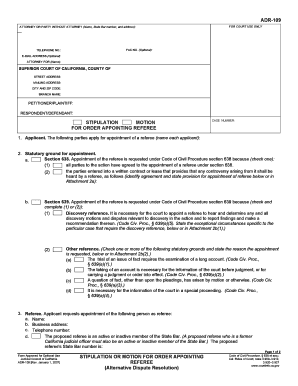
COURT OF CALIFORNIA, COUNTY OF STREET ADDRESS: MAILING ADDRESS: CITY AND ZIP CODE: BRANCH NAME: PETITIONER/PLAINTIFF: RESPONDENT/DEFENDANT: STIPULATION MOTION FOR ORDER APPOINTING REFEREE CASE NUMBER: 1. Applicant. The following parties apply for appointment of a referee (name each applicant): 2. Statutory ground for appointment. Section 638. Appointment of the referee is requested under Code of Civil Procedure section 638 because (check one): a. all parties to the action have agreed to the.

How it works
  • Open form

    Open form follow the instructions

  • Easily sign form

    Easily sign the form with your finger

  • Share form

    Send filled & signed form or save

How to fill out the CA ADR-109 online

Filling out the CA ADR-109 form online can seem daunting, but this guide will walk you through each step to ensure a smooth process. The form is essential for requesting the appointment of a referee in alternative dispute resolution cases, and understanding its components will help you complete it accurately.

Follow the steps to complete the CA ADR-109 form online.

  1. Press the ‘Get Form’ button to access the CA ADR-109 form and open it in your online editor.
  2. Begin by entering the information for the attorney or party without an attorney. Include their name, State Bar number, and address. If applicable, add a fax number and email address.
  3. In the section labeled 'FOR COURT USE ONLY,' fill in the court information including the superior court name, street address, mailing address, city, zip code, and branch name.
  4. Identify the petitioner/plaintiff and the respondent/defendant by entering their names in the designated fields.
  5. For the section regarding the application, list each applicant requesting the appointment of a referee clearly.
  6. Select the statutory grounds for the appointment of a referee. Specify if it is under section 638 or 639 by checking the appropriate box and providing any necessary details.
  7. Complete the referee section by providing the name, business address, telephone number, and State Bar number of the proposed referee.
  8. Describe the subject matter of reference, indicating whether it includes all issues in dispute or specific issues that need addressing.
  9. Indicate the referee's compensation arrangement. Specify whether the referee will be privately compensated by the parties or if the court needs to resolve the payment issue.
  10. Decide if you will request the use of court facilities or personnel. Indicate your choice and provide justification if necessary.
  11. Fill out the hearing location information, including the contact person’s name, address, and telephone number for any public proceedings.
  12. Finally, type or print the names and signatures of all applicants or their attorneys, along with the date.
  13. Once you have completed the form, you can save your changes, download the document, print it, or share it as needed.

Start filling out the CA ADR-109 online today to ensure timely processing of your request.

Get form

Experience a faster way to fill out and sign forms on the web. Access the most extensive library of templates available.

Related content

ADR-109 Stipulation or Motion for Order Appointing...

Jan 1, 2007 — all parties to the action have agreed to the appointment of a referee...

Learn more
The Unique Role of ADR in Business Court Cases

by BF Tennille · 2010 · Cited by 36 — The most common forms of ADR associated with...

Learn more
SC-70 SC-130 - OPERATOR'S MANUAL

General. • This manual has been authored with simplified grammar, to meet the needs of...

Learn more
Questions & Answers

Get answers to your most pressing questions about US Legal Forms API.

Contact support

What does it mean when a lawyer asks for discovery?

When a lawyer requests discovery, they are seeking specific information or documents that are relevant to their case. This process is vital for preparing a strong argument and understanding the other party's position. Engaging in discovery is fundamental within the framework of CA ADR-109, as it promotes transparency and informed decision-making.

A referee's responsibilities can vary depending on the context but generally include facilitating discussions, reviewing relevant documents, and making recommendations. They aim to achieve fair resolutions that adhere to established legal standards, including those set forth in CA ADR-109. Their role ultimately helps to alleviate disputes before they escalate.

In real estate transactions, a referee is often appointed to oversee specific disputes that arise during the process. This role can include handling issues like property valuation or enforcement of agreements. The involvement of a referee can align with strategies mentioned in CA ADR-109, ensuring that transactions proceed smoothly and justly.

The primary purpose of a discovery referee is to expedite the discovery process while reducing the burden on courts. This referee addresses issues such as document production and interrogatories efficiently and fairly. By doing so, they help parties adhere to the timelines and guidelines set forth in CA ADR-109.

A discovery referee acts as an unbiased third party to resolve disputes that arise during the discovery phase of litigation. They facilitate the exchange of information and documents between opposing parties to ensure compliance and fairness. Utilizing a discovery referee can support the objectives outlined in CA ADR-109 by streamlining the process.

The Judicial Council of California plays a crucial role in overseeing the state's court system. It establishes policies and procedures that promote efficient operations within the judiciary. Through its initiatives, including those related to CA ADR-109, it aims to ensure fair and accessible justice for all Californians.

To file a DBA (Doing Business As) in California, you need to complete the appropriate form, which varies by county. You can typically file online, or in person at your local county clerk's office. Make sure to check CA ADR-109 guidelines for any specific instructions regarding your DBA filing requirements.

In California, the standard timeframe to file an opposition is often 16 days from receiving the motion. This ensures you have adequate time to prepare your response and gather necessary materials. Confirm that your submission complies with the CA ADR-109 to avoid any complications.

The deadline to file an opposition to a motion to compel in California is typically 14 days from when the motion is served. Adhering to this timeline is essential to effectively contest the motion. Utilize resources such as CA ADR-109 guidelines to ensure your submission aligns with legal standards.

Filing a California corporate disclosure statement involves preparing the requisite form accurately. You can manually submit the CA ADR-109 form by mail or online, depending on your preference. Make sure to verify that all required information is complete to avoid delays in processing your statement.

Get This Form Now!

Use professional pre-built templates to fill in and sign documents online faster. Get access to thousands of forms.

If you believe that this page should be taken down, please follow our DMCA take down process here.

Get CA ADR-109