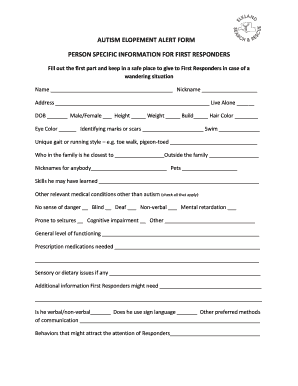
AUTISM ELOPEMENT ALERT FORM PERSON SPECIFIC INFORMATION FOR FIRST RESPONDERS Fill out the first part and keep in a safe place to give to First Responders in case of a wandering situation Name Nickname.
Open form follow the instructions
Easily sign the form with your finger
Send filled & signed form or save
How to use or fill out the AUTISM ELOPEMENT ALERT FORM PERSON SPECIFIC online
Completing the Autism Elopement Alert Form Person Specific is crucial for ensuring the safety and well-being of individuals with autism in wandering situations. This guide provides step-by-step instructions to help you fill out the form accurately and effectively.
Follow the steps to complete the form online.
- Press the ‘Get Form’ button to access the form and open it in your browser.
- Fill in the personal information section, including the individual's name, nickname, address, date of birth, gender, height, weight, build, hair color, and eye color.
- Complete the section on identifying marks or scars and include details about the individual’s swim ability and unique gait or running style.
- Indicate the family members and outside acquaintances the individual is closest to, along with any nicknames and pets they may have.
- Document any skills the individual has learned and note other relevant medical conditions apart from autism; check all applicable boxes.
- Provide information about the individual’s general level of functioning and any prescription medications they require.
- Detail any sensory or dietary issues present and write any additional information that First Responders might need.
- Specify if the individual is verbal or non-verbal, whether they use sign language, and any alternative communication methods.
- Outline behaviors that may attract the attention of responders and those that might trigger a catastrophic reaction, along with the individual's response to stress.
- Include methods to de-escalate if the individual is upset and describe their response to being touched.
- List the individual's favorite toys, music, topics, and any fears or attractions to specific physical features.
- Note any local structures or areas the individual likes or dislikes and document attractions to hazardous areas.
- Indicate if the individual has a history of wandering, including past triggers and common routes.
- In the current situation section, describe what the individual is wearing, including shoes and any marked clothing or identification.
- Detail any tracking devices that may be in use, including cell phone information and the individual's ability to use money.
- Provide details on where the individual left from, the direction of travel, and the time and date they departed.
- Finally, review all the information to ensure accuracy. You can then save changes, download, print, or share the form as needed.
Ensure safety by completing the Autism Elopement Alert Form online today.
Experience a faster way to fill out and sign forms on the web. Access the most extensive library of templates available.
Related content
Does the individual live alone? PERSON-SPECIFIC INFORMATION FOR FIRST RESPONDERS. Date...
Alert first responders with a written document describing your child's wandering...
Get answers to your most pressing questions about US Legal Forms API.
What is elope behavior?
Elope behavior refers to the act of leaving a designated area without permission. This can happen in various environments, from schools to home settings. Understanding this behavior is crucial, and using tools such as the AUTISM ELOPEMENT ALERT FORM PERSON SPECIFIC can provide necessary support to prevent incidents.
How many people with autism have eloped?
While exact statistics on eloping behavior in individuals with autism vary, studies indicate that a significant number of families have experienced such episodes. Factors like age and sensory sensitivities play key roles in these instances. Resources like the AUTISM ELOPEMENT ALERT FORM PERSON SPECIFIC can better prepare families for these occurrences.
What does it mean when an autistic person elopes?
When an autistic person elopes, it typically means they have left a place without informing caregivers or others. This behavior can be a response to anxiety, overwhelming situations, or a desire for exploration. By utilizing the AUTISM ELOPEMENT ALERT FORM PERSON SPECIFIC, caregivers can create strategies to minimize these occurrences.
At what age do autistic kids stop eloping?
The age at which autistic children stop eloping can vary significantly based on their individual development and circumstances. Some may continue this behavior into their teenage years. Understanding their unique needs and using tools like the AUTISM ELOPEMENT ALERT FORM PERSON SPECIFIC can help create a safer environment.
Why do people with autism elope?
People with autism may elope due to a lack of understanding of safety or social boundaries, or they may seek sensory experiences in an unpredictable world. Each individual is unique, and their reasons can vary greatly. Using resources like the AUTISM ELOPEMENT ALERT FORM PERSON SPECIFIC can help caregivers take preventive measures.
What is the correct way to say someone with autism?
The most respectful phrase is ‘a person with autism.’ This language emphasizes their individuality and humanity before their condition. Remember that individuals may have personal preferences, so it's best to ask them how they would like to be identified.
How do you make someone with autism feel included?
To make someone with autism feel included, focus on clear communication and provide a structured environment. Encourage them to express their feelings and interests. Use visual aids and tools, such as the AUTISM ELOPEMENT ALERT FORM PERSON SPECIFIC, to support their understanding of social situations.
What is the biggest challenge for people with autism?
The biggest challenge for many people with autism is often the struggle for acceptance and understanding in their communities. This can lead to feelings of isolation and frustration. Cultivating an inclusive environment where individuals feel valued is essential. Utilizing resources like the AUTISM ELOPEMENT ALERT FORM PERSON SPECIFIC can empower families and communities to support those with autism effectively.
How to stop an autistic child from wandering?
To effectively prevent wandering, caregivers can establish a safe and predictable environment while implementing consistent routines. Introducing communication tools and visual schedules can also help children understand expectations. Additionally, the AUTISM ELOPEMENT ALERT FORM PERSON SPECIFIC allows families to create customized alerts and notifications, enhancing their ability to monitor safety.
What percentage of children with autism elope?
Research indicates that approximately 30% to 50% of children with autism will elope at some point. This behavior is often linked to a strong desire for exploration or escape from overwhelming situations. Understanding these tendencies is crucial for caregivers and educators. Using strategies like the AUTISM ELOPEMENT ALERT FORM PERSON SPECIFIC aids parents in preventing wandering incidents.
Use professional pre-built templates to fill in and sign documents online faster. Get access to thousands of forms.
If you believe that this page should be taken down, please follow our DMCA take down process here.