Loading

Open form follow the instructions

Easily sign the form with your finger

Send filled & signed form or save
How to fill out the Order Granting Motion For Default Judgment online
Filling out the Order Granting Motion For Default Judgment can seem daunting, but with the right guidance, you can complete it confidently and accurately. This guide provides step-by-step instructions on how to fill out this form online, ensuring that all essential components are addressed.
Follow the steps to complete the form online effectively.
- Click ‘Get Form’ button to obtain the form and open it in your editor.
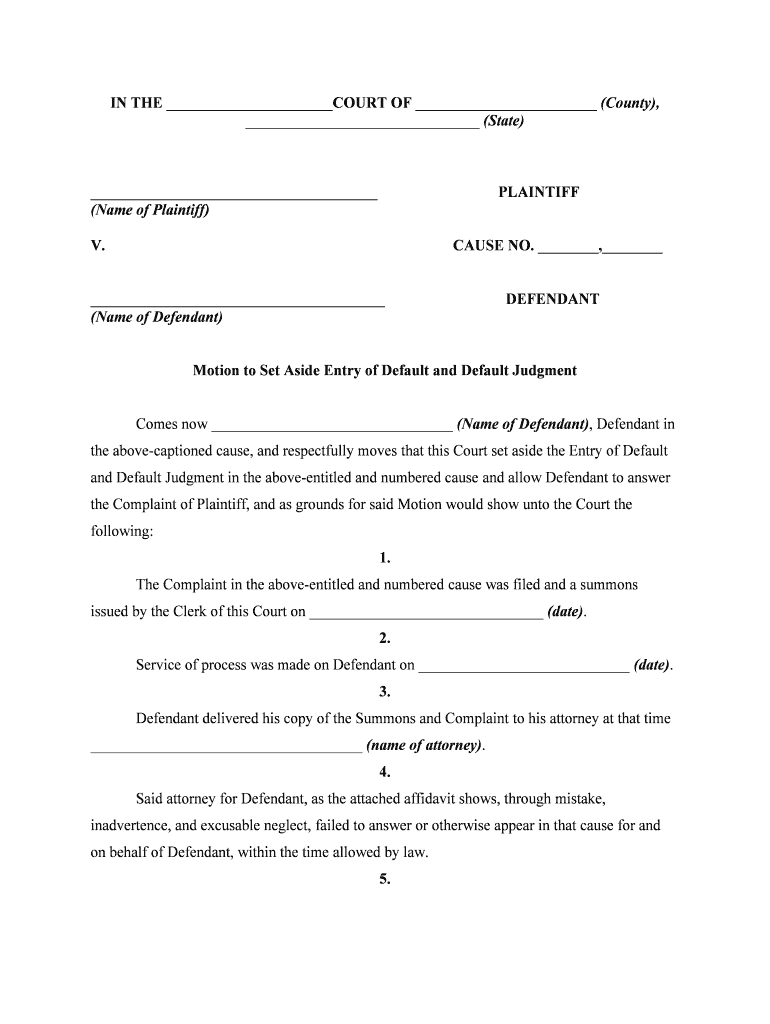
- Begin by filling in the court information at the top of the form, including the name of the court, the county, and the state.
- Next, identify the parties involved by entering the name of the plaintiff and the name of the defendant in the provided sections.
- Complete the section for the cause number as assigned by the court.
- In the motion statement, clearly state the name of the defendant who is making the motion to set aside the default and judgment.
- Fill in the dates for when the complaint was filed and when service of process was made. This information is crucial for establishing the timeline of the case.
- Specify the name of the attorney who received the summons and complaint on behalf of the defendant.
- Describe the reasons for failing to respond to the complaint, drawing attention to any mistakes or reasons such as inadvertence or neglect.
- Enter the date the entry of default was recorded and the date the default judgment was taken.
- Affirm that the defendant has a valid defense to the plaintiff’s complaint and reference any attached answer or affidavits.
- Conclude with a statement of the request for the court to set aside the entry of default and provide space for the defendant's signature as well as their attorney's signature.
- Once all fields are filled in, review the document for accuracy. Save your changes, then download or print the completed form. You may also opt to share it as needed.
Start filling out your documents online today to ensure you meet all legal requirements.
Experience a faster way to fill out and sign forms on the web. Access the most extensive library of templates available.
Related content
BEFORE THE COURT is Plaintiff's Motion for Default Judgment, ECF No. 26, on the grounds...
A default judgment may be entered against a minor or incompetent person only if...
IT IS ORDERED that this judgment is granted. This judgment resolves the last pending claim...
Get answers to your most pressing questions about US Legal Forms API.
What happens after you file a motion for default?
After you file a motion for default, the court schedules a hearing to review the motion. If the court grants the motion, you will receive an order granting motion for default judgment, which provides you with a legal victory. The next steps typically involve pursuing collection of the judgment or taking further legal action, if necessary. Familiarizing yourself with the entire process can prove beneficial, so consider utilizing tools like US Legal Forms to guide you.
What does it mean when a motion is defaulted?
When a motion is defaulted, it indicates that one party failed to respond or participate in the legal proceedings. Consequently, the court may proceed to issue a default judgment in favor of the other party. This situation underscores the importance of timely responses, as neglect can lead to severe legal consequences. Understanding this process is vital, and resources like US Legal Forms can help you prepare necessary documents effectively.
What does order granting motion mean?
An order granting motion means that the court has approved a request made by a party, often leading to a favorable outcome for that party. Specifically, in the context of a motion for default judgment, this order signifies that the judge has agreed with the claims presented, due to a lack of response from the other party. This order can be a crucial step in securing a legal victory. You may want to utilize platforms like US Legal Forms to navigate the complexities of filing such motions.
Can you negotiate after a default judgment?
Yes, you can negotiate after a default judgment, but it often depends on the jurisdiction and specific case details. If the judgment was entered against you, reaching out to the other party may lead to a settlement or resolution. However, negotiating after an order granting motion for default judgment can be complex, so seeking guidance from a legal professional is advisable. They can provide valuable insights on potential options or relief available.
What is order of judgment by default?
An order of judgment by default occurs when the court rules in favor of the party who filed the motion, due to the other party's failure to respond. This order formally recognizes the moving party's claims, effectively allowing them to receive damages or other relief sought. The order granting motion for default judgment simplifies the process for individuals who have not received a response, ensuring justice is served even in their absence. It is essential for establishing a legal resolution.
What happens at a motion for default hearing?
At a motion for default hearing, the court examines whether the respondent failed to respond to a complaint. If the judge finds in favor of the moving party, they may issue an order granting motion for default judgment. This means the moving party may obtain a judgment without the other party being present. Typically, the court reviews evidence submitted to support the motion.
What is the meaning of motion default?
Motion default refers to a situation in which the opposing party fails to respond to a lawsuit, allowing the party who filed the motion to seek a judgment without further contest. When you file for an order granting motion for default judgment, you are requesting the court to rule in your favor due to this non-response. This often leads to a simplified process because the court typically accepts the facts as presented by the filing party.
How do I file a motion for judgment?
Filing a motion for judgment involves preparing your motion and submitting it to the appropriate court. Include a caption that details the case number and the parties involved, along with a statement requesting an order granting motion for default judgment. After submitting, ensure that all parties are properly notified, and keep track of any required hearings related to your motion.
How do you write a good motion for court?
Writing a good motion for court begins with a strong, descriptive title that reflects the purpose, like 'Order Granting Motion For Default Judgment.' Use a professional tone, and lay out your arguments logically and persuasively. Be sure to attach any necessary documents that support your motion, and refer to rules or statutes that grant the court the authority to grant your request.
How to write a default motion?
When writing a default motion, begin with a clear heading that specifies the nature of your request, such as 'Order Granting Motion For Default Judgment.' Incorporate a concise explanation of the circumstances leading to the default, including dates and any attempts to engage the other party. Clearly set forth the legal basis for the request and state what relief you seek from the court.
Use professional pre-built templates to fill in and sign documents online faster. Get access to thousands of forms.
If you believe that this page should be taken down, please follow our DMCA take down process here.