Loading

Open form follow the instructions

Easily sign the form with your finger

Send filled & signed form or save
How to fill out the Rental Agreement Saskatchewan online
Filling out the Rental Agreement in Saskatchewan online is a straightforward process that ensures both landlords and tenants understand their rights and responsibilities. This guide will provide comprehensive instructions to help you complete the agreement accurately.
Follow the steps to fill out your Rental Agreement Saskatchewan online.
- Use the ‘Get Form’ button to access the Rental Agreement Saskatchewan and open it in the online editor.
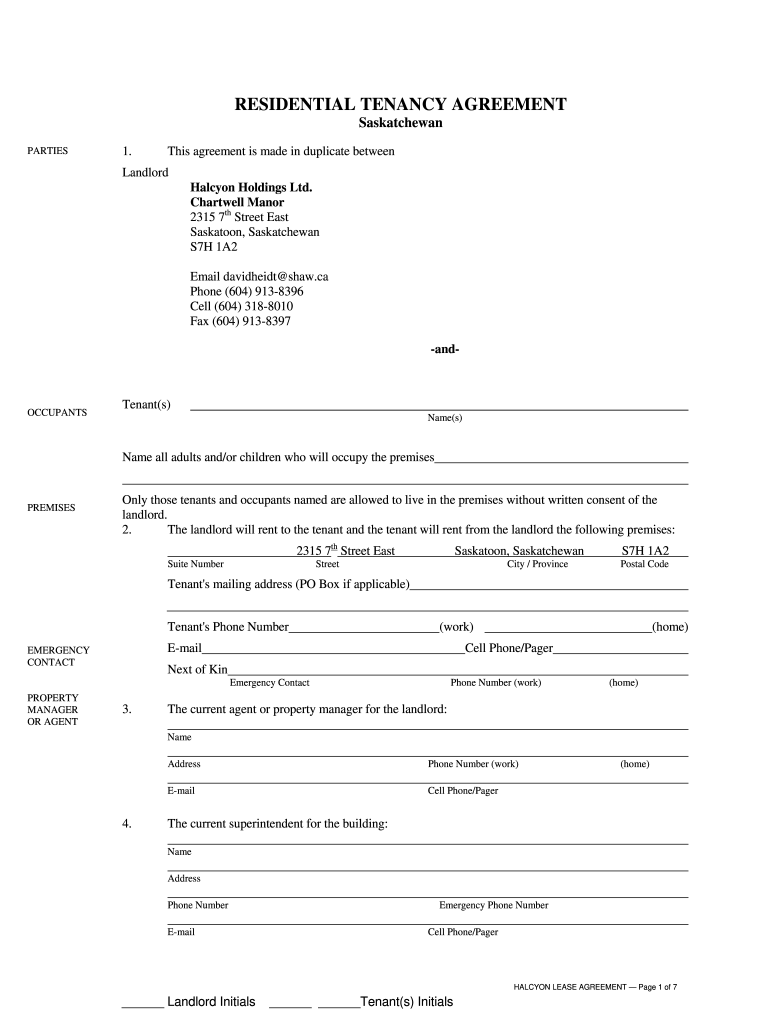
- Begin by filling in the landlord's details, including the name, address, email, and phone numbers. Ensure all contact information is accurate to facilitate communication.
- Next, list the names of all tenants and occupants who will reside at the property. Only those listed here are authorized to live in the premises unless written consent is obtained from the landlord.
- Enter the rental property's address, including the suite number, city, province, and postal code. Make sure this information is precise to avoid any future discrepancies.
- Indicate the emergency contact information, including their relationship to the tenant and relevant phone numbers.
- Complete the section regarding the property manager or agent, providing their name and contact details to ensure tenants know who to reach out for property management concerns.
- Specify the commencement date of the tenancy and whether it is a fixed term or a month-to-month arrangement. This section is crucial for defining the rental period.
- Fill in the agreed rent amount and payment terms, noting how rent will be paid (e.g., cash, cheque). Include the due date and any details about late fees for overdue payments.
- Indicate which items and services are included in the rent by checking the appropriate boxes. This helps clarify what tenants can expect as part of their tenancy.
- Review the pet, smoking, and vehicle policies to understand what is permitted on the property. Ensure these align with tenant expectations.
- Add information about any security deposit arrangements, including the amount, conditions for return, and responsibilities for premises maintenance upon move-out.
- Ensure understanding of the details surrounding the board's rules and regulations. Acknowledge by initialing to confirm receipt of these documents.
- Conduct a final review of all entered information to ensure accuracy and completeness. Make any necessary adjustments before proceeding.
- Once satisfied with the information entered, you can save changes, download the completed form, print it for signatures, or share it with relevant parties.
Complete your Rental Agreement Saskatchewan online today and ensure clarity and protection in your rental relationship.
Experience a faster way to fill out and sign forms on the web. Access the most extensive library of templates available.
Related content
The Landlord shall offer the Additional Premises to the Tenant on a one-time basis only at...
Know Your Rights!: Landlord has 30 days to return tenant's deposit Q: I just moved out of...
You will find important safety information in a variety of forms, including: This entire...
Get answers to your most pressing questions about US Legal Forms API.
How much notice does a landlord have to give in Saskatchewan?
The notice period a landlord must give in Saskatchewan varies based on the tenancy type, yet the standard requirement is one month. This notice must be clearly communicated to the tenant and should comply with the terms laid out in the Rental Agreement Saskatchewan. By adhering to these rules, landlords can ensure a smoother transition and maintain a respectful dynamic with their tenants. Consider using legal forms or resources to help draft accurate notices.
How much notice does a landlord have to give a tenant in Saskatchewan?
In Saskatchewan, a landlord must provide tenants with a specific notice period before ending a tenancy, commonly set at one month. This requirement ensures that tenants have adequate time to find new housing. The details can vary based on the rental agreement or situation, so it’s wise to refer to the Rental Agreement Saskatchewan for precise guidelines. Awareness of these regulations can help prevent misunderstandings and foster a positive landlord-tenant relationship.
What is the most a landlord can raise rent in Saskatchewan?
In Saskatchewan, the maximum amount a landlord can raise rent usually depends on the annual allowable increase set by the provincial government. This increase is generally capped at a certain percentage, which is updated annually. Tenants should review their rental agreement to understand how these adjustments work in relation to their rent. Utilizing the Rental Agreement Saskatchewan can help both parties navigate and understand these terms effectively.
What is an immediate notice to vacate in Saskatchewan?
An immediate notice to vacate in Saskatchewan occurs when a landlord instructs a tenant to leave the rental property without delay. This notice is typically issued for serious violations of the rental agreement, such as illegal activities or significant damage. It's essential for landlords and tenants to understand their rights and obligations under the Rental Agreement Saskatchewan. Clear communication can often help resolve disputes before escalating to eviction.
What are the renters rights in Saskatchewan?
Renters in Saskatchewan have several rights, including the right to a safe and healthy living environment, the right to privacy, and the right to receive appropriate notice for rent increases or eviction. Understanding these rights is crucial for maintaining a positive rental experience. For clear guidance on these rights, refer to your rental agreement in Saskatchewan, or explore resources available on uslegalforms for comprehensive legal information.
What is the highest percentage a landlord can raise rent?
The highest percentage a landlord can raise rent in Saskatchewan can vary based on several factors, including local market conditions. The increase must still comply with general fairness principles and the expectation of reasonable notice. Consulting your rental agreement in Saskatchewan can provide clarity on any specific stipulations that apply to your situation.
What is the maximum percentage a landlord can increase rent?
Currently, there is no set maximum percentage governing rent increases in Saskatchewan. However, the increase must be reasonable and justified, usually tied to market values and property costs. Tenants should refer to their rental agreement in Saskatchewan for any limitations set by the landlord, ensuring transparency and fairness.
Can you hand write a rental agreement?
Yes, you can handwrite a rental agreement in Saskatchewan, but it is crucial to ensure it adheres to legal requirements. A properly crafted rental agreement protects both landlords and tenants. Consider using templates available on platforms like uslegalforms to cover all necessary details and avoid legal pitfalls. This way, you have an effective rental agreement in Saskatchewan tailored to your needs.
How much can your landlord raise your rent in Saskatchewan?
In Saskatchewan, landlords can increase rent upon the expiration of a rental agreement, but they must provide a written notice to tenants. The notice period typically needs to be three months before the new rent takes effect. It’s wise to check the terms outlined in your rental agreement in Saskatchewan, as they might specify caps or conditions on rent increases.
What is normal wear and tear in Saskatchewan?
Normal wear and tear refers to the expected deterioration of a rental property due to regular use over time. This can include minor scuff marks on walls or faded carpets. It is essential to differentiate between normal wear and tear and damage caused by negligence or misuse, as this will impact security deposit returns. Always consult your rental agreement in Saskatchewan for specific expectations.
Use professional pre-built templates to fill in and sign documents online faster. Get access to thousands of forms.
If you believe that this page should be taken down, please follow our DMCA take down process here.