Loading

Open form follow the instructions

Easily sign the form with your finger

Send filled & signed form or save
How to fill out the Probate Inventory Form online
Completing the Probate Inventory Form online is an important step in managing the estate of a person who has passed away. This guide will walk you through each section of the form, ensuring you understand what information is required to accurately report assets and liabilities.
Follow the steps to complete the Probate Inventory Form effectively.
- Press the ‘Get Form’ button to access the form and open it in your designated editor.
- Begin by entering the name of the party submitting the inventory in the designated field at the top of the form.
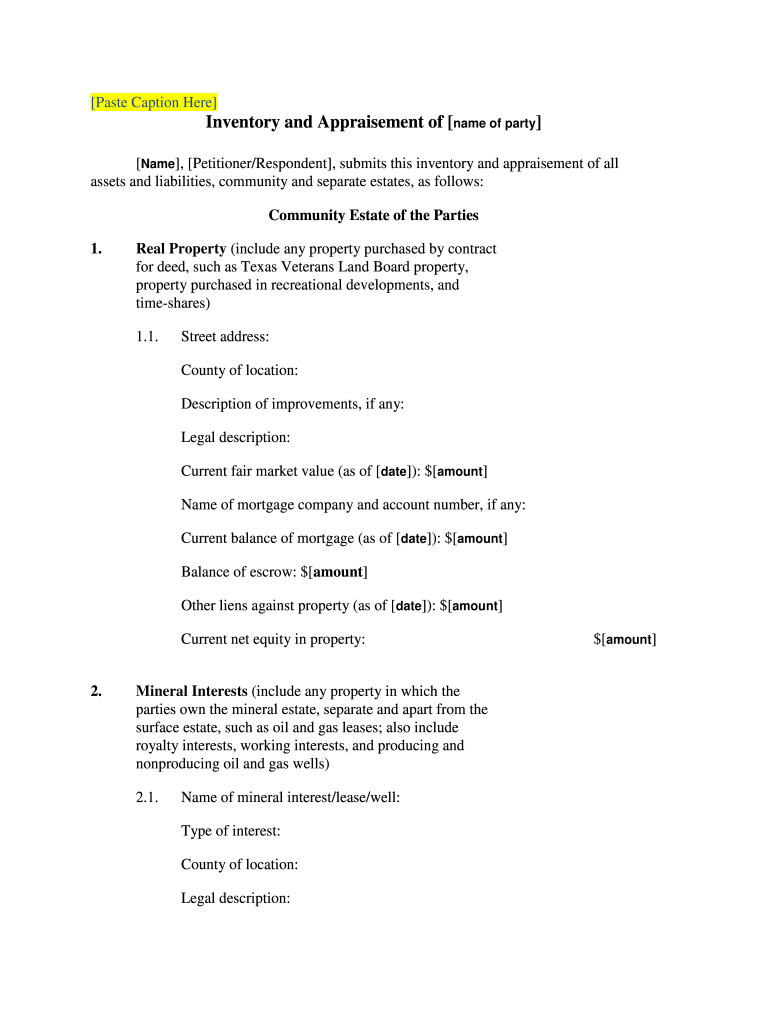
- List the community estate assets, beginning with real property. Include the street address, county of location, and legal description of the property.
- For each property, provide the current fair market value, along with details about any mortgage accounts, current balances, and any additional liens.
- Continue by detailing mineral interests, specifying names, types of interest, county of location, and current values.
- Document cash and accounts with financial institutions clearly. Include account names, numbers, and current account balances.
- Complete the sections for brokerage accounts, publicly traded stocks, bonds, and other securities by including names, values, and secure account details.
- Proceed with listing retirement benefits, encompassing various plans. Fill in each plan's particulars, including account numbers and balance details.
- Detail liabilities, including credit card debts and any professional fees associated with the case, indicating current balances for each.
- Review all sections carefully to ensure accuracy before saving changes. Once done, you can download, print, or share the completed form as necessary.
Take the next step and complete your Probate Inventory Form online for efficient estate management.
Experience a faster way to fill out and sign forms on the web. Access the most extensive library of templates available.
Related content
For use in Probate & Family Court (3/19/12). Used in cases regarding wills, estates, and...
The Estate Inventory Form is a complementary tool to guide estate planning. Enter basic...
Jun 27, 2012 — This bill would prohibit the hourly rate of pay for an appointment of a...
Get answers to your most pressing questions about US Legal Forms API.
How to make an inventory list for probate?
To create an inventory list for probate, begin by collecting all relevant documents that outline the estate's assets. Next, utilize a Probate Inventory Form to ensure that each asset is listed with its corresponding details and values. This methodical approach simplifies the process and ensures compliance with the legal requirements of the probate process.
What is the difference between inventory and assets?
The distinction between inventory and assets is clear when using a Probate Inventory Form. Inventory encompasses all items within the estate that need to be documented, while assets are the actual items of value contained in that inventory, such as property, investments, and personal belongings. Thus, inventory serves as the organized list, while assets are the contents of that list.
What happens after inventory and appraisal?
Once you finish the inventory and appraisal, the next phase typically involves paying off any outstanding debts or taxes associated with the estate. With the information from the Probate Inventory Form, you can clearly see what funds are available for these obligations. Additionally, this step is crucial before distributing assets to beneficiaries.
What is the next step after you inventory your assets?
After you complete the inventory of assets, the next step is to assess the value of each item listed. This process may involve hiring an appraiser for complex assets or determining values based on market conditions. The Probate Inventory Form serves as a comprehensive guide through this stage to accurately reflect the estate's current worth.
How do you complete an inventory of assets?
Completing an inventory of assets begins with gathering all relevant documents and records, such as receipts, titles, and appraisals. Next, use a Probate Inventory Form to systematically list each asset, including its value and description. This organized approach not only simplifies the process but also helps ensure that nothing is overlooked.
Do joint bank accounts have to be listed on the inventory and accounting?
Joint bank accounts should be listed on the inventory if they are held as tenants in common, as they impact the estate's total assets. Conversely, if the accounts are held with rights of survivorship, they typically pass outside of probate and may not need to be listed. Nevertheless, it is best to clarify these details on your Probate Inventory Form to ensure compliance with legal requirements.
What needs to be done before probate?
Before initiating probate, it is essential to gather all pertinent documents, including the will and estate planning documents. Additionally, inventorying assets, including bank accounts and properties, is crucial to providing a clear picture of the estate. This initial setup simplifies the process of completing your Probate Inventory Form and ensures all necessary assets are accounted for.
What are the requirements for joint accounts?
To open a joint bank account, both parties usually need to provide identification and fill out an application with the bank. The account holders are expected to be individuals capable of entering legal agreements. Additionally, it's wise to discuss the account's management and terms, which will aid you when documenting your assets on the Probate Inventory Form.
Is a joint account included in an estate?
Typically, a joint account held as joint tenants with rights of survivorship is not included in the deceased's estate because it automatically passes to the surviving owner. However, if the account is held as tenants in common, the deceased's share would be subject to probate. Understanding these distinctions helps you properly fill out your Probate Inventory Form and clarifies asset distribution.
What are the rules for joint bank accounts?
The rules for joint bank accounts can vary by institution, but generally, both parties must consent to open the account and can withdraw or deposit funds freely. Additionally, it is crucial to maintain clear communication regarding financial transactions to avoid potential disputes later. When preparing your Probate Inventory Form, keep in mind how these rules affect the division of assets during the probate process.
Use professional pre-built templates to fill in and sign documents online faster. Get access to thousands of forms.
If you believe that this page should be taken down, please follow our DMCA take down process here.