Loading

Open form follow the instructions

Easily sign the form with your finger

Send filled & signed form or save
How to fill out the Oilfield Jsa online
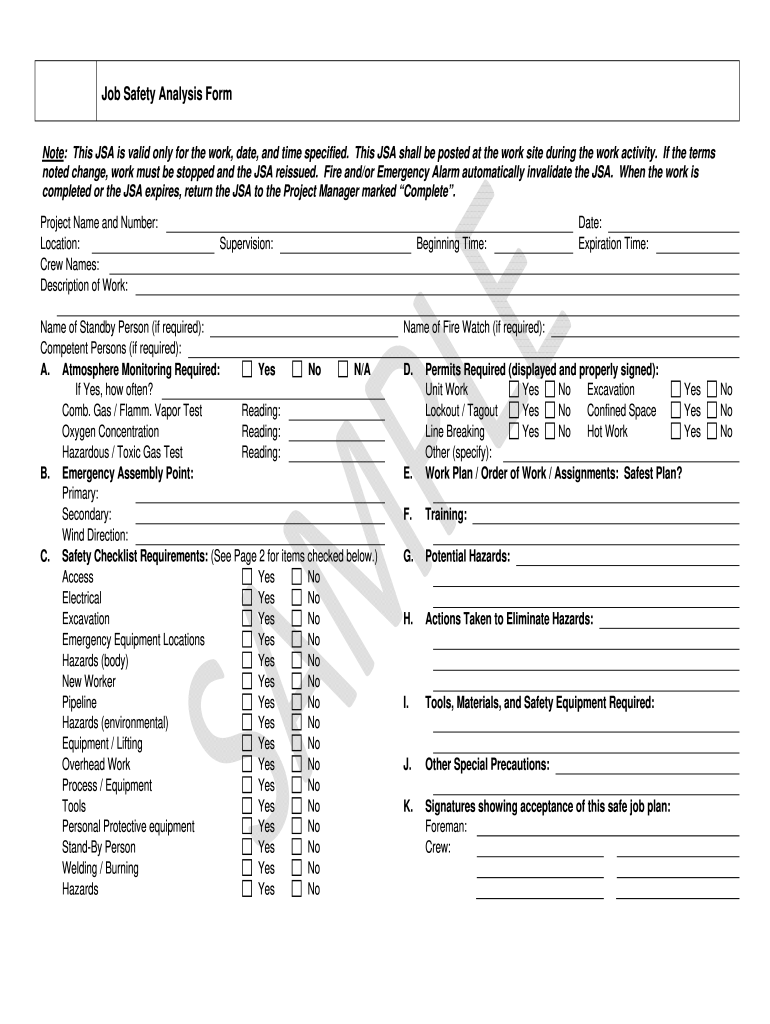
Filling out the Oilfield Job Safety Analysis (JSA) online is an essential step in ensuring safety during oilfield operations. This guide will provide you with clear instructions to effectively complete the form while adhering to safety protocols.
Follow the steps to complete the Oilfield Jsa online with ease.
- Press the ‘Get Form’ button to obtain the Oilfield Job Safety Analysis form and open it in your preferred online editor.
- Begin by filling in the project name and project number in the designated fields. Ensure this information is accurate and current.
- Enter the location where the work will take place. This should reflect the precise area to maintain clarity and safety.
- List the names of all crew members involved in the project. This ensures accountability and safety onsite.
- Provide a detailed description of the work to be performed. This helps in understanding the context and specific hazards associated with the tasks.
- Designate the supervisor overseeing the work. Include their full name to enhance identification and responsibility.
- If a standby person is required, enter their name in the specified field. Also include names of any competent persons as necessary.
- Indicate whether atmosphere monitoring is required. If yes, specify the frequency of testing and enter the readings for combustible gas, oxygen concentration, and any hazardous or toxic gas tests conducted.
- Specify the primary and secondary emergency assembly points. Include the prevailing wind direction to help with situational awareness.
- Complete the safety checklist requirements by indicating 'yes' or 'no' for each item listed. This includes checks for access, electrical hazards, excavation, and more.
- Fill in the beginning time, date, and expiration time for the JSA. This ensures the document is valid for the duration of the plan.
- If a fire watch is required, please provide their name in the corresponding field.
- List any permits required for the work to commence, ensuring they are correctly displayed and signed.
- Document the work plan, order of work, and assignments, ensuring to highlight the safest plan of action.
- Outline any training provided, potential hazards, actions taken to eliminate those hazards, and the required tools, materials, and safety equipment.
- Detail any other special precautions that should be noted to ensure safety during activities.
- Finally, the form must be signed by the foreman and crew members to indicate acceptance of the safe job plan.
- After completing the form, save your changes to secure the data, then download, print, or share the document as required.
Get started on completing your Oilfield Jsa online today to enhance your workplace safety protocol.
Experience a faster way to fill out and sign forms on the web. Access the most extensive library of templates available.
Related content
The JSA is a very effective means of helping reduce incidents, accidents, and injuries in...
JSA is a systematic procedure that breaks each job/task into key training sequences...
Mar 31, 1995 — Services Arrangement ("JSA") on September 1, 1995, subject to the...
Get answers to your most pressing questions about US Legal Forms API.
How many steps are in JSA?
An Oilfield JSA typically has five essential steps. Each step ensures that all potential hazards associated with a job task are identified and addressed. This systematic approach leads to safer working conditions and reduces the likelihood of accidents, benefiting both workers and employers.
What are the 5 steps of a risk assessment order?
The five steps of a risk assessment order include identifying hazards, deciding who might be harmed and how, evaluating the risks and deciding on precautions, recording your findings, and reviewing your assessment. Following these steps helps mitigate risks in Oilfield operations. A thorough risk assessment is essential for effective safety management.
What are the 5 steps of JSA?
The five steps of JSA are similar to those of safety management and include identifying the job, assessing the risks involved, determining the control measures, implementing those measures, and reviewing the process. Each step is crucial for ensuring worker safety in the Oilfield. This process allows for proactive management of any hazards that may arise during the job.
What are the 5 steps of safety?
The five steps of safety generally include identifying hazards, assessing risks, controlling risks, training workers, and continuously reviewing and improving safety practices. By adhering to these steps, teams can foster a safe working environment in the Oilfield. Consistent evaluation and training ensure that everyone is prepared to handle potential hazards.
What is JSA in oil and gas?
In the oil and gas industry, JSA stands for Job Safety Analysis, a systematic process used to identify hazards associated with specific job tasks. The primary goal is to enhance safety and reduce the likelihood of accidents. It involves collaboration among team members to ensure everyone is aware of potential risks and safety procedures.
What is JSA level 1 and 2?
JSA levels 1 and 2 refer to different degrees of risk assessment in the context of an Oilfield JSA. Level 1 involves a basic risk assessment of simpler tasks, while Level 2 entails a more detailed analysis of complex tasks that could pose higher risks. Understanding these levels helps teams apply the appropriate safety measures for their projects.
What is the highest paying job in Oilfield?
The highest paying job in the Oilfield typically belongs to Petroleum Engineers, who design and develop methods for extracting oil and gas from deposits below the earth's surface. Their expertise leads to substantial earnings, often exceeding six figures annually, depending on experience and location. Other high-paying roles include drill operators and production managers, which also contribute significantly to project success.
What are the 5 steps of a JSA?
The five steps of an Oilfield JSA include identifying the job that needs to be performed, assessing the hazards associated with that job, determining the appropriate safety measures, implementing those measures, and then monitoring the effectiveness of the safety procedures. By following these steps, workers can ensure a safer work environment. A structured approach helps in minimizing risks, leading to a more productive workplace.
How to properly fill out a JSA?
To properly fill out an Oilfield JSA, start by clearly defining the job and listing all potential hazards. Engage your team in discussing control measures for each identified risk. Beside each hazard, document the necessary precautions and ensure all team members sign off on the JSA. Utilizing a dedicated platform like USLegalForms can simplify the documentation process and help maintain compliance.
What does a JSA consist of?
An Oilfield JSA typically consists of a detailed description of the job, the identification of hazards, risk assessments, control measures, and documentation for future reference. Each element plays a significant role in ensuring that team members understand the risks involved. Accurate documentation is especially important for accountability and compliance. A thorough JSA fosters a safer working environment for everyone.
Use professional pre-built templates to fill in and sign documents online faster. Get access to thousands of forms.
If you believe that this page should be taken down, please follow our DMCA take down process here.