No If YES, please explain. NUTRITION Are there any concerns about your child s eating, general nutrition or growth? If YES, please explain. o Yes o No GENERAL HEALTH CONCERNS Is there anything about your child s health (special equipment, allergies, other mental or physical information) that the team should know about to better plan and provide services to your ch.

How it works
  • Open form

    Open form follow the instructions

  • Easily sign form

    Easily sign the form with your finger

  • Share form

    Send filled & signed form or save

How to fill out the Individualized Family Service Plan online

The Individualized Family Service Plan (IFSP) is a crucial document designed to address the needs of children with disabilities and their families. This guide provides clear, step-by-step instructions on how to fill out the IFSP online, ensuring that you can navigate the process with confidence.

Follow the steps to complete the IFSP efficiently.

  1. Click ‘Get Form’ button to obtain the form and open it in the editor.
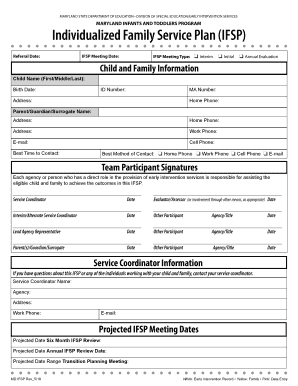
  2. Start by entering the referral date, IFSP meeting date, and meeting type (Interim, Initial, or Annual Evaluation) at the top of the form. Ensure these dates are accurate as they are crucial for tracking the timeline of services.
  3. Fill in the Child and Family Information section with complete details including the child's name, date of birth, ID number, and address. Additionally, provide information for the parent or guardian, including contact numbers and preferred contact methods.
  4. In the Team Participant Signatures section, list all individuals and agencies involved in providing early intervention services. Ensure each participant signs and dates the form to confirm their involvement.
  5. Complete Part I, which covers Information About My Child’s Development. This includes sections for health information, present levels of development, and eligibility for early intervention services. Provide thorough responses to ensure an accurate assessment is made.
  6. Proceed to Part II, where you will detail your family's concerns, priorities, and resources. This will inform the development of tailored intervention strategies and outcomes.
  7. In Part III, summarize your child's strengths and needs, drawing from observations and assessments. This section informs the service planning process and aims to enhance developmental outcomes.
  8. Detail all early intervention services required in Part IV. Specify the type of service, frequency, setting, and provider information, ensuring all necessary details are captured.
  9. For transition information, complete Part VII, outlining plans as your child approaches age three. Include notes regarding the transition planning meeting and community service referrals.
  10. Finally, review all entries for accuracy before saving changes. You can download, print, or share the completed form as needed to maintain a record and share with relevant stakeholders.

Complete your IFSP online today to ensure your child receives the necessary early intervention services.

Get form

Experience a faster way to fill out and sign forms on the web. Access the most extensive library of templates available.

Related content

Individualized Family Service Plans (IFSPs) Tips

May 27, 2025 — The Individualized Family Service Plan (IFSP) is a written plan created...

Learn more
Individualized Family Service Plan

An IFSP is a written document outlining early intervention services for children with...

Learn more
Policy Guidelines

The case management plan is called an individualized family services plan in early...

Learn more
Questions & Answers

Get answers to your most pressing questions about US Legal Forms API.

Contact support

Who is most likely to have an Individualized Family Service Plan?

Typically, infants and toddlers with developmental delays or disabilities are most likely to have an Individualized Family Service Plan. These plans support families in promoting their child’s growth and development during critical early years. Families seeking tailored assistance can benefit greatly from an IFSP, as it addresses specific needs and fosters collaboration among various service providers. Platforms like uslegalforms can assist families in navigating the creation of their IFSP.

An Individualized Family Service Plan (IFSP) is designed for young children, focusing on the family's needs and developmental goals. In contrast, an Individualized Education Program (IEP) is tailored for school-age children and emphasizes educational goals. While both plans aim to support the child's development, the IFSP addresses broader family dynamics, while the IEP concentrates on specialized educational services. Understanding these differences can help you choose the right approach for your child.

Creating an Individualized Family Service Plan involves collaborating with your child's care team to identify their specific needs. Begin by gathering information about your child's strengths and areas that need support. Next, schedule a meeting to discuss goals, strategies, and resources tailored to your family’s situation. Utilizing platforms like uslegalforms can help streamline this process and provide the necessary documentation.

The difference between an IEP and an Individualized Family Service Plan lies in their intended goals and age range. An IEP is primarily focused on the educational needs of children aged three to twenty-one, emphasizing academic and related services. In comparison, an IFSP is geared towards supporting the overall development of children from birth to three years, addressing family needs and developmental milestones. Knowing these differences can guide you in seeking the appropriate support for your child's journey.

An Individualized Family Service Plan is typically written by a service coordinator in collaboration with the child's parents and multidisciplinary team members. Parents play a crucial role in shaping the plan, ensuring it reflects their family's specific needs. This cooperation ensures the IFSP is personalized and relevant. Having clear guidance from experts at US Legal Forms can also help simplify this writing process, making it more effective.

An IFSP is developed after a comprehensive evaluation of the child and family is completed. This collaborative process involves discussion among parents, service coordinators, and professionals to identify each child's unique needs. The plan is not static; it is regularly reviewed and updated based on the child’s progress and changing circumstances. This flexible approach ensures the family receives ongoing support where it matters most.

To create an Individualized Family Service Plan, start by gathering information about your child's developmental status and your family's priorities. Engaging with early intervention professionals is crucial, as they guide you through the process and assist in drafting the plan. It's important to ensure that all relevant team members participate to address diverse needs effectively. Using platforms like US Legal Forms can help streamline the creation process and ensure all legal aspects are covered.

An Individualized Family Service Plan is developed through a collaborative process involving parents, service providers, and other professionals. Initial assessments of the child's strengths and needs inform the planning process, ensuring the plan is tailored to the family’s unique situation. Regular meetings allow for adjustments as needed, fostering a supportive environment that promotes growth. This teamwork aims to create the best possible outcomes for your child.

The main difference between an Individualized Education Program (IEP) and an Individualized Family Service Plan (IFSP) is the age group they serve and their focus. An IEP targets children aged three to twenty-one and centers on educational goals within a school setting. In contrast, an IFSP focuses on children from birth to age three, emphasizing the family’s role and supporting developmental needs. Understanding these distinctions helps in choosing the right support for your child.

An Individualized Family Service Plan (IFSP) requires specific information including the child's present levels of development, family priorities, and the specific services needed to support the child's growth. It also outlines measurable outcomes and timelines for achieving these goals. The plan should be reviewed regularly to adapt to the child's and family's evolving needs. This ensures that everyone is aligned and working towards common objectives.

Get This Form Now!

Use professional pre-built templates to fill in and sign documents online faster. Get access to thousands of forms.

If you believe that this page should be taken down, please follow our DMCA take down process here.

Get Individualized Family Service Plan