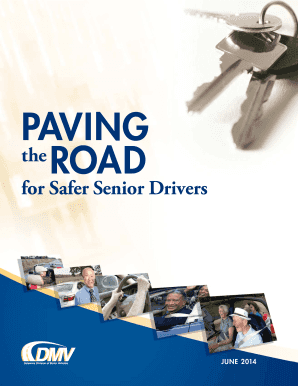
group of partners of state and private agencies, worked together and designed this guide. As the number of older drivers across the United States increases, Delaware boasts the fastest growing older population in the country. Studies tell us that experienced older drivers are less likely to speed or drink-and-drive and more likely to wear safety belts, but also are more likely to be hurt in a crash. This guide provides helpful information and some steps you can take to ensure you are comfortabl.
Loading
Open form follow the instructions
Easily sign the form with your finger
Send filled & signed form or save
How to fill out the DE Paving the Road for Safer Senior Drivers online
This guide provides a clear and comprehensive overview of the DE Paving the Road for Safer Senior Drivers document, ensuring you can confidently fill it out online. Whether you are a senior driver or someone assisting a loved one, this guide will help you navigate through each section efficiently.
Follow the steps to complete the online form effectively.
- Press the ‘Get Form’ button to access the DE Paving the Road for Safer Senior Drivers form, enabling you to fill it out online.
- Begin by providing your personal information in the designated fields, including your name, address, and contact information. Ensure that all details are accurate to avoid any delays.
- Review the section regarding driver license information, ensuring you provide any necessary details regarding your Delaware driver license, including its status and renewal date.
- Proceed to fill out the vehicle registration part if applicable. Enter relevant information about your vehicle, including the make, model, and year.
- If you require handicap plates or placards, complete that section by answering the necessary eligibility questions and providing any required medical information.
- Follow the prompts for the Next of Kin Registry, ensuring that emergency contacts are updated and accurate.
- Read through the safety tips and laws outlined in the document and acknowledge your understanding if required.
- Once you have completed all sections, review your entries for accuracy before saving your changes. You can then download, print, or share the completed form as needed.
Complete your forms online to ensure safer driving for our senior community!
Experience a faster way to fill out and sign forms on the web. Access the most extensive library of templates available.
Related content
by B Dworsky · 2007 — Older Delawareans, whether as a passenger or a driver, were...
by KH Lococo · 2017 — Kathy Sifrit was the NHTSA Task Order Manager on this project...
Get answers to your most pressing questions about US Legal Forms API.
How do you know when a senior should stop driving?
Recognizing when a senior should stop driving can be challenging. Signs may include difficulty with vision, delayed reactions, and accidents. DE Paving the Road for Safer Senior Drivers suggests regular assessments and open communication to address these concerns, ensuring both safety and dignity for senior drivers.
Why should it be illegal to drive over the age of 80?
Arguments for making driving illegal beyond the age of 80 often center on age-related declines in reflexes and cognition. However, a blanket rule might overlook individuals who are still capable drivers. DE Paving the Road for Safer Senior Drivers promotes a more balanced approach by focusing on individual assessments rather than age alone.
What are the safe driving tips for seniors?
Safe driving tips for seniors include regular health check-ups, minimizing distractions, and driving during daylight hours. Additionally, familiarizing oneself with the vehicle's features and practicing defensive driving can enhance safety. DE Paving the Road for Safer Senior Drivers offers comprehensive resources to help seniors stay safe on the road.
Should 90 year olds be able to drive?
Whether 90-year-olds should drive depends on individual health and driving skills. If their physical or cognitive abilities decline, it may not be safe for them to continue driving. DE Paving the Road for Safer Senior Drivers advocates for personalized assessments to determine the best option for older drivers and their families.
At what age should most seniors stop driving?
There is no specific age when all seniors should stop driving, but many experts suggest reevaluating driving skills after the age of 75. Regular assessments can help provide clarity on whether it remains safe to drive. DE Paving the Road for Safer Senior Drivers encourages proactive discussions on this topic to ensure safety for everyone on the road.
How do you legally stop an elderly person from driving?
Legally stopping an elderly person from driving can involve a formal evaluation by a medical professional and, if necessary, reporting to the local Department of Motor Vehicles. Family members can also discuss their concerns with the individual to encourage safer alternatives. DE Paving the Road for Safer Senior Drivers provides resources and guidance to help families navigate this sensitive issue.
Is it safe for 90 year olds to drive?
Driving safety for 90-year-olds largely depends on their physical and mental health. A person’s ability to respond to road conditions, recognize hazards, and make quick decisions can greatly impact safety. DE Paving the Road for Safer Senior Drivers highlights the need for thorough evaluations and discussions about driving capability as one ages.
At what age do most seniors give up driving?
Most seniors tend to give up driving around the age of 75, although this can vary significantly among individuals. Factors such as health, mobility, and personal circumstances often play a role in this decision. DE Paving the Road for Safer Senior Drivers emphasizes the importance of assessing each driver's capabilities rather than relying solely on age.
What percent of 90 year olds still drive?
Approximately 25% of 90-year-olds continue to drive, but this figure varies across different regions. Many factors influence this statistic, including health conditions, vehicle accessibility, and community support. DE Paving the Road for Safer Senior Drivers underscores the significance of understanding individual circumstances in making driving decisions. Encouragement from family and friends can support continued mobility for seniors.
What is the cognitive driving test for seniors?
The cognitive driving test for seniors assesses critical cognitive functions affecting driving competence. This examination helps evaluate attention, reaction time, and judgment. DE Paving the Road for Safer Senior Drivers highlights the importance of being aware of one's cognitive abilities. Taking this test can provide clarity on whether to continue driving.
Use professional pre-built templates to fill in and sign documents online faster. Get access to thousands of forms.
If you believe that this page should be taken down, please follow our DMCA take down process here.
This form is available in several versions. Select the version you need from the drop-down list below.