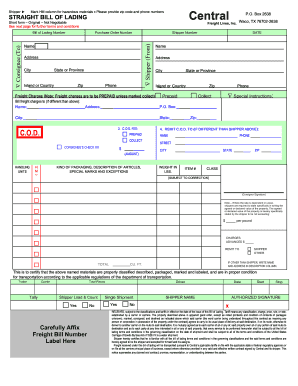
Get Central Freight Lines Straight Bill Of Lading
How it works
-

Open form follow the instructions
-

Easily sign the form with your finger
-

Send filled & signed form or save
How to fill out the Central Freight Lines Straight Bill of Lading online
Filling out the Central Freight Lines Straight Bill of Lading online is a straightforward process that ensures the safe transport of goods. This guide will provide you with clear and concise instructions to help you complete the form accurately and efficiently.
Follow the steps to complete the online form successfully
- Click ‘Get Form’ button to access the Central Freight Lines Straight Bill of Lading and open it in your preferred digital editor.
- Fill in the shipper's information, including name, address, state or province, country, zip code, and phone number. Ensure all information is accurate for effective communication.
- If applicable, specify freight charges. Remember that freight charges should typically be prepaid unless marked as collect. Include the billing name and address if different from the shipper.
- Indicate if the shipment is a cash on delivery (C.O.D.) shipment by marking 'C.O.D.' in the designated box. Select the payment method — cashier's check only or consignee's check allowed.
- Enter the C.O.D. fee amount along with any special instructions related to the shipment.
- Provide information on the carrier, including the bill of lading number, shipper and consignee details, packaging type, and description of the articles being shipped.
- Declare the weight of the shipment and any other necessary information regarding handling, including special instructions related to hazardous materials.
- Have the consignor sign in the designated area to certify that they are familiar with the terms and conditions and that the shipment is loaded and marked properly.
- Review all filled sections for accuracy. Once confirmed, save your changes, and proceed to download, print, or share the completed form as needed.
Complete your form online today for a seamless shipping experience.
A negotiable bill of lading to order allows the shipper or holder to transfer ownership of the goods by endorsing the document. This means it can be sold or transferred multiple times during transit. This flexibility is particularly useful in trade, as it enables transactions without physical delivery. Understanding how this contrasts with the Central Freight Lines Straight Bill of Lading is crucial for anyone involved in shipping.