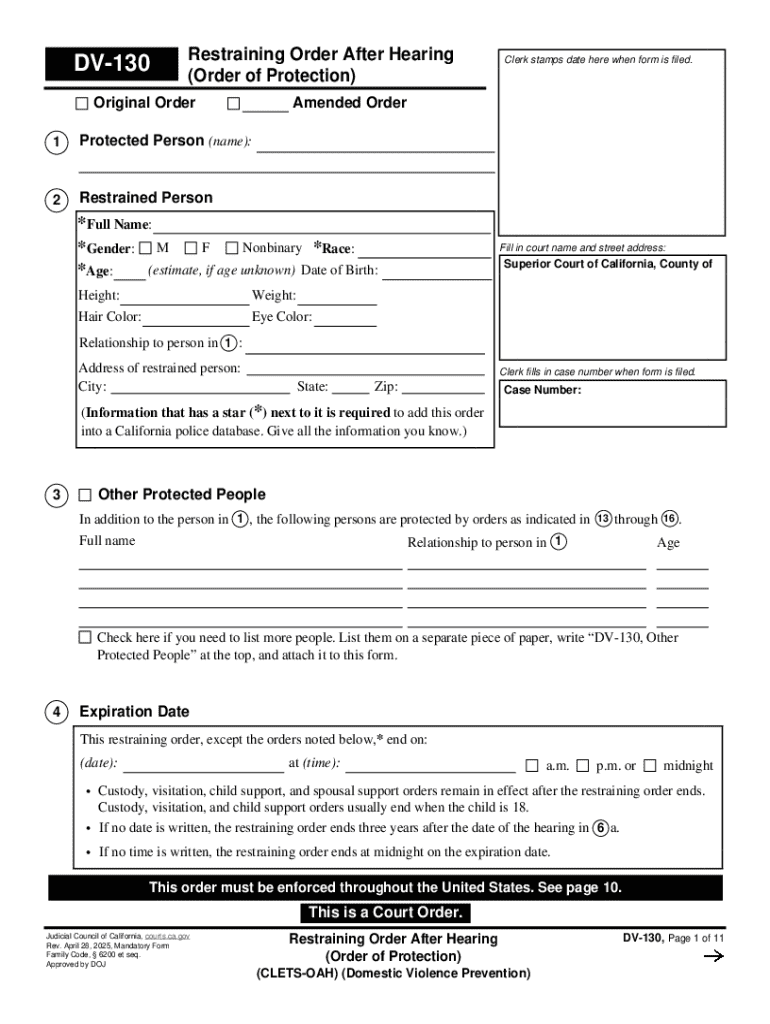
F Nonbinary *Race: *Gender: M (estimate, if age unknown) Date of Birth: *Age: Height: Weight: Hair Color: Eye Color: Fill in court name and street address: Superior Court of California, County of Relationship to person in 1 : Address of restrained person: City: Clerk fills in case number when form is filed. State: Zip: Case Number: (Information that has a star (*) next to it is required to add this order into a California police database. Give all the information you know.) 3 Other.
Loading

Open form follow the instructions

Easily sign the form with your finger

Send filled & signed form or save
How to fill out the CA DV-130 online
The CA DV-130 form, known as the Restraining Order After Hearing, is essential for individuals seeking protection from abusive situations. This comprehensive guide will walk you through each component of the form to ensure you can complete it accurately and effectively.
Follow the steps to fill out the CA DV-130 with ease.
- Click ‘Get Form’ button to obtain the form and open it in the editor.
- Begin by entering the name of the protected person in section 1. Ensure you provide accurate details to reflect the situation.
- In section 2, provide the full name of the restrained person, along with their gender, date of birth, and physical descriptions such as race, height, weight, hair color, and eye color.
- Fill in the court name and street address in the provided section to specify where the order is being filed.
- List any additional protected people in section 3, including their relationship to the initial protected person and their ages. If needed, create an attachment for additional names.
- In section 4, indicate the expiration date and time of the restraining order. If you do not specify a date, the order will last for three years.
- Proceed to section 5 to schedule any future court hearings that may be required for reviewing the case.
- In section 6, record the details of the hearing, including the date and the name of the judicial officer who presided over it.
- Complete sections 7 through 31 by following the instructions provided in the form regarding the specific orders requested by the court.
- Lastly, ensure you save your changes and download or print the completed form as needed. You may also share it with relevant parties involved.
Complete your CA DV-130 form online today for a smoother process.
Experience a faster way to fill out and sign forms on the web. Access the most extensive library of templates available.
Related content
by JEB Myers · 2014 · Cited by 5 — Form DV-130 (2014), available at...
HEARING (ORDER OF PROTECTION) (DV-130). This form should be filled out prior to the...
I was served with form DV-100, DV-109, or. DV-110. What does this mean? Someone has asked...
Get answers to your most pressing questions about US Legal Forms API.
Do restraining orders expire in California?
Restraining orders in California can indeed expire, depending on the specific circumstances of each case. Generally, a temporary restraining order, including those using the CA DV-130 forms, lasts up to 21 days. If you seek a longer duration, a judge may grant a permanent restraining order, lasting up to five years. Always check the specific terms of your order for accurate expiration dates.
Can you verbally serve a restraining order in California?
In California, verbal service of a restraining order is not permissible. The law requires formal delivery of the CA DV-130 documents to ensure the recipient understands the order. Therefore, using a process server or another appropriate method for in-person service is necessary. This ensures compliance with legal requirements and protects everyone involved.
How to serve someone in a California restraining order?
Serving someone in a California restraining order involves collecting the correct CA DV-130 forms and organizing the delivery. Make sure a qualified individual, such as a process server or a friend, delivers the documents directly to the person in question. This ensures the recipient officially receives notice of the order. After completion, remember to file proof of service with the court to confirm it was properly served.
How do I serve someone in a restraining order in California?
To serve someone with a restraining order in California, you must deliver the documents in person, typically using a process server. The CA DV-130 forms provide detailed instructions for this process. It’s crucial that the server is someone who is not involved in the case, ensuring unbiased delivery. After service, ensure proper proof of service is filed with the court.
How to serve someone who is avoiding service in California?
Serving someone who is trying to avoid service in California requires a strategic approach. You can attempt to serve the individual at different times and locations, ensuring you document each attempt. If those efforts fail, you may consider using the CA DV-130 forms to request an alternative service method, such as posting the notice in a visible place. Additionally, consulting with a process server can help streamline this process.
How to drop a temporary restraining order in California?
To drop a temporary restraining order in California, you need to file a form requesting the termination with the court where the order was issued. It's essential to appear at the hearing, if required, to explain why you wish to withdraw the order. Filing the appropriate forms can often be straightforward, especially with support from legal services familiar with CA DV-130.
How to put a restraining order on someone in CA?
To put a restraining order on someone in California, you need to fill out forms like the CA DV-130 and submit them to the court. After filing, a court date will be scheduled, where you can present your case. It is crucial to prepare any evidence, such as texts or witness statements, before appearing in court. Legal assistance can help streamline this process.
What's the difference between a protective order and a restraining order in California?
In California, a protective order and a restraining order serve similar purposes, but there are differences. A protective order refers to broader legal protections that might be put in place for individuals who are facing harassment or threats. On the other hand, the CA DV-130 form applies particularly to domestic violence cases. Both options aim to keep individuals safe from harm.
On what grounds can you get a restraining order in California?
In California, you can get a restraining order on various grounds, including abuse, stalking, or threats to your safety. The CA DV-130 form specifically targets domestic violence situations. If you feel threatened or unsafe due to a relationship, the court can provide protection. Always consult legal resources to understand your specific situation.
How fast can you get a restraining order in California?
The speed of obtaining a restraining order in California can vary. In urgent situations, you can request a temporary restraining order, which can often be granted the same day you apply. After that, a more permanent order can be scheduled for a hearing, typically within a few weeks.
Use professional pre-built templates to fill in and sign documents online faster. Get access to thousands of forms.
If you believe that this page should be taken down, please follow our DMCA take down process here.