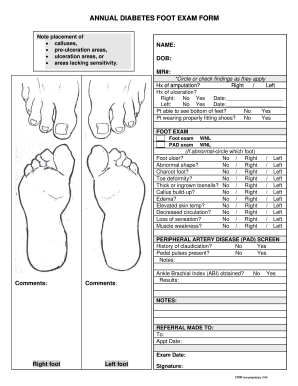
Title: Microsoft Word Annual Foot exam Int 73pg2.doc Author: dkinnunen Created Date: 2/27/2006 11:56:43 AM.
Open form follow the instructions
Easily sign the form with your finger
Send filled & signed form or save
How to fill out the UPHP Annual Diabetes Foot Exam Form online
Filling out the UPHP Annual Diabetes Foot Exam Form online is a vital step in managing a person's diabetes and maintaining foot health. This guide will provide clear, step-by-step instructions to help users complete the form accurately and effectively.
Follow the steps to complete the online form.
- Click ‘Get Form’ button to obtain the form and open it in the appropriate editing platform.
- Begin by entering the user's name, date of birth (DOB), and medical record number (MR#) in the designated fields.
- Indicate any history of amputation by specifying right or left, if applicable.
- Note the history of ulceration for both feet. For each foot, check 'No' or 'Yes' and provide the date of the ulceration if applicable.
- Assess whether the user is able to see the bottom of their feet and if they are wearing properly fitting shoes by selecting the appropriate 'Yes' or 'No' options.
- Complete the foot exam section by checking the relevant boxes for findings such as foot ulcers, abnormal shapes, or callus build-up for each foot.
- Proceed to the Peripheral Artery Disease (PAD) screen section, where users should indicate if there is a history of claudication and if pedal pulses are present.
- Fill in any notes or comments regarding the examination observations in the provided fields.
- Complete the Ankle Brachial Index (ABI) results section by marking 'Yes' or 'No' and entering the results if applicable.
- Indicate if a referral was made, including details about the appointment date and exam date.
- Finally, the user or examiner must sign the form to validate the entries.
- Once all fields are completed, users can save changes, download the form, print it, or share it as needed.
Complete the UPHP Annual Diabetes Foot Exam Form online today to support effective diabetes management.
Experience a faster way to fill out and sign forms on the web. Access the most extensive library of templates available.
Related content
Purpose of this Document: This document contains all of the model proposals that were...
This article explores the significance of diabetic foot exams, the methodologies involved...
Jan 1, 2025 — Diabetes: The NHSN SSI surveillance definition of diabetes indicates that...
Get answers to your most pressing questions about US Legal Forms API.
How often does Medicare cover diabetic foot care?
Medicare usually covers diabetic foot care if you meet certain criteria, including having any diabetes-related complications. Generally, patients can receive covered diabetic foot care services up to twice a year. Utilize the UPHP Annual Diabetes Foot Exam Form to keep track of your appointments and eligibility for Medicare coverage related to foot health.
What are the ADA guidelines for diabetic foot exams?
The American Diabetes Association (ADA) recommends that individuals with diabetes receive foot exams at least annually, or more frequently if they have a history of foot problems. The guidelines emphasize a comprehensive examination, including inspection of skin, nails, and circulation. Using the UPHP Annual Diabetes Foot Exam Form can help you adhere to these guidelines and document the exams effectively.
How do you bill for a diabetic foot exam?
Billing for a diabetic foot exam typically involves using specific codes that correspond to the services provided. Providers should document the patient's condition thoroughly to justify the exam and submit the correct billing codes. The UPHP Annual Diabetes Foot Exam Form can assist healthcare providers in this process, making it straightforward to ensure accurate billing.
What is the ICD-10 code for diabetic foot assessment?
The ICD-10 code for a diabetic foot assessment is E11.621, which specifically addresses diabetic foot ulcers. Knowing this code can aid healthcare providers in accurate documentation and billing. Make sure to utilize the UPHP Annual Diabetes Foot Exam Form to streamline the inclusion of relevant codes into your medical records.
How often do you need a diabetic foot exam?
It's important to have a diabetic foot exam at least once a year. For individuals with diabetes, regular assessments help in early detection and prevention of serious complications. The UPHP Annual Diabetes Foot Exam Form simplifies the scheduling of these vital checkups, ensuring you stay on top of your foot health.
How to do a diabetic foot examination?
To conduct a diabetic foot examination, start by thoroughly inspecting your feet for any cuts, blisters, or areas of redness. Look closely between your toes and the soles for any abnormalities. Additionally, using the UPHP Annual Diabetes Foot Exam Form helps track any findings or concerns from your self-exams. Regular self-checks combined with professional exams are crucial in keeping your feet healthy.
Where do you get a diabetic foot exam?
You can get a diabetic foot exam at your primary care physician’s office or a specialized podiatrist’s clinic. Many healthcare facilities offer these services, ensuring that your foot health is closely monitored. Additionally, accessing the UPHP Annual Diabetes Foot Exam Form makes it easy to document your exam history. Finding a suitable location for your exam is essential for maintaining your overall health.
How to complete a diabetic foot check?
Completing a diabetic foot check involves a systematic approach. Start with a visual examination of the feet, followed by checking circulation and sensation through touch. Utilize the UPHP Annual Diabetes Foot Exam Form to record observations, and ensure to assess for any risk factors that may warrant immediate attention or intervention.
What are three things you should never do to the feet of someone with diabetes?
It is crucial to never use sharp objects to remove calluses or corns from a diabetic patient's feet, as this can lead to cuts or infections. Avoid soaking the feet in hot water, as it may cause burns due to reduced sensitivity. Additionally, refrain from using tight or ill-fitting footwear, which can cause blisters or pressure sores, documenting any concerns with the UPHP Annual Diabetes Foot Exam Form.
How to do a foot assessment?
When conducting a foot assessment, start by visually inspecting both feet for any abnormalities, such as cuts, blisters, or discoloration. Next, gently palpate the feet to check for temperature differences, sensitivity, or swelling. Finally, document your findings using the UPHP Annual Diabetes Foot Exam Form to ensure a thorough record, facilitating any necessary follow-ups or referrals.
Use professional pre-built templates to fill in and sign documents online faster. Get access to thousands of forms.
If you believe that this page should be taken down, please follow our DMCA take down process here.