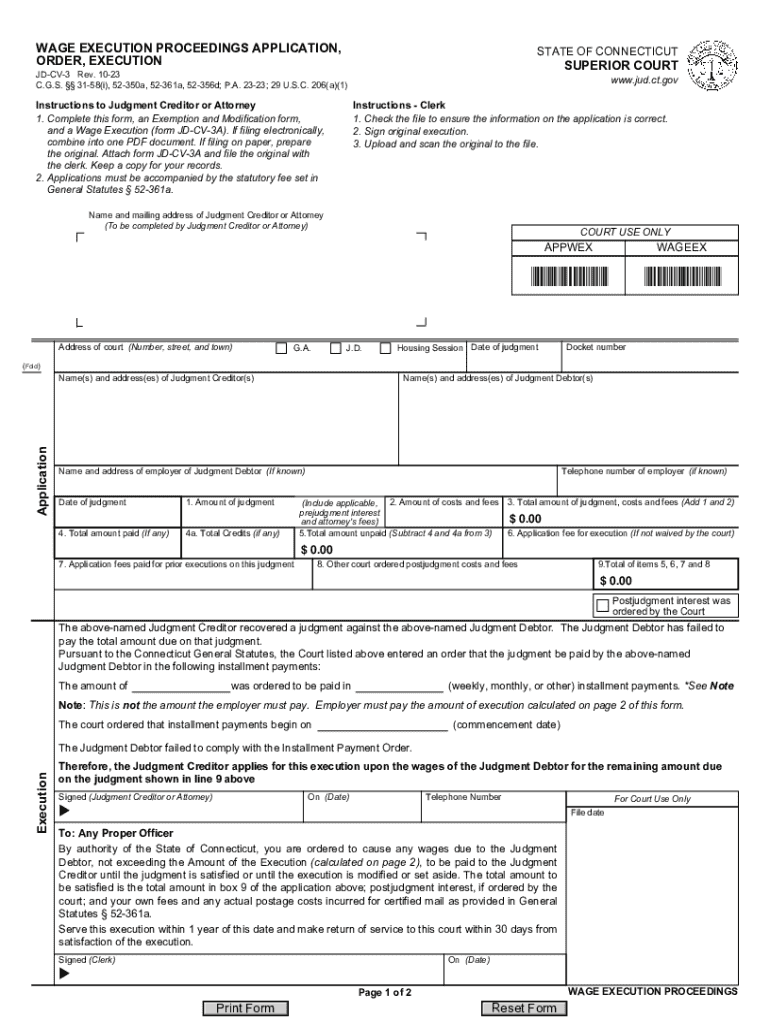
WAGE EXECUTION PROCEEDINGS APPLICATION, ORDER, EXECUTION STATE OF CONNECTICUT SUPERIOR COURT JD-CV-3 Rev. 10-23 C.G.S. 31-58(i), 52-350a, 52-361a, 52-356d; P.A. 23-23; 29 U.S.C. 206(a)(1) Instructions.
Loading

Open form follow the instructions

Easily sign the form with your finger

Send filled & signed form or save
How to fill out the CT JD-CV-3 online
The CT JD-CV-3 form is a critical document used in wage execution proceedings in Connecticut. This guide will provide you with step-by-step instructions on how to complete the form online, ensuring that you have all the necessary information to proceed with your application.
Follow the steps to fill out the CT JD-CV-3 online.
- Press the ‘Get Form’ button to obtain the form and open it in the editor.
- Begin by filling out the name and mailing address of the Judgment Creditor or Attorney at the top of the form. Ensure accuracy as this information is crucial for court correspondence.
- Next, enter the address of the court, including the number, street, and town. This should match the court where the application is being filed.
- Complete the Application section by providing the relevant details about the Judgment Creditor(s) and Judgment Debtor(s), including their names and addresses.
- In the Amount of Judgment section, indicate the total amount due, including costs and any fees. You will need to calculate and input the total amount of judgment, costs, and fees.
- Continue by filling in the amounts for any payments made, statutory fees, and other relevant financial details as required in subsequent lines.
- If there are applicable postjudgment interest amounts ordered by the court, make sure to include those calculations as part of the total being requested.
- Complete the Execution section by signing the form as either the Judgment Creditor or Attorney, along with the date it is submitted.
- Once all sections are filled out correctly, review the form to ensure all information is accurate and complete.
- Finally, save the changes, and you can choose to download, print, or share the completed form as necessary.
Start filling out your CT JD-CV-3 form online today to ensure timely processing of your wage execution application.
Experience a faster way to fill out and sign forms on the web. Access the most extensive library of templates available.
Related content
JD-CV-003, Wage Execution Proceedings, Application, Order, Execution, Rev. 10/23...
This is to certify that at a session of the Superior Court, within and for said Judicial...
TERMINATION OF COVERAGE: The PowerGard Protection Plan. Residential will terminate...
Get answers to your most pressing questions about US Legal Forms API.
How to write a letter to stop garnishment?
To write a letter to stop garnishment, begin by clearly stating your intent and reason for requesting the halt. Include relevant case information and refer to the CT JD-CV-3 in your letter. Providing detailed information and any supporting evidence can strengthen your letter and improve your chances of achieving a favorable outcome.
How to fill out a challenge to garnishment form?
Filling out a challenge to garnishment form requires you to provide accurate information regarding your case. Use the CT JD-CV-3 form, where you can explain your reasons for contesting the garnishment. Be sure to include any supporting documents to bolster your claim and ensure the court understands your position.
How do you freeze a garnishment?
Freezing a garnishment involves legally halting the garnishment process, often by filing a request with the court. This can usually be done by utilizing the CT JD-CV-3 form, which allows you to present your case to the judge. Taking this step can provide you time to resolve any disputes related to the garnishment.
How to stop a wage garnishment in CT?
To stop a wage garnishment in Connecticut, you can file a motion with the appropriate court. The CT JD-CV-3 form is specifically designed for such situations and can be an effective tool in disputing the garnishment. It is often wise to seek legal advice to better understand your rights and the best steps to take.
How do I write an objection letter for wage garnishment?
When writing an objection letter for wage garnishment, clearly state your reasons for opposing the garnishment. Include your personal information, the case number, and reference the CT JD-CV-3 form as part of your process. Ensuring that your letter is well-structured and contains all necessary details can help strengthen your objection.
What to do after a writ of garnishment?
After receiving a writ of garnishment, the first step is to review your options for responding. You may want to consult legal resources, and consider filing a challenge using the CT JD-CV-3 form if you believe the garnishment is unjust. It's important to act quickly to protect your rights and potentially stop the garnishment from proceeding.
How do you dissolve a writ of garnishment?
To dissolve a writ of garnishment, you typically need to file a motion with the court that issued the writ. This process often includes providing valid reasons or evidence to support your claim. Utilizing the CT JD-CV-3 form can guide you through this procedure, helping you explain why the writ should be lifted and reclaiming your financial peace.
Can you ignore a garnishee order?
Ignoring a garnishee order is not advisable. Doing so can lead to automatic deductions from your paycheck and potentially worsen your financial situation. Instead, consider using the CT JD-CV-3 to formally respond and challenge the order if necessary, allowing you to regain control over your wages.
What happens if you don't respond to a writ of garnishment?
If you do not respond to a writ of garnishment, the court may issue an order allowing your wages to be garnished without any further input from you. This means your employer will have to withhold a portion of your wages for the creditor. To prevent this situation, it is important to engage with the process and consider using tools like the CT JD-CV-3 form to voice your objections.
What is the best way to stop wage garnishment?
The best way to stop wage garnishment often involves filing a response or challenging the garnishment. You can use the CT JD-CV-3 form as part of this process. Consulting with a legal expert can help you understand your options and take the necessary steps to protect your income. Remember, taking action quickly is crucial to halt garnishment efficiently.
Use professional pre-built templates to fill in and sign documents online faster. Get access to thousands of forms.
If you believe that this page should be taken down, please follow our DMCA take down process here.