Loading
Get Canada Chk-300 - Nova Scotia 2019-2026
How it works
-

Open form follow the instructions
-

Easily sign the form with your finger
-

Send filled & signed form or save
How to use or fill out the Canada CHK-300 - Nova Scotia online
This guide provides a comprehensive overview of how to fill out the Canada CHK-300 - Nova Scotia form online. It is designed to support users in completing each section of the checklist accurately and efficiently.
Follow the steps to complete your checklist online.
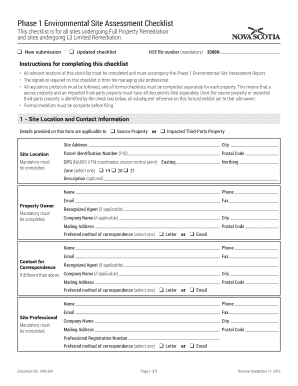
- Press the ‘Get Form’ button to access the form and open it in your editor.
- Begin by selecting whether you are submitting a new checklist or an updated version. This selection is crucial for tracking changes.
- Provide the mandatory NSE file number in the format 33000-xxxx. This number is essential for identifying the assessment.
- Fill out the site location and contact information section accurately. Indicate whether the property is a source property or impacted third-party property, and ensure all details such as address, city, and postal code are correct.
- Enter the Parcel Identification Number (PID), GPS coordinates (Easting and Northing), and select the appropriate zone from the options provided.
- Input the property owner's details, including name, phone number, email, and fax. This information is mandatory.
- If applicable, fill out the recognized agent's information. Include the company name and address, and indicate the preferred method of correspondence.
- Complete the site professional section with mandatory information such as name, phone number, email, and professional registration number.
- In the site assessment requirements section, ensure you have investigated all information as instructed. Mark 'Yes' on any supporting information provided and reference the necessary documents.
- Conduct a thorough site visit and capture comprehensive details about the location, including photographs, confirmation of land use, and any structures present. Document any findings in the designated sections.
- Interview relevant persons and document their connections to the property, stating reasons for any interviews not conducted.
- In the reporting section, ensure that all information from records, site visits, and interviews is summarized clearly, distinguishing factual information from opinions.
- Finish by completing the declaration section. The site professional must acknowledge the accuracy of the information provided by printing their name, signing, and including the professional registration number.
- Return the completed form along with any applicable documents to your local Nova Scotia Environment office. Users can locate their offices online.
Complete your documents online to ensure accurate submissions and compliance.
Building on wetlands in Nova Scotia is heavily regulated due to environmental protection laws. You generally need to obtain various permits and comply with guidelines to minimize ecological impact. Engaging with regulatory frameworks like Canada CHK-300 - Nova Scotia can help you understand the processes and requirements involved in such projects.