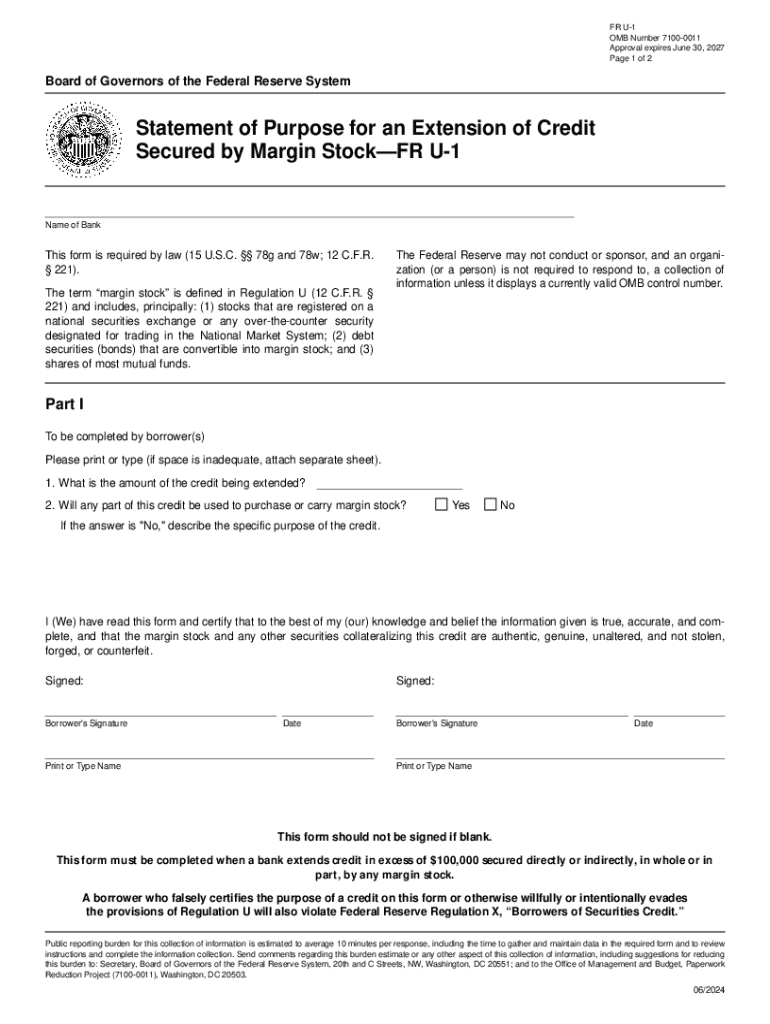
FR U1 OMB Number 71000011 Approval expires June 30, 2027 Page 1 of 2Board of Governors of the Federal Reserve SystemStatement of Purpose for an Extension of Credit Secured by Margin StockFR U1Name.

Open form follow the instructions

Easily sign the form with your finger

Send filled & signed form or save
How to fill out the FRS FR U-1 online
The FRS FR U-1 form is essential for borrowers requesting an extension of credit secured by margin stock. This guide will provide you with clear, step-by-step instructions to effectively complete the form online.
Follow the steps to fill out the FRS FR U-1 form online
- Click the ‘Get Form’ button to access the form and open it in an online editor.
- In Part I, provide the name of the bank and the total amount of credit being extended in the designated field.
- Indicate whether any portion of the credit will be used to purchase or carry margin stock by selecting 'Yes' or 'No'. If 'No', briefly describe the specific purpose of the credit.
- Certify the accuracy of the information provided by signing and printing your name, along with the date.
- For Part II, if the purpose of the credit is to purchase or carry margin securities, list the margin stock securing this credit along with details such as the number of shares, market price per share, and total market value per issue.
- If applicable, list any debt securities convertible into margin stock and provide the necessary details including principal amount, market price, and total market value per issue.
- Describe any additional collateral not classified as margin stock that is securing the credit.
- In Part III, a bank officer must sign the form, certifying their authorization and the details of the credit, including the signature, title, and date.
- Review all entered information for accuracy and completeness before concluding.
- Once completed, save the changes, and use options to download, print, or share the form as needed.
Complete your FRS FR U-1 form online today for a smooth credit extension process.
Experience a faster way to fill out and sign forms on the web. Access the most extensive library of templates available.
Related content
Aug 10, 2017 — The bank lender must obtain from the borrower, and complete, a purpose...
Jan 17, 2025 — Use the Fedex.com site to login to your FedEx account, get your tracking...
by FRS MODEL — The FRS generates a stable 10 MHz output frequency from a. 20 MHz Voltage...
Get answers to your most pressing questions about US Legal Forms API.
What is a purpose credit margin stock?
Purpose credit margin stock refers to securities that can be leveraged for borrowing, reflecting their potential value in financing activities. Under the FRS FR U-1 framework, margin stocks must meet specific criteria to qualify for purpose credit. By understanding these elements, brokers and dealers can effectively manage their margin accounts and enhance their investment strategies.
What rules apply when extending purpose credit to brokers and dealers?
When extending purpose credit to brokers and dealers, strict rules must be followed to ensure compliance with FRS FR U-1 requirements. These include verifying the purpose of the credit and ensuring it aligns with market regulations. Adhering to these rules protects all parties involved and promotes responsible lending practices.
What is an example of purpose credit?
An example of purpose credit refers to the loans or financial assistance provided for a specific intention, such as purchasing a house or funding education. In the context of FRS FR U-1, purpose credit allows individuals and institutions to understand their borrowing responsibilities and comply with regulations. This facilitates transparent financial transactions, making it easier for brokers and dealers to assess risk and manage their portfolios.
Which regulation governs the extension of credit by broker-dealers?
The extension of credit by broker-dealers is governed by Regulation T and Regulation U, which impose rules on how credit can be extended for purchasing or carrying securities. These regulations exist to protect both the financial system and consumers by ensuring responsible lending practices. Broker-dealers must remain compliant with these regulations to maintain their operating privileges. By understanding FRS FR U-1, broker-dealers can better manage their lending practices and regulatory compliance.
What is the maximum amount of credit a lender will extend to a customer called?
The maximum amount of credit a lender extends to a customer is known as the credit limit. This limit is determined based on various factors, including the customer's creditworthiness and the value of any collateral provided. Understanding this concept is critical for both borrowers and lenders, as it shapes the terms of their financial relationship. By leveraging insights about FRS FR U-1, lenders can set appropriate credit limits that align with regulatory standards.
What is the difference between Reg T and Reg U loans?
The primary difference between Regulation T and Regulation U loans lies in their application scope. Regulation T governs credit extension for purchasing securities, while Regulation U oversees credit backed by margin stocks. Each regulation has its own set of requirements and limits, which impacts lending practices. Familiarity with FRS FR U-1 allows lenders to distinguish between these regulations effectively, ensuring compliance in their lending operations.
What is a margin stock as defined in Regulation U?
A margin stock is defined by Regulation U as any equity security registered on a national exchange or over-the-counter market that meets specified criteria. These stocks are subject to certain restrictions when it comes to borrowing for investment purposes. The classification influences how much credit can be extended against them. For those dealing with margin stocks, knowledge of FRS FR U-1 is essential for proper compliance and risk management.
Who does Regulation U apply to?
Regulation U applies primarily to lenders who extend credit collateralized by margin stocks. This includes banks and broker-dealers providing loans against these types of securities. The aim is to regulate the credit that these institutions can extend, ensuring that they operate within established guidelines. Understanding FRS FR U-1 can help these financial institutions navigate their responsibilities under Regulation U.
What are the regulation O requirements regarding extensions of credit to insiders?
Regulation O involves specific requirements that govern how banks extend credit to insiders, such as executive officers and directors. These regulations aim to prevent conflicts of interest and possible lending abuses. Institutions must adhere to caps on the total amount of credit extended to insiders, ensuring transparency and fairness in the lending process. By understanding the implications of FRS FR U-1, banks can maintain compliance and trust with their stakeholders.
What are the rules for margin stocks?
The rules for margin stocks include restrictions under Regulation U, which dictate how much credit can be extended based on the stock's value. These rules are essential for safeguarding the integrity of financial markets. Knowing how to navigate the FRS FR U-1 can help investors and brokers maintain compliance and protect their interests. On our legal forms platform, you can find further assistance and tools for understanding these regulations.
Use professional pre-built templates to fill in and sign documents online faster. Get access to thousands of forms.
If you believe that this page should be taken down, please follow our DMCA take down process here.