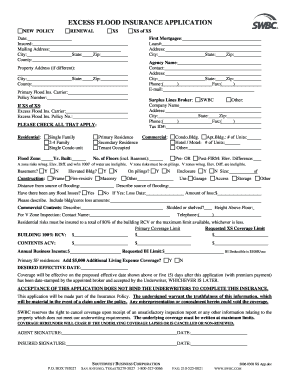
: City: Phone:( ) E-mail: Property Address (if different): State: City: County: Zip: Primary Flood Ins. Carrier: Policy Number: PLEASE CHECK ALL THAT APPLY: Single Family 2-4 Family Single Condo unit Primary Residence Commercial: Secondary Residence Tenant Occupied Yr. Built: Flood Zone: Zip: State: Zip: Fax:( ) SWBC Surplus Lines Broker: Company Name Address: City: Phone:( ) Tax ID#: If XS of XS: Excess Flood Ins. Carrier: Excess Flood Ins. Policy No.: Residential: State: State:.

How it works
  • Open form

    Open form follow the instructions

  • Easily sign form

    Easily sign the form with your finger

  • Share form

    Send filled & signed form or save

How to fill out the SWBC Excess Flood Insurance Application online

The SWBC Excess Flood Insurance Application is essential for obtaining flood insurance coverage beyond primary limits. This guide provides clear, step-by-step instructions to help you complete the application efficiently and accurately online.

Follow the steps to complete the application with ease

  1. Press the ‘Get Form’ button to obtain the application form and open it in your chosen editor.
  2. Fill in the date of application. Ensure that you accurately record the date on which you are completing the form.
  3. Provide the insured's name and mailing address, including city, county, and state.
  4. Indicate information regarding the first mortgagee, including their name, loan number, address, city, and zip code.
  5. Complete the agency information, including the agency's name, contact person, address, city, phone number, and email.
  6. If the property address differs from the mailing address, input it in the designated fields along with the state, city, county, and zip code.
  7. List your primary flood insurance carrier along with your policy number.
  8. Check the applicable boxes under property types and occupancy status, including single-family, multi-family units, condos, primary residence, commercial properties, secondary residences, or tenant-occupied situations.
  9. Provide the year built and flood zone information for the property.
  10. Complete the section regarding the SWBC surplus lines broker, including the company name, address, city, phone number, and tax ID number.
  11. If applicable, provide details about excess flood insurance coverage, including the name of the excess flood insurance carrier and the policy number.
  12. Specify the construction type of the building and details pertaining to its elevation, including whether it has a basement.
  13. Detail any previous flood losses, including loss date and amount. If applicable, provide a description of the source of flooding and any commercial contents affected.
  14. Indicate the requested excess coverage limit as well as any primary coverage limits, including building replacement cost value and contents actual cash value.
  15. Select whether you desire additional living expense coverage and state the desired effective date for the coverage.
  16. Sign and date the form at the bottom. Ensure both the agent and the insured provide signatures.
  17. Once all fields are completed, save your changes. You can then download, print, or share the completed application as needed.

Complete your SWBC Excess Flood Insurance Application online today to ensure your property is protected.

Get form

Experience a faster way to fill out and sign forms on the web. Access the most extensive library of templates available.

Related content

Case 2:05-cv-04182-SRD-JCW Document 19694 Filed...

SWBC acts as a general agent or “Coverholder” for the Underwriters who subscribed to...

Learn more
SWBC | Home

SWBC offers financial solutions for individuals, businesses, and financial institutions...

Learn more
Questions & Answers

Get answers to your most pressing questions about US Legal Forms API.

Contact support

What is better, NFIP or private flood insurance?

The choice between NFIP and private flood insurance depends on your specific needs and property risk. NFIP provides standardized coverage but may have lower limits, while private insurance can offer customization and potentially higher payouts. Evaluating your options through the SWBC Excess Flood Insurance Application can help you choose the best path for adequate flood protection.

Most standard flood insurance policies do not cover water damage from sewer backup or intentional flooding, as these are considered separate issues. Additionally, personal property such as valuables, cars, and landscaping may have limited or no coverage in certain policies. It's crucial to review your SWBC Excess Flood Insurance Application thoroughly to understand what is covered and explore options for additional protection.

Flood insurance typically refers to coverage provided by the NFIP, primarily covering basic flood damage. On the other hand, excess flood insurance covers losses that exceed the limits of standard policies, offering a safety net for higher-value properties. Using the SWBC Excess Flood Insurance Application, you can easily assess and increase your coverage levels to better protect your assets.

The two main types of flood insurance are the standard coverage offered by the National Flood Insurance Program (NFIP) and private flood insurance policies. While NFIP provides essential coverage, private insurers can offer more flexible options that adapt to individual needs. Exploring the SWBC Excess Flood Insurance Application can help you understand the advantages of both types.

An excess flood policy provides additional coverage beyond standard flood insurance limits. This type of policy is especially useful for property owners in high-risk flood areas, who need more protection than what the National Flood Insurance Program offers. You can receive tailored benefits by using the SWBC Excess Flood Insurance Application, ensuring comprehensive flood coverage.

To maximize your flood insurance claim, document all damage thoroughly with photos and notes. Be honest and detailed when providing information to your insurer. Utilize the SWBC Excess Flood Insurance Application to ensure you include all relevant details and necessary coverage, which can lead to better compensation.

To file an insurance claim for flooding, start by gathering all relevant information about the incident, including photos and documents of the damage. Contact your insurance provider to report the claim and fill out the necessary forms, such as the SWBC Excess Flood Insurance Application. Make sure to keep copies of all documentation you submit, as this helps streamline the process.

Filing a flood insurance claim involves several key steps. First, notify your insurance provider to begin the claims process. Next, fill out the necessary forms, providing detailed documentation and evidence of the damage. By making use of the resources offered through the SWBC Excess Flood Insurance Application, you can simplify the process and ensure your claim is handled efficiently.

Yes, you can buy excess flood insurance to protect your property against larger losses. The SWBC Excess Flood Insurance Application is designed for this purpose, offering additional coverage beyond your primary flood policy. Utilizing this resource can significantly enhance your financial security against flood damage.

Yes, you can obtain flood insurance coverage exceeding $250,000 by applying for excess flood insurance. The SWBC Excess Flood Insurance Application allows you to secure coverage limits based on your specific needs. This is beneficial for homeowners with properties that hold greater value or in flood-prone areas.

Get This Form Now!

Use professional pre-built templates to fill in and sign documents online faster. Get access to thousands of forms.

If you believe that this page should be taken down, please follow our DMCA take down process here.

Get SWBC Excess Flood Insurance Application