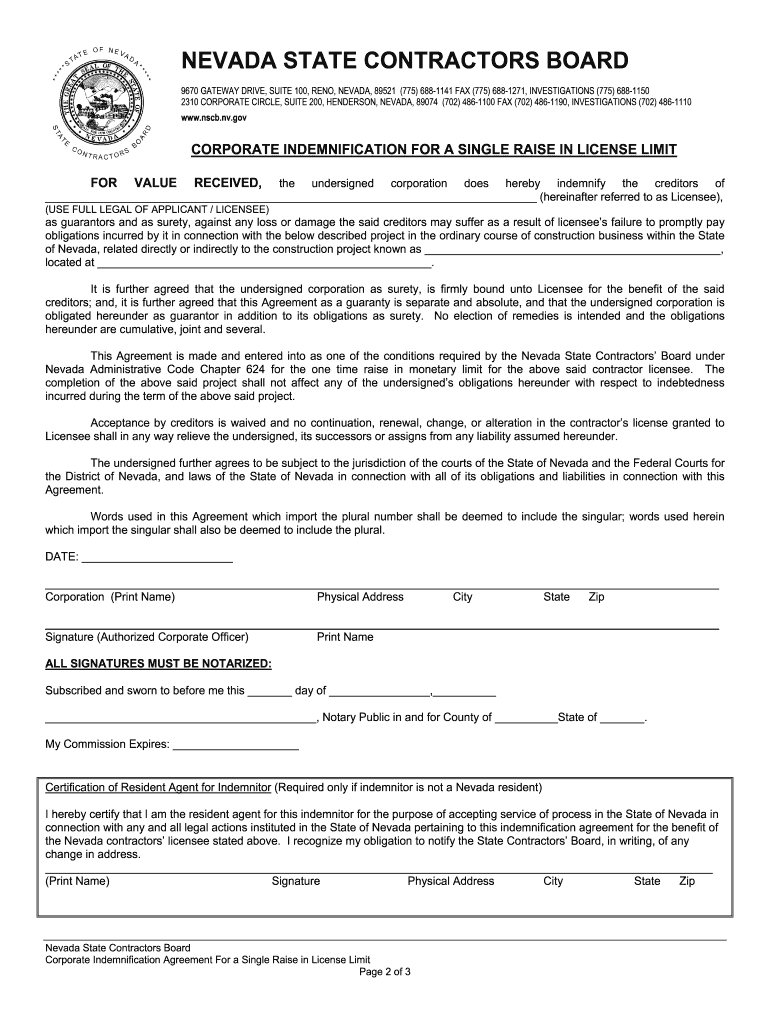
Ider the financial strength of an individual or entity in addition to the licensee when deciding whether or not to grant a limit increase for a single project. Indemnification is not required, however, it provides an option to an applicant who may not otherwise qualify for a one-time raise in limit for a single project. The agreement must be on a form prescribed by the board, and accompanied by financial documents as set forth below. 1. Indemnification Agreement: Provide a completed indemnificat.
Loading

Open form follow the instructions

Easily sign the form with your finger

Send filled & signed form or save
How to fill out the NV Indemnification Instructions and Requirements online
Filling out the NV indemnification instructions and requirements is essential for contractors seeking to increase their license limit in Nevada. This guide provides clear, step-by-step guidance to assist you in completing the form accurately and efficiently.
Follow the steps to complete your indemnification instructions and requirements.
- Click ‘Get Form’ button to obtain the form and open it in your preferred online document editor.
- Begin with the indemnification agreement section. Fill in the full legal name of the applicant/licensee where indicated.
- Provide the project details by describing the construction project and its location. Ensure accuracy, as this information is crucial for the indemnification.
- Complete the financial statement requirements based on your entity type, ensuring that all submissions include classified balance sheets and follow the guidelines for financial documentation.
- If applicable, gather the bank verification form. Fill in the necessary information regarding your bank and account as required for verification.
- Review the completed form for any missing information or errors. Make necessary corrections to ensure full compliance.
- Once reviewed, save your changes, and consider downloading or printing the form for your records. You may also share it as needed.
Complete your NV indemnification instructions and requirements online today to streamline your license limit increase application.
Experience a faster way to fill out and sign forms on the web. Access the most extensive library of templates available.
Related content
Risk Management has created a web-based insurance manual, “Insurance and Indemnification...
It is not necessary to have an indemnification clause in System contracts as such clauses...
Jun 8, 2020 — provides rules and regulations relating to, inter alia, Lemonade Insurance...
Get answers to your most pressing questions about US Legal Forms API.
What are the three types of indemnification?
The three types of indemnification typically include express indemnification, implied indemnification, and statutory indemnification. Express indemnification occurs when parties explicitly agree to indemnify one another in written form. Implied indemnification arises from the nature of the relationship or situation, while statutory indemnification stems from specific laws. Understanding these different types can help you navigate NV Indemnification Instructions and Requirements. Uslegalforms can assist in outlining the appropriate type for your situation.
What is the rule of indemnification?
The rule of indemnification essentially establishes that a party can seek compensation from another party for losses incurred due to the latter's actions or negligence. This rule applies broadly within tort and contract law. Familiarity with the rule of indemnification is important for applying NV Indemnification Instructions and Requirements effectively. Platforms like uslegalforms provide guidance on incorporating these rules into your legal agreements.
What is mandatory indemnification?
Mandatory indemnification refers to situations where the law requires one party to indemnify another, regardless of a contractual agreement. This may occur in specific contexts, such as employer-employee relationships or certain regulatory frameworks. Understanding mandatory indemnification is vital when interpreting NV Indemnification Instructions and Requirements, as it imposes obligations beyond contractual agreements. Uslegalforms can help clarify these legal requirements within your documents.
What is the standard indemnification clause?
A standard indemnification clause is a contractual provision that outlines the terms under which one party agrees to indemnify another. It usually specifies the risks covered, the extent of liability, and any conditions for making a claim. Knowing the components of a standard clause is essential when navigating NV Indemnification Instructions and Requirements. If you need help drafting one, uslegalforms offers customizable templates that simplify the process.
What are the standards of indemnification?
Standards of indemnification vary based on jurisdiction and can include common law principles or statutory requirements. Generally, these standards determine when one party must compensate another for loss or damage, usually arising from a contract or specific legal obligations. Adhering to NV Indemnification Instructions and Requirements helps ensure compliance with applicable standards, reducing legal risks. Resources from uslegalforms can guide you in aligning with these standards effectively.
What are the five components of an indemnity clause?
The five components of an indemnity clause typically include the nature of the indemnity obligation, the parties involved, the scope of the indemnification, the duration of the obligation, and any limitations on liability. Understanding these components is crucial for anyone dealing with NV Indemnification Instructions and Requirements, as they define how responsibilities are shared among parties. A well-drafted clause ensures clarity and can prevent future disputes. Consider using uslegalforms to access templates specifically focused on these components.
How do I draft an indemnity agreement?
To draft an indemnity agreement, start with a clear title and identify the parties. Next, articulate the terms of indemnification, specifying the types of risks covered and any exclusions. Be sure to adhere to NV Indemnification Instructions and Requirements for your document to be comprehensive and enforceable.
What is the indemnity format?
The indemnity format typically includes a title, an introduction stating the parties involved, and detailed provisions outlining the indemnification terms. It should clearly define the scope of indemnity, circumstances of liability, and any limitations. Following NV Indemnification Instructions and Requirements will ensure your format is professionally acceptable and legally sound.
What is a request for indemnification?
A request for indemnification is a formal appeal made by one party to another, seeking compensation for losses incurred due to specific events or actions. This request should include the details of the claims, the nature of the losses, and references to the indemnity clauses in contracts. Understanding NV Indemnification Instructions and Requirements can help you craft an effective request.
What is an example of an indemnity contract?
An indemnity contract often exists in construction agreements where a contractor agrees to protect the property owner from damages related to the project. This contract clearly outlines the roles, responsibilities, and indemnification terms, which is essential. Following NV Indemnification Instructions and Requirements helps to solidify the agreement and protect all parties involved.
Use professional pre-built templates to fill in and sign documents online faster. Get access to thousands of forms.
If you believe that this page should be taken down, please follow our DMCA take down process here.
This form is available in several versions. Select the version you need from the drop-down list below.