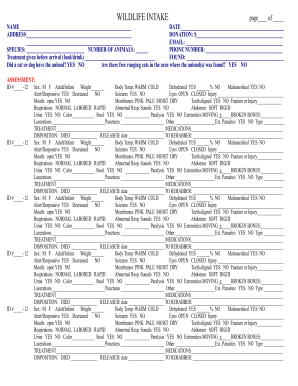
WILDLIFE INTAKE page of NAME DATE ADDRESS DONATION: $ EMAIL: SPECIES: NUMBER OF ANIMALS: PHONE NUMBER: Treatment given before arrival (food/drink) FOUND: Did a cat or dog have the animal? YES NO Are.
Open form follow the instructions
Easily sign the form with your finger
Send filled & signed form or save
How to fill out the NC Wildlife Rehabilitators Intake Form online
Filling out the NC Wildlife Rehabilitators Intake Form online is a crucial step in providing care for wildlife. This guide offers comprehensive instructions to ensure users complete the form accurately and efficiently.
Follow the steps to complete the online form successfully.
- Press the 'Get Form' button to obtain the intake form and open it within your web browser.
- Enter your full name in the provided field to identify yourself as the submitter of the intake form.
- Fill in the date of submission to document when the form is completed.
- Provide your address, ensuring it is complete and accurate for follow-up communications.
- If applicable, indicate the amount of any donation you are offering to support the wildlife rehabilitation services.
- Enter your email address to receive confirmations or further information regarding the form.
- Specify the species of the animal you are reporting, along with the number of animals involved.
- Provide your phone number for any urgent follow-up questions concerning the animal intake.
- Detail any treatment the animal received prior to arrival to inform the rehabilitators of its condition.
- Indicate where you found the animal to assist in understanding its context and condition.
- Respond to the questions regarding the involvement of domestic animals and feral cat populations in the area.
- Fill out the assessment section for each animal. Include relevant data such as sex, age classification, weight, body temperature, hydration status, and any injuries or symptoms.
- Provide treatment details and any medications administered to the animal prior to its arrival.
- Indicate the disposition of the animal, including whether it died, was released, or transferred to a rehabilitator, alongside the associated dates.
- If there are additional notes or information that may assist in the rehabilitation process, include them in the designated section.
- After reviewing your completed form for accuracy, save your changes and download, print, or share the form as needed.
Complete your NC Wildlife Rehabilitators Intake Form online today to help protect and rehabilitate wildlife.
Experience a faster way to fill out and sign forms on the web. Access the most extensive library of templates available.
Related content
The following was provided as proof of ownership at the time of surrender for the animal...
by R Hagevik · 2022 — There are more than 5,000 licensed wildlife rehabilitators as...
North Carolina Wildlife Resources Commission. Division of Wildlife Management. 1751...
Get answers to your most pressing questions about US Legal Forms API.
How to become a wildlife rehabilitator without a degree?
Becoming a wildlife rehabilitator without a degree involves gaining relevant experience, acquiring necessary permits, and completing approved training courses. You can start by volunteering at local wildlife centers to develop skills and knowledge about animal care. Networking with other wildlife rehabilitators can also provide valuable insights. To streamline your journey, consider using the NC Wildlife Rehabilitators Intake Form to find training and mentorship opportunities.
What are the requirements to be a wildlife rehabilitator?
To be a wildlife rehabilitator in North Carolina, you must meet several key requirements. These include obtaining a permit, completing educational training, and gaining hands-on experience with wildlife. You'll also need to adhere to state regulations regarding animal care and handling. Filling out the NC Wildlife Rehabilitators Intake Form can guide you through these requirements and connect you with resources.
Can you be a wildlife rehabilitator without a degree?
Yes, you can become a wildlife rehabilitator without a degree; however, having relevant experience is essential. Volunteers and internships in animal care can provide you with practical skills and knowledge. Additionally, completing the appropriate training and certifications allows you to work effectively in this role. Use the NC Wildlife Rehabilitators Intake Form to discover training options that align with your background.
How do I become a registered wildlife rehabilitator?
To become a registered wildlife rehabilitator in North Carolina, you must complete specific training and gain experience in animal care. This process includes taking courses approved by the state's wildlife agency, securing a mentor, and completing a certain number of hours working with wildlife. After meeting these criteria, you can submit your application along with the NC Wildlife Rehabilitators Intake Form to the authorities.
Do you need a degree to work at a wildlife sanctuary?
While a degree is not strictly required to work at a wildlife sanctuary, it can improve your chances of employment. Many sanctuaries prefer candidates with degrees in fields such as biology or environmental science, as these programs provide valuable knowledge about animal care. However, relevant experience can also make up for a lack of formal education. Consider using the NC Wildlife Rehabilitators Intake Form to explore educational and training opportunities.
What qualifications do you need to be a wildlife rehabilitator?
To become a wildlife rehabilitator in North Carolina, you usually need to have a combination of education and experience with animals. Most positions require a High School diploma or equivalent, but having a background in biology or animal care is beneficial. Additionally, you must pass a state exam to obtain the necessary permit. Completing the NC Wildlife Rehabilitators Intake Form helps you understand the qualifications needed.
How much do wildlife rehabilitators make in NC?
Wildlife rehabilitators in North Carolina typically earn between $25,000 and $45,000 annually, depending on their experience and the specific organization they work for. Their salary may also vary based on the type of wildlife they handle and their level of responsibility. For those considering this career path, understanding the financial aspects is crucial. You can start by filling out the NC Wildlife Rehabilitators Intake Form to connect with potential employers.
What certifications do you need to be a wildlife rehabilitator?
Wildlife rehabilitators usually need to achieve certification from a recognized organization, such as the National Wildlife Rehabilitators Association. This certification ensures that you understand the best practices for treating and caring for various species. Some states may have additional certification requirements, which can vary. To navigate these requirements, consider using the NC Wildlife Rehabilitators Intake Form for useful resources.
How to get certified as a wildlife rehabilitator?
To gain certification as a wildlife rehabilitator, you generally need to complete a training program and gain hands-on experience. Many organizations offer workshops and internships that can help you learn necessary skills. After completing the required training, passing an exam may be necessary to obtain certification. A completed NC Wildlife Rehabilitators Intake Form can help you locate certification courses in your area.
What degree do you need to work at a wildlife sanctuary?
To work at a wildlife sanctuary, a degree in biology, zoology, or a related field is often beneficial. While formal education can help in understanding animal behavior and ecology, hands-on experience is just as important. Many sanctuaries value practical skills and a commitment to wildlife conservation over specific degrees. If you're looking to get involved, completing an NC Wildlife Rehabilitators Intake Form can guide your next steps.
Use professional pre-built templates to fill in and sign documents online faster. Get access to thousands of forms.
If you believe that this page should be taken down, please follow our DMCA take down process here.