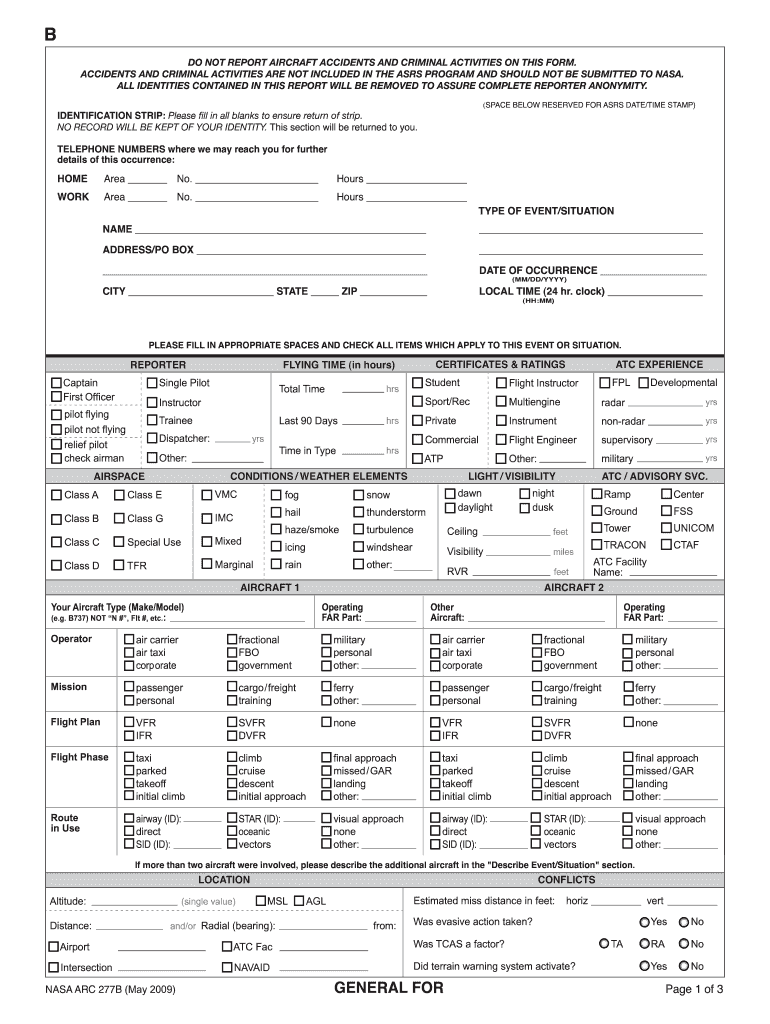
o initial approach o final approach o missed/GAR o landing o other: Route in Use o airway (ID): o direct o SID (ID): o STAR (ID): o oceanic o vectors o visual approach o none o other: o airway (ID): o direct o SID (ID): o STAR (ID): o oceanic o vectors o visual approach o none o other: If more than two aircraft were involved, please describe the additional aircraft in the "Describe Event/Situation" section. LOCATION Altitude: Distance: (single value) CONFLICTS Estimated miss dist.
Loading

Open form follow the instructions

Easily sign the form with your finger

Send filled & signed form or save
How to fill out the NASA ARC 277B online
The NASA ARC 277B is an essential form designed for reporting aviation safety issues within the framework of the Aviation Safety Reporting System. This guide provides clear, step-by-step instructions to help users effectively complete the form online while ensuring their anonymity.
Follow the steps to successfully complete the NASA ARC 277B online.
- Click the 'Get Form' button to access the NASA ARC 277B form and open it in the online editor.
- Carefully fill out the identification strip section at the top of the form. Provide your telephone numbers where further details can be reached.
- In the 'Type of Event/Situation' section, specify your name, address, date of occurrence, and local time using the 24-hour clock format.
- Complete the reporter section by selecting your role (e.g., Captain, First Officer), and include any applicable experience or ratings.
- Detail the conditions and weather elements affecting the event. Check the applicable boxes to describe the light, visibility, and air traffic control services involved.
- Review the aircraft information. Specify the type and operational details for the involved aircraft, and choose the mission type and flight plan for each aircraft.
- In the 'Describe Event/Situation' section, provide a detailed account of the incident, including any relevant chain of events and human performance considerations. Use additional paper if necessary.
- Once you have filled out the form completely, review all entries for accuracy. You can then save changes, download, print, or share the form as needed.
Complete the NASA ARC 277B online today to contribute to aviation safety.
Experience a faster way to fill out and sign forms on the web. Access the most extensive library of templates available.
Related content
NASA ARC 277B (May 2009). GENERAL. PLEASE FILL IN APPROPRIATE SPACES AND CHECK ALL ITEMS...
Jul 4, 2023 — The “NASA Form”, or ARC Form 277B, is used by pilots, mechanics, and...
Get answers to your most pressing questions about US Legal Forms API.
When should you file a NASA report?
Consider filing a NASA report when you encounter an unexpected or unsafe situation during flight operations. The NASA ARC 277B is designed for pilots and air traffic controllers to report safety-related occurrences without facing repercussions. Reporting immediately after the event ensures accurate information and better safety insights. Use this opportunity to contribute positively to aviation safety.
When should you file an aviation safety report?
You should file an aviation safety report whenever you witness or experience an event that compromises safety. Even minor incidents are valuable, as they contribute to understanding safety trends and improving protocols. Filing under the NASA ARC 277B allows for a better overview of safety issues in aviation. Remember to report promptly to ensure timely analysis.
What does a NASA report protect you from?
A NASA report protects you from potential enforcement action by promoting a culture of safety within aviation. When you file under the NASA ARC 277B program, your submission remains confidential, allowing you to report without fear of penalties. This protection encourages transparency and ultimately enhances aviation safety for all. Knowing you are protected can empower you to address and report safety concerns.
How to file an ASAP report?
To file an Aviation Safety Action Program (ASAP) report, reach out to your airline's designated representative. These reports complement the NASA ARC 277B process and aim for prompt resolution of safety issues. Make sure to include all relevant details to foster effective follow-up. Collaboration is key to enhancing safety and preventing future incidents.
Do all aviation incidents need to be reported?
Not all aviation incidents require a report, but significant events affecting safety should be documented. The NASA ARC 277B serves as a tool for voluntary reporting, helping enhance safety practices across the industry. By offering transparency, these reports can lead to safer skies for everyone. Always assess the nature of the incident before deciding to report.
How to file a NASA report?
To file a NASA report, you should start by visiting the FAA's Aviation Safety Reporting System (ASRS) website. There, you can find the NASA ARC 277B form which you need to fill out. Providing detailed information about the incident helps improve aviation safety. Remember, your report remains confidential, encouraging you to report without fear.
What are the benefits of submitting an ASRP report?
Submitting an ASRP report has numerous benefits, including proactive safety improvements and potential policy changes within the organization. These reports contribute to a systematic analysis of safety issues, leading to better practices and enhanced training programs. Additionally, being part of this reporting system reinforces your commitment to safety in aviation. Engaging with the principles outlined in NASA ARC 277B can amplify the impact of your submission.
When to fill out an ASAP report?
You should fill out an ASAP report when you are part of an organization that has an Aviation Safety Action Program in place. This report is typically for incidents that occur during normal operations but could lead to safety concerns if not addressed. Be sure to consult your company's guidelines to determine if the situation warrants an ASAP filing. Familiarizing yourself with NASA ARC 277B can provide more clarity on the reporting process.
How do I file a NASA report?
Filing a NASA report is a straightforward process that involves completing a specific form detailing your safety concern. You can easily access the form through the NASA Aviation Safety Reporting System (ASRS) website. Make sure to provide accurate and detailed information to assist in the investigation. Referencing NASA ARC 277B can guide you in submitting an effective report.
Should I fill out a NASA report?
If you encounter a safety-related issue in aviation, filling out a NASA report is a responsible action. This report allows you to communicate concerns without fear of retribution, fostering a culture of safety within the industry. It's essential to weigh the significance of the issue when deciding to file. Utilizing the insights from NASA ARC 277B can help you determine the appropriateness of filing.
Use professional pre-built templates to fill in and sign documents online faster. Get access to thousands of forms.
If you believe that this page should be taken down, please follow our DMCA take down process here.