Loading
Get 8322 2013-2026
How it works
-

Open form follow the instructions
-

Easily sign the form with your finger
-

Send filled & signed form or save
How to fill out the 8322 online
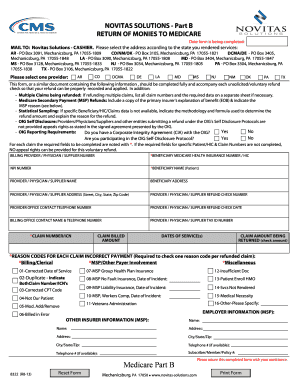
Filling out the 8322 form correctly is essential for returning refunds to Medicare. This guide provides step-by-step instructions to help users complete the form efficiently and accurately.
Follow the steps to successfully complete the 8322 form online.
- Use the ‘Get Form’ button to access the 8322 form online and open it in your preferred editor.
- Identify and select the appropriate mailing address based on the state where services were rendered. Make sure to match your specific state to ensure proper processing.
- Select the provider associated with the refund from the dropdown list. This step is crucial as it relays the correct information regarding your Medicare participation.
- Complete the sections marked with an asterisk (*). Required fields include billing provider number, beneficiary Medicare health insurance number (HIC), beneficiary name, and claim number or ICN. Be accurate to avoid delays.
- If refunding multiple claims, list all claim numbers and required data on a separate sheet if necessary. Ensure that each claim is adequately documented.
- For Medicare secondary payment (MSP) refunds, include a copy of the primary insurer's explanation of benefits (EOB) and indicate the MSP reason in the designated area.
- Complete the necessary claim information, including billed amount, claim amounts being returned, and the reason codes for each claim. It's important to check one reason code per refunded claim.
- Review your entries for completeness and accuracy. Make sure every required field is completed to maintain your appeal rights.
- Once all sections are complete, you may save changes, download, print, or share the form as needed.
Begin completing your 8322 form online today!
Related links form
Frizzled receptors (FZDs) are a family of seven-span transmembrane receptors with hallmarks of G protein-coupled receptors (GPCRs) that serve as receptors for secreted Wingless-type (WNT) ligands in the WNT signaling pathway.