Get Transfer On Death To Beneficiary 2010-2026
How it works
-

Open form follow the instructions
-

Easily sign the form with your finger
-

Send filled & signed form or save
How to fill out the Transfer on Death to Beneficiary online
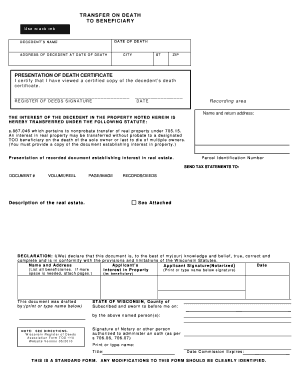
Filling out the Transfer on Death to Beneficiary form is an essential step in designating who will receive your property after your passing. This guide will provide you with clear, step-by-step instructions on how to complete the form accurately and efficiently online.
Follow the steps to complete the form correctly.
- Click ‘Get Form’ button to obtain the form and open it in your preferred online editor.
- Begin by filling out the date of death. Ensure you enter the exact date in a clear manner.
- Next, provide the decedent’s name. This should match the name listed on official documents.
- Fill in the address of the decedent at the time of death. Include the city, state (abbreviated), and zip code in the designated fields.
- You must certify that you have viewed a certified copy of the death certificate. This is a crucial step for validation.
- Provide the name and return address of the individual completing the form. This helps in communication regarding the document.
- List the property information as per the requirements of the form. Include the parcel identification number and a legal description of the real estate.
- Complete the declaration section. Ensure that you declare the truthfulness of the information provided.
- If necessary, attach additional pages for listing multiple beneficiaries or to include more detailed descriptions of the properties.
- Ensure all signatures are notarized as required. This adds legal weight to the document.
- Review the completed form for accuracy and clarity. Save your changes, then download, print, or share the form as needed.
Start the process of completing your Transfer on Death to Beneficiary form online today.
One significant disadvantage of Transfer on Death to Beneficiary is that you retain control over the assets until your death, which might lead to mismanagement if circumstances change. Furthermore, it does not provide for situations such as incapacity, as the asset transfer occurs only upon death. Additionally, if you do not properly update beneficiaries or if conflicting wills exist, it can create additional legal challenges.