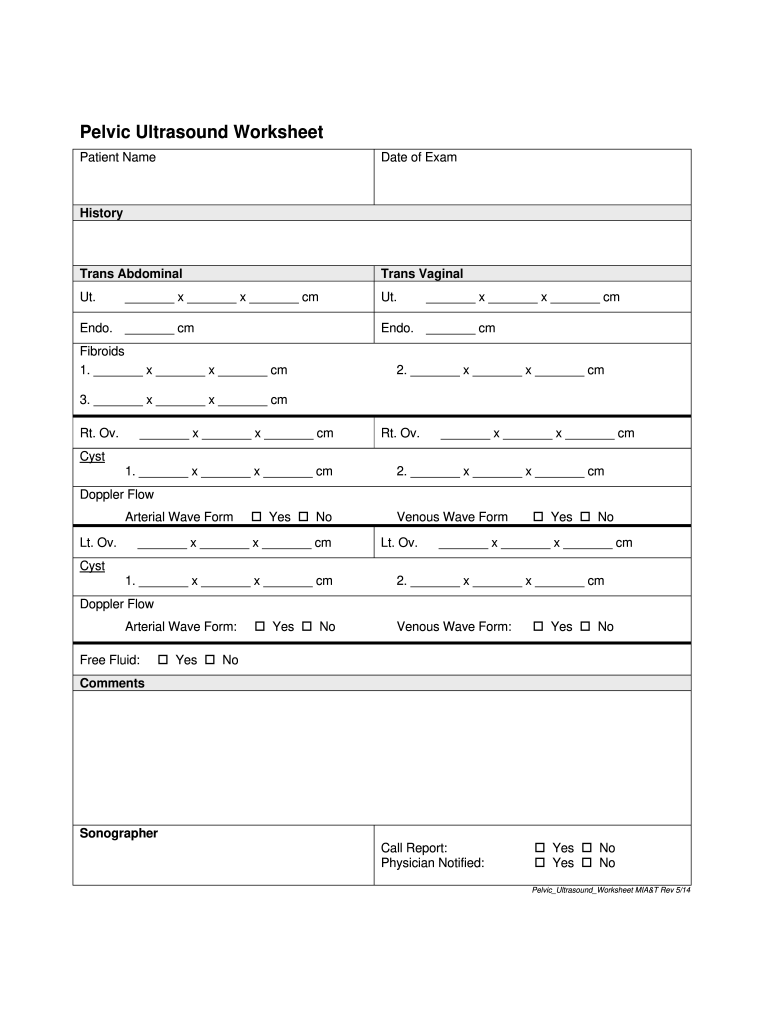
_______ cm Fibroids 1. _______ x _______ x _______ cm 2. _______ x _______ x _______ cm 3. _______ x _______ x _______ cm Rt. Ov. _______ x _______ x _______ cm Rt. Ov. _______ x _______ x _______ cm Cyst 1. _______ x _______ x _______ cm 2. _______ x _______ x _______ cm Doppler Flow Arterial Wave Form Lt. Ov. Yes No _______ x _______ x _______ cm Venous Wave Form Lt. Ov. Yes No _______ x _______ x _______ cm Cyst 1. _______ x _______ x _______ cm 2. _______ x __.
Loading

Open form follow the instructions

Easily sign the form with your finger

Send filled & signed form or save
How to fill out the MIA Pelvic Ultrasound Worksheet online
Filling out the MIA Pelvic Ultrasound Worksheet online is a crucial step in documenting your pelvic ultrasound examination. This guide offers clear, structured instructions to help you complete the form accurately and efficiently.
Follow the steps to complete the MIA Pelvic Ultrasound Worksheet online.
- Click ‘Get Form’ button to obtain the worksheet and open it in the online document editor.
- Enter the patient name in the designated field. This should be the name of the individual receiving the ultrasound examination.
- Specify the date of the exam in the appropriate section to ensure accurate records.
- In the 'History' section, provide relevant medical history or indications for the ultrasound if applicable.
- Select either 'Trans Abdominal' or 'Trans Vaginal' to indicate the type of examination performed.
- Fill in the dimensions of the uterus by providing measurements in the format '_______ x _______ x _______ cm'. Include the endometrial thickness as well in the designated field.
- Record measurements for fibroids if present, using the same dimension format. Fill in details for each fibroid listed.
- Provide the dimensions for both right ovary (Rt. Ov.) and left ovary (Lt. Ov.) similarly, using the specified measurement structure.
- Indicate the presence of cysts by filling in the required measurements. List multiple cysts if necessary.
- Complete the 'Doppler Flow' section by indicating if there is an arterial or venous wave form present for both left and right ovaries.
- Note any free fluid present and provide measurements where applicable.
- Use the comments section to add any additional information relevant to the examination or findings.
- Once all sections are completed, review the form for accuracy. Save your changes, and opt to download, print, or share the form as needed.
Complete your MIA Pelvic Ultrasound Worksheet online today for comprehensive and organized documentation.
Experience a faster way to fill out and sign forms on the web. Access the most extensive library of templates available.
Related content
by J Schädler · 2023 · Cited by 4 — In this study, an ultrasound-guided minimally...
This publication is the official announcement of the program requirements and regulations...
Get answers to your most pressing questions about US Legal Forms API.
What is a pelvic floor assessment by ultrasound?
A pelvic floor assessment by ultrasound is a detailed evaluation that visualizes the pelvic structures and their function. Using the MIA Pelvic Ultrasound Worksheet, healthcare providers can assess the integrity of the pelvic floor muscles and how they support the bladder, uterus, and rectum. This assessment helps in diagnosing issues such as prolapse or urinary incontinence. Ultimately, it guides treatment decisions and enhances patient care.
What tests diagnose pelvic floor dysfunction?
To accurately diagnose pelvic floor dysfunction, several tests may be employed. In addition to ultrasound, healthcare providers may recommend urodynamic testing or pelvic exams. The MIA Pelvic Ultrasound Worksheet complements these assessments by providing a detailed view of the pelvic anatomy. Together, these tests help clinicians create a comprehensive evaluation and develop an effective treatment strategy.
Can pelvic floor dysfunction be seen on ultrasound?
Pelvic floor dysfunction can often be visualized using ultrasound techniques. The MIA Pelvic Ultrasound Worksheet allows medical professionals to analyze the position and movement of pelvic organs during different maneuvers. This capability can highlight issues such as prolapse or muscle tension. Consequently, healthcare providers can better understand the patient's condition and recommend appropriate interventions.
Can a pelvic ultrasound detect pelvic floor dysfunction?
Yes, a pelvic ultrasound can help identify signs of pelvic floor dysfunction. By utilizing the MIA Pelvic Ultrasound Worksheet, clinicians can visualize how the pelvic floor supports internal organs and assess any abnormalities. While the ultrasound does not provide a complete diagnosis, it can reveal anatomical changes that indicate dysfunction. This information assists healthcare providers in developing an effective treatment plan.
What will a pelvic ultrasound reveal?
A pelvic ultrasound provides valuable insights into the organs and structures within the pelvis. Using the MIA Pelvic Ultrasound Worksheet, healthcare professionals can identify conditions affecting the bladder, uterus, ovaries, and surrounding tissues. This non-invasive procedure can help pinpoint abnormalities such as cysts, fibroids, or other complications. Ultimately, it serves as a crucial tool in diagnosing a wide range of pelvic ailments.
How full does the bladder need to be for a pelvic ultrasound?
Your bladder should be comfortably full, ideally containing about 32 ounces of liquid for an optimal pelvic ultrasound. A sufficiently filled bladder enhances the clarity of the imaging, making it easier for healthcare professionals to assess your condition accurately. This preparation is critical for the successful completion of the MIA Pelvic Ultrasound Worksheet.
How much water should I drink to have a full bladder for an ultrasound?
For a full bladder before an ultrasound, drinking about 32 ounces of water is typically recommended. This amount provides the necessary pressure on the pelvic organs, improving visibility during the procedure. Being well-hydrated will make the MIA Pelvic Ultrasound Worksheet process smoother and more efficient.
Can I pee 1 hour before a pelvic ultrasound?
Ideally, you should avoid urinating one hour before your pelvic ultrasound to ensure your bladder is sufficiently full. This fullness is crucial for making the imaging process clearer and more effective. Following this guideline will help you accurately complete the MIA Pelvic Ultrasound Worksheet without any issues.
How long before a pelvic ultrasound can I pee?
It is advisable to refrain from urinating at least one hour before your pelvic ultrasound. This time frame allows your bladder to reach the desired fullness necessary for effective imaging. To ensure a successful experience with the MIA Pelvic Ultrasound Worksheet, remember to plan your hydration schedule accordingly.
How can I fill my bladder quickly for an ultrasound?
To fill your bladder quickly, consider drinking a larger quantity of water in a short period, but be cautious of discomfort. Aim to consume 32 ounces at least an hour before your ultrasound. This practice not only helps you manage your fluid intake but also ensures you meet the requirements outlined in the MIA Pelvic Ultrasound Worksheet.
Use professional pre-built templates to fill in and sign documents online faster. Get access to thousands of forms.
If you believe that this page should be taken down, please follow our DMCA take down process here.