Loading
Get Mc 52, Request And Writ For Garnishment (income Tax Refund ...
How it works
-

Open form follow the instructions
-

Easily sign the form with your finger
-

Send filled & signed form or save
How to fill out the MC 52, Request And Writ For Garnishment (Income Tax Refund) online
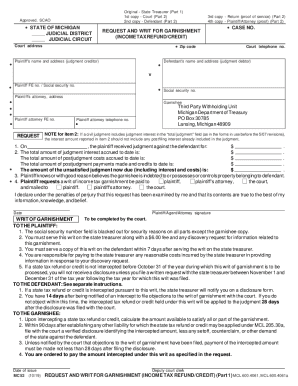
Filling out the MC 52, Request And Writ For Garnishment form is essential for initiating a garnishment process on an income tax refund. This guide provides clear and structured instructions to help you complete the form online effectively.
Follow the steps to fill out the MC 52 form correctly.
- Click ‘Get Form’ button to obtain the form and open it in the editor.
- Begin by entering the court address in the designated field. Make sure to include the zip code for accurate processing.
- Fill in the plaintiff's name and address, which refers to the judgment creditor. Include relevant contact information.
- Input the case number and the court telephone number for reference.
- Provide the defendant's name and address, identifying the judgment debtor clearly.
- In the section for amounts, indicate the total judgment received, postjudgment costs accumulated, payments made, and the amount of the unsatisfied judgment now due.
- Fill out the garnishee information, which includes the name or entity that is believed to owe money or possess property belonging to the defendant.
- In the request section, specify to whom the garnishment should be paid, choosing from the options: plaintiff, plaintiff's attorney, or the court.
- Sign and date the form, ensuring the signature is from the plaintiff, agent, or attorney, confirming that the contents are true to the best of your knowledge.
- Once you have filled out all sections, save your changes, and consider downloading or printing the form for your records.
Complete your documents online to streamline your legal processes.
If a creditor has a judgment against you and wants to garnish your tax refund, it must file a Request and Writ for Garnishment with the court. Then the creditor must file the writ with the Department of Treasury. The creditor must also serve a copy of the writ on you.