Loading
Form preview
  • US Legal Forms
  • Other Templates
  • Miscellaneous Forms
  • Multi-State Miscellaneous Forms
  • Electronystagmography Versus Videonystagmography 2010

Get Electronystagmography Versus Videonystagmography 2010-2026

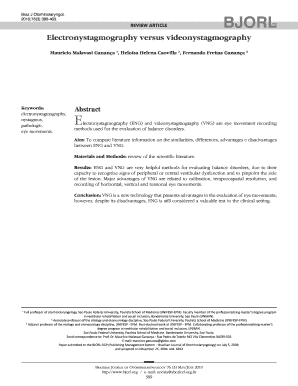
That the patient’s disability does not correlate with the degree of functional loss that is found on these tests.5 Altered findings suggest signs of peripheral or central vestibular dysfunction and may establish the affected side.2-3,6-8 Abnormal findings should be duly characterized, relevant findings should be valued, and the results should be interpreted jointly; the type and intensity of vestibular involvement may help define the prognosis.6 The routine assessment of patients with dizzines.

How it works

  1. Open form

    Open form follow the instructions

  2. Easily sign form

    Easily sign the form with your finger

  3. Share form

    Send filled & signed form or save

How to fill out the Electronystagmography versus Videonystagmography online

Electronystagmography (ENG) and Videonystagmography (VNG) are crucial methods for evaluating balance disorders. This guide provides a comprehensive overview of how to complete the form online, ensuring clarity and ease of understanding for all users.

Follow the steps to successfully fill out the form

  1. Press the ‘Get Form’ button to obtain the document and open it in your editor.
  2. Carefully read through the introduction section of the form to understand the purpose of the document. This section outlines the comparison between ENG and VNG, which is essential for filling out the remaining parts.
  3. Fill in your personal information in the designated fields. This typically includes your name, contact details, and any relevant medical history that pertains to balance disorders.
  4. Complete the evaluation section by providing information on any previous tests you have undergone related to balance issues. Be as detailed and accurate as possible to facilitate a comprehensive assessment.
  5. In the section comparing ENG and VNG, check the boxes or provide responses based on your understanding of the differences and similarities. This may involve selecting options that best reflect your personal observations or experiences.
  6. Review your answers for accuracy and completeness. It is advisable to go through each section carefully to ensure no information is omitted.
  7. Once satisfied with the completed form, save your changes. You should have the option to download, print, or share the form as needed.

Complete your documentation online to ensure a smooth evaluation process.

Get form

Experience a faster way to fill out and sign forms on the web. Access the most extensive library of templates available.
Get form

Related content

Electronystagmography versus videonystagmography
by MM Ganança · 2010 · Cited by 122 — Electronystagmography (ENG) and...
Learn more
Electronystagmogrophy (ENG) & Videonystagmography...
ElectroNystagmoGraphy (ENG) and VideoNystagmoGraphy (VNG) tests are part of a...
Learn more

Related links form

How To Cancel Kumon Membership 2020 C031a Seafarers Application Record.xls - Marantankers 2020 Hdfc Deposit Slip 2020 Lesson 3 Extra Practice Multiply And Divide Monomials Answer Key 2020

Questions & Answers

Get answers to your most pressing questions about US Legal Forms API.

Contact support

Videonystagmography is also known as VNG testing. Both terms refer to the same procedure that evaluates eye movements through video recording. This test is essential for diagnosing balance issues related to inner ear problems. Most patients find VNG testing to be a straightforward process.

Videonystagmography is a test that records eye movements using video technology. It helps assess how well the inner ear and brain work together to maintain balance. During the test, patients will experience various movements while the video system captures their eye responses. This data allows healthcare professionals to diagnose balance disorders effectively.

Vestibular therapy is also known as balance rehabilitation. This form of therapy focuses on improving balance and reducing dizziness through specific exercises and strategies. It helps individuals regain stability and confidence in their movements. Those seeking help with balance issues often benefit greatly from vestibular therapy.

To perform Electronystagmography, the technician places electrodes around your eyes to monitor your eye movements. You are then asked to follow certain visual targets while your head is moved in different positions. The data collected helps evaluate your inner ear balance mechanisms. Electronystagmography offers detailed information for diagnosing balance disorders.

The procedure for Videonystagmography includes a series of eye movement tests while wearing special goggles. These goggles track your eye movements as you respond to various stimuli, such as head movements or video prompts. VNG is non-invasive and typically takes about an hour to complete. This test provides crucial insights into your vestibular system.

VNG and ENG both assess a person's balance and eye movements, but they differ in their approach. ENG uses electrodes placed around the eyes to measure electrical activity, while VNG captures video footage of eye movements. Each method has its specific advantages depending on the patient's needs. Choosing between VNG and ENG often depends on the healthcare provider’s recommendation.

Electronystagmography (ENG) uses electrodes to detect eye movements, while Videonystagmography (VNG) employs a video system to track these movements. The key difference lies in the technology used for recording eye motion. Both tests aim to evaluate balance-related issues and dizziness. Understanding Electronystagmography versus Videonystagmography can help patients make informed choices.

The vertigo test is commonly referred to as the balance test. It assesses how well your body maintains balance and controls eye movements. This test can help identify issues related to dizziness and balance disorders. Both Electronystagmography versus Videonystagmography are often used in this context.

VNG offers several advantages, including a non-invasive approach and high accuracy in measuring eye movements. The use of video technology allows for better analysis and documentation of test results. Additionally, VNG provides real-time feedback, making it easier for clinicians to assess your condition.

Electronystagmography is a diagnostic test that assesses how your eyes move in response to various stimuli. By placing electrodes around the eyes, the test records electrical signals generated by eye movements. This information is crucial in identifying issues related to balance and vestibular function.

Get This Form Now!

Use professional pre-built templates to fill in and sign documents online faster. Get access to thousands of forms.
Get form
If you believe that this page should be taken down, please follow our DMCA take down processhere.
Get Electronystagmography versus Videonystagmography
Get form
  • Adoption
  • Bankruptcy
  • Contractors
  • Divorce
  • Home Sales
  • Employment
  • Identity Theft
  • Incorporation
  • Landlord Tenant
  • Living Trust
  • Name Change
  • Personal Planning
  • Small Business
  • Wills & Estates
  • Packages A-Z
  • Affidavits
  • Bankruptcy
  • Bill of Sale
  • Corporate - LLC
  • Divorce
  • Employment
  • Identity Theft
  • Internet Technology
  • Landlord Tenant
  • Living Wills
  • Name Change
  • Power of Attorney
  • Real Estate
  • Small Estates
  • Wills
  • All Forms
  • Forms A-Z
  • Other Templates
  • Legal Hub
  • About Us
  • Help Portal
  • Legal Resources
  • Blog
  • Affiliates
  • Contact Us
  • Delete My Account
  • Site Map
  • Industries
  • Forms in Spanish
  • Localized Forms
  • State-specific Forms
  • Forms Kit
  • Real Estate Handbook
  • All Guides
  • Notarize
  • Incorporation services
  • For Consumers
  • For Small Business
  • For Attorneys
  • USLegal
  • FormsPass
  • pdfFiller
  • signNow
  • altaFlow
  • DocHub
  • Instapage
Form Packages
  • Adoption
  • Bankruptcy
  • Contractors
  • Divorce
  • Home Sales
  • Employment
  • Identity Theft
  • Incorporation
  • Landlord Tenant
  • Living Trust
  • Name Change
  • Personal Planning
  • Small Business
  • Wills & Estates
  • Packages A-Z
Form Categories
  • Affidavits
  • Bankruptcy
  • Bill of Sale
  • Corporate - LLC
  • Divorce
  • Employment
  • Identity Theft
  • Internet Technology
  • Landlord Tenant
  • Living Wills
  • Name Change
  • Power of Attorney
  • Real Estate
  • Small Estates
  • Wills
  • All Forms
  • Forms A-Z
  • Other Templates
Customer Service
  • Legal Hub
  • About Us
  • Help Portal
  • Legal Resources
  • Blog
  • Affiliates
  • Contact Us
  • Delete My Account
  • Site Map
  • Industries
  • Forms in Spanish
  • Localized Forms
  • State-specific Forms
  • Forms Kit
Legal Guides
  • Real Estate Handbook
  • All Guides
Prepared for you
  • Notarize
  • Incorporation services
Our Customers
  • For Consumers
  • For Small Business
  • For Attorneys
Our Sites
  • USLegal
  • FormsPass
  • pdfFiller
  • signNow
  • altaFlow
  • DocHub
  • Instapage
Social Media
Call us now toll free:
+1 833 426 79 33
As seen in:
© Copyright 1999-2026 airSlate Legal Forms, Inc. 17 Station Street, Ste. 203, Brookline, MA 02445
  • Your Privacy Choices
  • Terms of Service
  • Privacy Notice
  • Content Takedown Policy
  • Bug Bounty Program