Loading
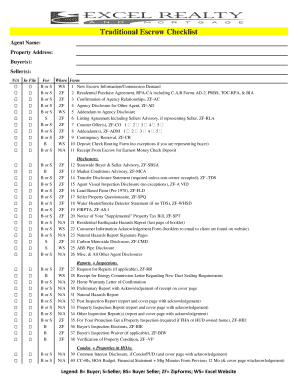
Get Traditional Escrow Checklist - Excel Realty And Mortgage
How it works
-

Open form follow the instructions
-

Easily sign the form with your finger
-

Send filled & signed form or save
How to fill out the Traditional Escrow Checklist - Excel Realty And Mortgage online
The Traditional Escrow Checklist is an essential tool for streamlining the escrow process. This guide will provide you with step-by-step instructions on how to accurately complete this checklist online, ensuring all necessary information is captured for a smooth transaction.
Follow the steps to effectively fill out the Traditional Escrow Checklist online.
- Click ‘Get Form’ button to obtain the form and open it in the editor.
- Begin filling out the form by entering the agent's name in the designated field. Ensure that you provide the correct information to avoid any discrepancies during the escrow process.
- Input the property address in the specified section. This is crucial for identifying the property involved in the transaction.
- Next, fill in the details of the buyer(s). This section should include all individuals or entities purchasing the property.
- Proceed to enter the seller(s) information in the appropriate field. Be sure to include all relevant individuals or entities involved in the sale.
- For each item on the checklist, indicate whether it pertains to the buyer, seller, or both, as specified in the checkboxes provided.
- Continue through the checklist, completing all required sections, which include various agreements, disclosures, and reports necessary for the transaction.
- Finally, review all entries for accuracy. Once confirmed, you can save changes, download, print, or share the completed form as needed.
Start filling out the Traditional Escrow Checklist online today to ensure a smooth escrow process!
Related links form
Sociedade Gestora Do Fundo De Penses Do Banco De Portugal, S - Bportugal
Refactoring A Java Code Base To AspectJ An Illustrative Example* - Repositorium Sdum Uminho
Implementing An Asset Management Approach To Capital Investment Planning - Lesam2007 Lnec
Town Twinning Thematic Networking Of Twinned Towns - Eurocid
Who owns the money in an escrow account? The buyer in a transaction owns the money held in escrow. This is because the escrow agent only has the money in trust. The ownership of the money is transferred to the seller once the transaction's obligations are met.