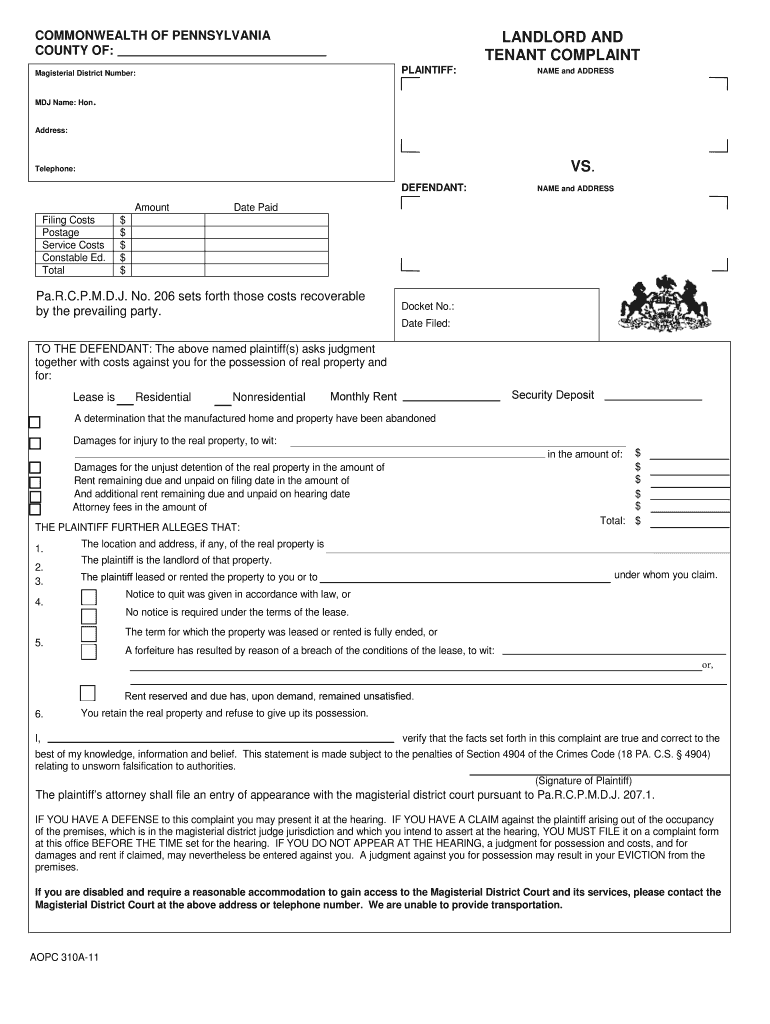
COMMONWEALTH OF PENNSYLVANIA COUNTY OF:LANDLORD AND TENANT COMPLAINTMagisterial District Number:PLAINTIFF:NAME and ADDRESSDEFENDANT:NAME and ADDRESS.MDJ Name: HonAddress:VS.Telephone:Amount Filing.
Loading

Open form follow the instructions

Easily sign the form with your finger

Send filled & signed form or save
How to fill out the PA AOPC 310A online
The PA AOPC 310A is a vital form used for landlord and tenant complaints in Pennsylvania. Filling it out accurately online can help facilitate the legal process in matters of property disputes.
Follow the steps to fill out the PA AOPC 310A effectively.
- Click ‘Get Form’ button to obtain the form and open it in the editor.
- Fill in the 'County' section with the name of the county where the complaint is being filed.
- Enter the 'Magisterial District Number' relevant to the case.
- In the 'Plaintiff' section, clearly provide the name and address of the individual or entity initiating the complaint.
- In the 'Defendant' section, provide the name and address of the individual or entity being complained against.
- Include the 'MDJ Name' along with their address and telephone number.
- Detail the filing costs in the provided fields, including amounts for postage, service costs, and constable fees.
- State the total amount of costs paid and the date of payment.
- Check the appropriate box to specify if the lease is residential or nonresidential and fill in details related to the security deposit and monthly rent.
- In the section regarding damages, clearly list amounts for injury to property, unjust detention of property, and any attorney fees.
- Provide relevant details under 'The plaintiff further alleges that' by filling in the specific allegations, including the lease terms and terms of property possession.
- Lastly, verify the information by signing at the bottom of the complaint, ensuring it aligns with the penalties regarding falsification.
- Once all sections are completed, save changes, and you can then download, print, or share the final document as needed.
Complete your PA AOPC 310A form online today for a seamless filing experience.
Experience a faster way to fill out and sign forms on the web. Access the most extensive library of templates available.
Related content
Pa.R.C.P.D.J. No. 206 sets forth those costs recoverable by the prevailing party. Docket...
Get answers to your most pressing questions about US Legal Forms API.
How long do you have to move out after eviction in PA?
It takes 5 days for the Writ of Possession to be issued by the court. Law enforcement officials have 48 hours to serve this court order to the tenant. After that, the tenant has 10 days to move out of the property.
What is required for a notice to quit in PA?
The Notice to Quit must include the name of the landlord, name of the tenant, address of the rental property, reason for the notice (such as failure to pay rent for a specific time period or for some other violation of the lease) and a date by which the landlord wants the tenant to move out of the rental property.
How long does it take to evict a tenant in PA?
It takes 5 days for the Writ of Possession to be issued by the court. Law enforcement officials have 48 hours to serve this court order to the tenant. After that, the tenant has 10 days to move out of the property.
What happens when a tenant appeal an eviction in PA?
A tenant would file an appeal with the Court of Common Pleas in the county, where the rental property is physically located. When a tenant files an appeal, they ask the court to enter a Rule to Show Cause, which would require a landlord to file a civil complaint in the court within twenty days.
Can a landlord evict you without going to court in PA?
YOUR LANDLORD CAN ONLY EVICT YOU BY GOING TO COURT, which usually involves these important steps: 1. Written notice. Unless your lease says otherwise, your landlord must give you a written notice before filing an eviction case against you.
How do I stop a writ of possession in PA?
Simply put, the Motion to Stay the Writ of Possession is a document filed with the court asking the judge to “stay” or “stop” the sheriff from executing the Writ of Possession and removing the resident. It can be a typed or handwritten document filed by the resident or the resident's attorney if one is retained.
What happens at a recovery of real property hearing in PA?
You will receive notice of the date and time for the hearing. The landlord may ask for possession of the property, money for unpaid rent and damages to the property, if any, at the hearing. The Magisterial District Judge will make a decision, either at the hearing, or within 3 days after the hearing.
Use professional pre-built templates to fill in and sign documents online faster. Get access to thousands of forms.
If you believe that this page should be taken down, please follow our DMCA take down process here.