Loading
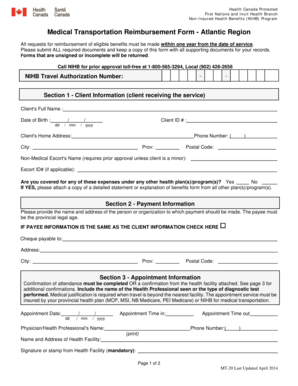
Get Nihb Medical Transportation Reimbursement Form
How it works
-

Open form follow the instructions
-

Easily sign the form with your finger
-

Send filled & signed form or save
How to fill out the Nihb Medical Transportation Reimbursement Form online
Filling out the Nihb Medical Transportation Reimbursement Form online is a straightforward process that ensures you receive reimbursement for eligible transport costs. This guide will provide you with clear, step-by-step instructions to help you complete the form accurately and efficiently.
Follow the steps to successfully complete the form.
- Click ‘Get Form’ button to obtain the form and open it for editing.
- Fill out Section 1 - Client Information. Include the client's full name, date of birth, client ID number, home address, phone number, and the name of any non-medical escort (if applicable). Ensure that you check the box if the payee information is the same as the client’s information.
- Complete Section 2 - Payment Information. Enter the name and address of the person or organization to whom payment will be made, ensuring that the payee meets provincial legal age requirements.
- In Section 3 - Appointment Information, record the appointment date, time, and name of the health professional seen. You may need to attach confirmation of attendance from the health facility.
- Proceed to Section 4 - Claim Information. Check all applicable transport services being claimed, and ensure to include all required receipts for transportation, accommodations, and meals.
- Finally, complete Section 5 - Authorization and Signature. Sign and date the form, ensuring that if the client is under 16, a parent or legal guardian must sign.
- Once you have filled out all sections, save your changes, download the form, print it if necessary, and share it as needed. Remember to keep copies of this form and all supporting documents for your records.
Ensure you complete your documents accurately and submit them promptly for processing.
NIHB program benefits include prescription drugs and over-the-counter medications, dental and vision care, medical supplies and equipment, mental health counselling, and transportation to access medically required health services that are not available on the reserve or in the community of residence.