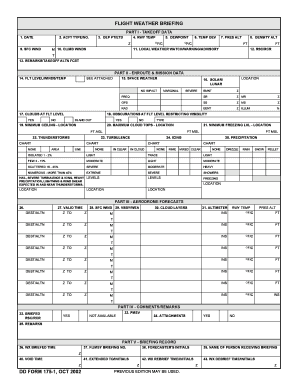
FT FT 11. LOCAL WEATHER WATCH/WARNING/ADVISORY 12. RSC/RCR T 13. REMARKS/TAKEOFF ALTN FCST PART II - ENROUTE & MISSION DATA 14. FLT LEVEL/WINDS/TEMP SEE ATTACHED 15. SPACE WEATHER NO IMPACT LOCATION 16. SOLAR/ LUNAR NO Z MR SS Z MS Z RAD YES Z SR GPS 17. CLOUDS AT FLT LEVEL BMNT FREQ MARGINAL SEVERE EENT Z ILLUM % 18. OBSCURATIONS AT FLT LEVEL RESTRICTING VISIBILITY IN AND OUT YES 19. MINIMUM CEILING - LOCATION NO TYPE 20. MAXIMUM CLOUD TOPS - LOCATION 21. MIN.
Open form follow the instructions
Easily sign the form with your finger
Send filled & signed form or save
How to fill out the Weather Briefing Form online
The Weather Briefing Form is an essential document for pilots, providing crucial weather information for safe flight operations. This guide will assist you in completing the form online, ensuring that you effectively capture all necessary details to facilitate your flight planning.
Follow the steps to successfully complete the Weather Briefing Form online.
- Click the ‘Get Form’ button to obtain the Weather Briefing Form and open it in your editor.
- In Part I, fill out the takeoff data. Input the date of the flight, aircraft type and number, departure point and estimated time of departure, runway temperature, surface wind, climb winds, dewpoint, temperature deviation, pressure altitude, and density altitude.
- Indicate any local weather watches, warnings, or advisories that might affect the flight. Provide information on runway snow condition (RSC) or runway condition rating (RCR) if applicable.
- In the remarks section, include any alternative takeoff forecasts or additional comments that might assist in flight planning.
- Proceed to Part II which covers enroute and mission data. Here, specify flight level, winds, temperatures, and check for any space weather impacts.
- Fill in the cloud data at flight level, including the type and extent of obscurations that may restrict visibility.
- Address the minimum ceiling, maximum cloud tops, and minimum freezing level, making sure to provide precise details for each location.
- In Part III, provide aerodrome forecasts, including valid time, surface wind, visibility, weather conditions, and any significant cloud layers for your destination and alternate airports.
- In Part IV, mark whether the weather briefing was completed, any pertinent comments, and attach supporting documents if necessary.
- Finally, in Part V, record the time of the weather briefing, the forecaster’s initials, and the name of the person receiving the briefing. Ensure to note any rebrief or debrief times and initials.
- Once all sections are completed, save your changes. You can download, print, or share the Weather Briefing Form as needed for your flight preparation.
Complete your Weather Briefing Form online today for safer flight planning.
Experience a faster way to fill out and sign forms on the web. Access the most extensive library of templates available.
Related content
The AWC "Standard Briefing" page is informational in nature and is designed to assist...
- A standard briefing provides a complete weather picture and is the most detailed of all...
Flight plan format is specified in ICAO Doc 4444. ... In most countries, flight plans are...
Get answers to your most pressing questions about US Legal Forms API.
How do I get a standard weather briefing?
The FAA has established a universal toll-free telephone number for FSSs: 1 800 WX BRIEF (1 800 992 7433). Before contacting Flight Service, you should have the general route of flight worked out. When you reach Flight Service, you will first hear a recorded announcement, followed by instructions.
How do you ask for a standard weather briefing?
The FAA has established a universal toll-free telephone number for FSSs: 1 800 WX BRIEF (1 800 992 7433). Before contacting Flight Service, you should have the general route of flight worked out. When you reach Flight Service, you will first hear a recorded announcement, followed by instructions.
What are the 3 types of weather briefings?
Three basic types of preflight briefings are available to serve your specific needs. These are: Standard Briefing, Abbreviated Briefing, and Outlook Briefing. You should specify to the briefer the type of briefing you want, along with your appropriate background information.
How do I get an online weather briefing?
N O A A N A T I O N A L W E A T H E R S E R V I C E Pilots can receive a complete preflight briefing from a Flight Service Station (1-800-WXBRIEF) or online at 1800wxbrief.com.
How far out can you get a weather briefing?
In addition to a standard briefing, you can request an outlook briefing when your departure time is more than six hours away. Such a briefing might help you evaluate your chances of making the flight before planning it out.
How far in advance can you get a standard weather briefing?
You should request an Outlook Briefing whenever your proposed time of departure is six or more hours from the time of the briefing. The briefer will provide available forecast data applicable to the proposed flight.
What type of weather briefing is the most comprehensive?
Standard briefings contain the most information and will give you the most comprehensive picture of flight conditions.
What are the types of weather briefings?
There are three types of weather briefings you can request: A Standard, Outlook or Abbreviated Briefing. A standard briefing is requested for flights that are due to depart within six hours, and requires the following information: Type of flight (VFR or IFR). Aircraft identification.
Use professional pre-built templates to fill in and sign documents online faster. Get access to thousands of forms.
If you believe that this page should be taken down, please follow our DMCA take down process here.