Loading
Form preview
  • US Legal Forms
  • Form Library
  • Industry Forms
  • Industry Realtor Forms
  • Judicial Title House Lease

Get Judicial Title House Lease

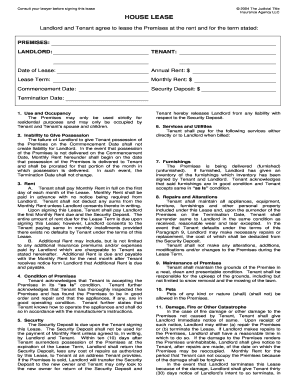
It. 6. Services and Utilities Tenant shall pay for the following services either directly or to Landlord when billed: 7. Furnishings The Premises is being delivered (furnished) (unfurnished). If furnished, Landlord has given an inventory of the furnishings which inventory has been signed by Tenant and Landlord. Tenant acknowledges that said furnishings are in good condition and Tenant accepts same in “as is” condition. 8. Repairs and Alterations Tenant shall maintain all appliances, equipme.

How it works

  1. Open form

    Open form follow the instructions

  2. Easily sign form

    Easily sign the form with your finger

  3. Share form

    Send filled & signed form or save

How to fill out the Judicial Title House Lease online

Completing the Judicial Title House Lease online can facilitate a smoother leasing process for both landlords and tenants. This guide provides step-by-step instructions to help you fill out the form accurately.

Follow the steps to complete the Judicial Title House Lease online.

  1. Press the ‘Get Form’ button to access the Judicial Title House Lease form and open it for editing.
  2. Begin by entering the 'Premises' section, listing the address and any other relevant details about the property being leased.
  3. Fill in the 'Landlord' and 'Tenant' sections, ensuring to provide the full names and relevant contact information.
  4. Specify the 'Date of Lease' by entering the effective date of the lease agreement.
  5. Indicate the 'Annual Rent' and 'Monthly Rent' amounts in the respective fields. Be clear about the payment structure.
  6. Set the 'Lease Term' to denote the duration of the lease agreement, and specify the 'Commencement Date' when the lease begins.
  7. Include the 'Security Deposit' amount required, detailing how and when it should be paid.
  8. Complete the 'Use and Occupancy' section to clarify who is allowed to occupy the premises. Include any stipulations regarding occupancy limits.
  9. Review sections regarding the 'Condition of Premises' to confirm acknowledgment of the property’s condition upon leasing.
  10. Fill in any additional information required under 'Repairs and Alterations', including maintenance responsibilities.
  11. Evaluate and complete the 'Services and Utilities' section, listing services that will be paid by the tenant.
  12. Include any necessary details in sections regarding 'Pets', 'Damage', and 'Liability' as applicable.
  13. Finalize the document by reviewing all sections for accuracy. Check any additional terms or conditions, which may be listed in riders or amendments.
  14. Once completed, save any changes made to the document and consider options to download, print, or share the lease for signatures.

Complete your Judicial Title House Lease online today for a hassle-free leasing experience.

Get form

Experience a faster way to fill out and sign forms on the web. Access the most extensive library of templates available.
Get form

Related content

Lease Requirements
The Public Housing lease establishes the legal relationship between the PHA and tenant(s)...
Learn more
RESIDENTIAL REAL PROPERTY LEASE AGREEMENT
No judicial officer shall ever have any rights, title, or interest in or to the...
Learn more
Doc 10075
The document is divided into ten Parts, and within seven of these Parts there are several...
Learn more

Related links form

Handicap Parking Permit Suffolk County Intent To Vacate Letter California 2020 Refunding Amerihealth Administrators For Claim Overpayment Form Bimco Supplytime 2017 Word Format 2020

Questions & Answers

Get answers to your most pressing questions about US Legal Forms API.

Contact support

Yes, you can write your own lease agreement, and it is often advisable to tailor it to your specific needs. Start with a clear outline of the duties and rights of both the landlord and tenant. To ensure it meets legal standards, consider using resources from US Legal Forms, especially if you want to create a robust Judicial Title House Lease.

To write a handwritten lease agreement, begin by outlining the essential terms, such as the rental period, payment amount, and responsibilities of each party. Include both tenant and landlord details, as well as property specifications. Make sure to clearly state any rules or conditions, and both parties should sign and date the document at the end to create a binding Judicial Title House Lease.

A lease title signifies your legal right to occupy and use a property under the terms of a lease agreement. It does not grant you ownership but allows you to enjoy the property for an agreed duration. By understanding lease titles, you can better navigate the complexities of a Judicial Title House Lease and ensure compliance with your lease terms.

No, having a leasehold does not mean you own the property; you possess a right to use it for a specific time as outlined in the lease agreement. The property remains owned by the freeholder. When navigating Judicial Title House Leases, it's essential to grasp this distinction, as it affects your legal standing and financial commitment.

Lease title refers to the rights and interests a person holds under a lease agreement for a property. It indicates that while you have the right to occupy and use the property, you do not own it outright. In the context of a Judicial Title House Lease, lease title can influence your decisions regarding the property and your lease obligations.

A lease is a contract that allows one party to use a property owned by another for a specified period, usually in exchange for rent. In contrast, a deed transfers ownership of property from one party to another, granting full rights to the new owner. Understanding this distinction is essential, especially when considering a Judicial Title House Lease, as it impacts your rights and responsibilities regarding the property.

A lease is not considered a document of title; rather, it is a legal agreement about the temporary use of property. Documents of title confirm ownership and give rights over property, while a lease outlines the responsibilities and rights during the lease term. If you need further clarity on leasing documents, consider exploring our resources at US Legal Forms related to Judicial Title House Lease.

Leasing a car does not grant you ownership or a title to the vehicle. Instead, you have the right to use the car for a set period, following the lease agreement's terms. Similar to a Judicial Title House Lease, this arrangement means that the leasing company retains the title to the vehicle throughout the lease duration.

A lease agreement and a title serve different purposes and are not the same. The lease agreement outlines the terms for using the property, while the title indicates legal ownership. If you are navigating a Judicial Title House Lease, it is crucial to grasp the differences between these documents to ensure a smooth leasing process.

A lease is not a form of ownership; rather, it is a contractual agreement between a landlord and a tenant. In this arrangement, the tenant has the right to use the property for a specified period, but the landlord retains ownership. Understanding the distinction between lease agreements and ownership is important, especially in the context of a Judicial Title House Lease.

Get This Form Now!

Use professional pre-built templates to fill in and sign documents online faster. Get access to thousands of forms.
Get form
If you believe that this page should be taken down, please follow our DMCA take down processhere.
Get Judicial Title House Lease
Get form
  • Adoption
  • Bankruptcy
  • Contractors
  • Divorce
  • Home Sales
  • Employment
  • Identity Theft
  • Incorporation
  • Landlord Tenant
  • Living Trust
  • Name Change
  • Personal Planning
  • Small Business
  • Wills & Estates
  • Packages A-Z
  • Affidavits
  • Bankruptcy
  • Bill of Sale
  • Corporate - LLC
  • Divorce
  • Employment
  • Identity Theft
  • Internet Technology
  • Landlord Tenant
  • Living Wills
  • Name Change
  • Power of Attorney
  • Real Estate
  • Small Estates
  • Wills
  • All Forms
  • Forms A-Z
  • Form Library
  • Legal Hub
  • About Us
  • Help Portal
  • Legal Resources
  • Blog
  • Affiliates
  • Contact Us
  • Delete My Account
  • Site Map
  • Industries
  • Forms in Spanish
  • Localized Forms
  • State-specific Forms
  • Forms Kit
  • Real Estate Handbook
  • All Guides
  • Notarize
  • Incorporation services
  • For Consumers
  • For Small Business
  • For Attorneys
  • USLegal
  • FormsPass
  • pdfFiller
  • signNow
  • altaFlow
  • DocHub
  • Instapage
Form Packages
  • Adoption
  • Bankruptcy
  • Contractors
  • Divorce
  • Home Sales
  • Employment
  • Identity Theft
  • Incorporation
  • Landlord Tenant
  • Living Trust
  • Name Change
  • Personal Planning
  • Small Business
  • Wills & Estates
  • Packages A-Z
Form Categories
  • Affidavits
  • Bankruptcy
  • Bill of Sale
  • Corporate - LLC
  • Divorce
  • Employment
  • Identity Theft
  • Internet Technology
  • Landlord Tenant
  • Living Wills
  • Name Change
  • Power of Attorney
  • Real Estate
  • Small Estates
  • Wills
  • All Forms
  • Forms A-Z
  • Form Library
Customer Service
  • Legal Hub
  • About Us
  • Help Portal
  • Legal Resources
  • Blog
  • Affiliates
  • Contact Us
  • Delete My Account
  • Site Map
  • Industries
  • Forms in Spanish
  • Localized Forms
  • State-specific Forms
  • Forms Kit
Legal Guides
  • Real Estate Handbook
  • All Guides
Prepared for you
  • Notarize
  • Incorporation services
Our Customers
  • For Consumers
  • For Small Business
  • For Attorneys
Our Sites
  • USLegal
  • FormsPass
  • pdfFiller
  • signNow
  • altaFlow
  • DocHub
  • Instapage
Social Media
Call us now toll free:
+1 833 426 79 33
As seen in:
© Copyright 1999-2026 airSlate Legal Forms, Inc. 3720 Flowood Dr, Flowood, Mississippi 39232
  • Your Privacy Choices
  • Terms of Service
  • Privacy Notice
  • Content Takedown Policy
  • Bug Bounty Program