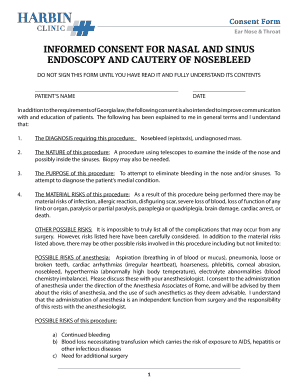
Consent Form Ear Nose & Throat INFORMED CONSENT FOR NASAL AND SINUS ENDOSCOPY AND CAUTERY OF NOSEBLEED DO NOT SIGN THIS FORM UNTIL YOU HAVE READ IT AND FULLY UNDERSTAND ITS CONTENTS PATIENTS NAME.
Loading
Open form follow the instructions
Easily sign the form with your finger
Send filled & signed form or save
How to fill out the informed consent for nasal and sinus endoscopy and cautery online
Completing the informed consent for nasal and sinus endoscopy and cautery online is a crucial step in ensuring that all parties are aware of the procedure details. This guide will help you navigate the consent form effectively and with confidence.
Follow the steps to successfully complete your consent form.
- Click the ‘Get Form’ button to access the informed consent document and open it in your preferred editing tool.
- Begin by entering your full name in the designated field, making sure to date the form accurately.
- Review the diagnosis section and confirm that it reflects your medical condition accurately.
- Understand and acknowledge the nature of the procedure by reading the explanation provided. Ensure that it aligns with what you have discussed with your healthcare provider.
- Read through the purpose of the procedure carefully. This section outlines the expected outcomes and aims of the endoscopy and cautery.
- Familiarize yourself with the material risks involved in the procedure. Consider discussing any concerns with your medical team.
- Indicate your understanding of the likelihood of success, selecting the appropriate option that reflects your expectations.
- Review the practical alternatives to the procedure. Make sure you are aware of other options that may be available to you.
- Understand the prognosis if you choose not to undergo the procedure, taking note of the potential implications for your health.
- Provide your consent by signing the form, ensuring that you have had the opportunity to ask questions and that all concerns are addressed.
- Fill out the questions section by circling YES or NO to indicate your understanding and satisfaction with the information provided.
- Finally, save your changes, and you may choose to download, print, or share the completed form as needed.
Complete your informed consent documents online and ensure you are well-prepared for your procedure.
Experience a faster way to fill out and sign forms on the web. Access the most extensive library of templates available.
Related content
by MV Vinay Kumar · 2013 · Cited by 18 — Bleeding from inside the nose is called...
by R Eliashar · 2006 · Cited by 105 — imize the need for nose packing, thus reducing...
May 25, 2020 — ... with oral and maxillofacial surgery and ear, nose and throat medicine...
Get answers to your most pressing questions about US Legal Forms API.
Is nose cauterization effective?
Cautery is a very effective technique for treating persistant nose bleeds. During the procedure, the chemical applied to the vessels created a scab that may initially appear dark grey. It is important to protect this area from trauma and to let it heal, as disturbing it may cause further bleeding.
Why would you need your nose cauterized?
Nose cautery can help prevent nosebleeds. The doctor uses a chemical swab or an electric current to cauterize the inside of the nose. This seals the blood vessels and builds scar tissue to help prevent more bleeding. For this procedure, your doctor made the inside of your nose numb.
What are the downsides of nose cauterization?
Risks Failure to stop epistaxis / Need for multiple procedures. Nasal septal perforation. Skin staining from Silver Nitrate (Temporary). Nasal Adhesions.
Is nasal cauterization considered surgery?
Nasal cautery is a type of surgery (operation) to treat nose bleeds. It involves using electricity to seal blood vessels in the nose that bleed regularly.
What is the CPT code for nasal cautery and nasal endoscopy?
Reserve 31238 for Scope-Necessary Cautery You should report 31238 (Nasal/sinus endoscopy, surgical; with control of nasal hemorrhage) when the physician can't stop the bleeding without the endoscope.
When should you cauterize your nose?
Typically, children benefit from nasal cautery when they have recurrent nosebleeds. These episodes can occur from a prominent blood vessel in the nose that bleeds from trauma (nose picking, rubbing nose, or bumping nose), from drying (dessication) of the mucous membranes lining the nose, or from another reason.
Can you still get nosebleeds after cauterization?
Follow up With Your Doctor Let your doctor know if you continue to experience nosebleeds or if you aren't healing as expected. Contact them right away if you have a fever, experience excessive bleeding or have pain that doesn't improve with medication.
What not to do after nose cauterization?
Nose care Don't touch the part of your nose that was treated. Try not to bump your nose. To avoid irritating your nose, do not blow your nose for 2 weeks. ... If you get another nosebleed: ... Apply antibacterial ointment or saline nasal spray to the inside of your nose several times a day after your procedure.
Use professional pre-built templates to fill in and sign documents online faster. Get access to thousands of forms.
If you believe that this page should be taken down, please follow our DMCA take down process here.