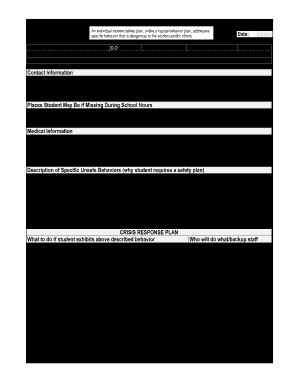
INDIVIDUAL STUDENT SAFETY PLAN An individual student safety plan, unlike a typical behavior plan, addresses specific behavior that is dangerous to the student and/or others.Student Name: Special Education? 504.
Open form follow the instructions
Easily sign the form with your finger
Send filled & signed form or save
How to fill out the Individual Student Safety Plan online
The Individual Student Safety Plan serves as a crucial tool designed to address specific behaviors that may pose risks to the student or others. This guide will provide you with clear and supportive instructions on how to complete the form online.
Follow the steps to complete the Individual Student Safety Plan effectively.
- Press the ‘Get Form’ button to access the Individual Student Safety Plan, allowing you to open it in the online editor.
- Begin by entering the student's name. Ensure that the student’s name is spelled correctly to avoid any confusion.
- Indicate whether the student is enrolled in special education or has a 504 Plan by selecting 'Yes' or 'No' as applicable.
- Fill in the student’s date of birth (D.O.B.) for proper identification.
- Input the eSIS number associated with the student, if available.
- Provide the student's grade level at the time of filling out the safety plan.
- Complete the contact information section by listing the name of the parent or guardian, their cell phone number, home phone number, and any additional emergency contact details.
- Outline potential locations where the student may be found if they go missing during school hours. Specify both on and off school grounds.
- Provide relevant medical information including the name of the student's physician, any diagnoses, medications they may be taking, and details of any allergies or special considerations.
- Document a description of the specific unsafe behaviors that necessitate the creation of a safety plan.
- Formulate a crisis response plan detailing immediate actions to take if the student displays the unsafe behaviors previously described.
- Identify staff members who will be responsible for implementing the safety plan, including backup personnel.
- List warning signs or triggers that may indicate the potential for unsafe behaviors.
- Detail strategies that have been successful in supporting the student.
- State what strategies have not been effective and should be avoided.
- Discuss the collaborative actions that staff, the student, and their family will undertake to reduce the risk of unsafe behavior.
- Designate a backup person for monitoring the safety plan’s efficacy.
- Determine the criteria for concluding the safety plan and identify the relevant personnel involved in this decision.
- List current agencies or outside professionals who are involved with the student, along with their contact details.
- Identify members of the Student Safety Team by entering their names and obtaining signatures.
- Set a review date for the safety plan, typically around two weeks from the plan's initiation or last review.
- Once all sections are completed, save your changes. You can also download, print, or share the completed Individual Student Safety Plan as needed.
Start filling out the Individual Student Safety Plan online today to ensure safety and support for the student.
Experience a faster way to fill out and sign forms on the web. Access the most extensive library of templates available.
Related content
We are working together in good faith so that the affected student can feel safe in school...
Individual Safety Plan · Level 1 - Exercise Normal Precautions: This is the lowest...
Help keep students and staff safer, while offering parents peace of mind. • Address...
Get answers to your most pressing questions about US Legal Forms API.
How do you write a personal safety plan?
To write a personal safety plan, start by assessing potential risks and vulnerabilities in one’s environment. Outline strategies to address these concerns and identify support resources, such as trusted individuals or emergency contacts. This plan serves as a proactive measure, providing guidance on how to maintain safety in daily life and during unexpected situations.
What is an IEP safety plan?
An IEP safety plan is a specific type of Individual Student Safety Plan tailored for students within an Individualized Education Plan. This document focuses on implementing safety measures that align with the student's educational and emotional needs. It plays a crucial role in promoting a safe learning environment, ensuring students can thrive academically and socially.
What does a safety plan include?
crafted Individual Student Safety Plan includes defined objectives, emergency procedures, designated personnel for intervention, parent communication guidelines, and continuous evaluation methods. These components work together to create an atmosphere of safety and readiness. By establishing these elements, schools can provide a structured environment for students.
How to write a student safety plan?
When writing an Individual Student Safety Plan, start by identifying potential risks that the student may face. Next, outline clear steps for prevention and response, assign roles to staff members, and establish communication channels. Bringing in support from parents and specialists can enhance the effectiveness of the plan, ensuring it meets the student's specific needs.
What is a safety plan in an IEP?
In an Individualized Education Plan (IEP), a safety plan serves as a specialized document outlining strategies to address safety concerns related to a student's unique needs. It includes procedures for specific situations to ensure student security and well-being at school. This approach fosters a safe learning environment while adhering to the student's educational goals.
What is the difference between a safety plan and a behavior plan?
An Individual Student Safety Plan focuses primarily on preventing harm and addressing emergencies, while a behavior plan aims to modify specific behaviors through strategies. The safety plan provides guidelines for safety and crisis management, while the behavior plan emphasizes behavioral changes and improvement. Understanding these differences can help educators tailor their approach to meet individual student needs.
What five things do a safety plan include?
An Individual Student Safety Plan typically includes specific goals, clear procedures for emergencies, designated staff roles, communication methods with parents, and monitoring strategies. By outlining these elements, the plan helps ensure that every student receives the support they need during difficult situations. Creating a comprehensive plan allows staff and parents to feel secure and prepared.
How to create a personal safety plan?
To create a personal safety plan, start by identifying the potential risks you or a student may face. Next, develop strategies to mitigate those risks and lay out a clear action plan. Engaging resources like uslegalforms can help simplify the process and provide structured templates to guide you.
What is the safety plan for individual students?
The safety plan for individual students focuses on tailored strategies to address their specific safety and emotional needs. It includes proactive measures to prevent crises and outlines steps for intervention when necessary. An effective Individual Student Safety Plan also emphasizes the importance of communication between all stakeholders, including parents and teachers.
What is a personalized safety plan?
A personalized safety plan is an Individual Student Safety Plan that addresses the specific circumstances and needs of a student. It takes into account factors such as the student’s background, potential triggers, and the support systems already in place. By customizing the plan, educators and caregivers can better ensure the safety and comfort of the student.
Use professional pre-built templates to fill in and sign documents online faster. Get access to thousands of forms.
If you believe that this page should be taken down, please follow our DMCA take down process here.