Loading
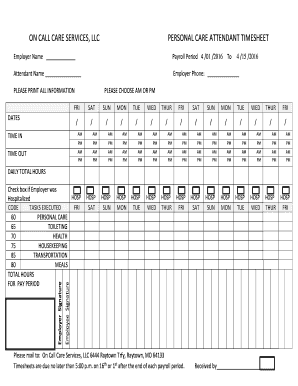
Get On Call Care Services Personal Care Attendant Timesheet 2016-2026
How it works
-

Open form follow the instructions
-

Easily sign the form with your finger
-

Send filled & signed form or save
How to fill out the On Call Care Services Personal Care Attendant Timesheet online
Filling out the On Call Care Services Personal Care Attendant Timesheet online is a straightforward process that helps ensure accurate recording of hours worked and tasks performed. This guide will provide you with clear, step-by-step instructions to complete the form effectively.
Follow the steps to complete the timesheet online seamlessly.
- Press the ‘Get Form’ button to access the timesheet and open it in the designated online editor.
- Begin by entering the employer's name in the designated field. Make sure this information is accurate as it pertains to the payroll.
- Next, fill in the payroll period by entering both the start and end dates of the pay period for which you are submitting hours.
- Print all information clearly, ensuring that each character is legible to avoid any miscommunication regarding times or tasks.
- Choose and mark AM or PM for each day of the week listed in the timesheet to indicate the time in and time out.
- Fill in the dates for each day worked during the payroll period. Ensure that the dates correspond with the days of the week.
- Sign the timesheet as the employee and have the employer sign as well to validate the information provided.
- If applicable, check the box to indicate if the employer was hospitalized during the pay period.
- Finalize the form by reviewing all entries for accuracy and completeness before saving, downloading, or printing the completed timesheet.
Complete your timesheet online today to ensure timely payroll processing.
There are several tasks that a PCA is not permitted to perform, including medical procedures that require a licensed professional. Personal Care Attendants primarily focus on non-medical support such as companionship, meal preparation, and assistance with activities of daily living. It’s essential for both PCAs and clients to understand these limitations to ensure safe and appropriate care.