Loading
Get Corporate Tax Calculator
How it works
-

Open form follow the instructions
-

Easily sign the form with your finger
-

Send filled & signed form or save
How to fill out the Corporate Tax Calculator online
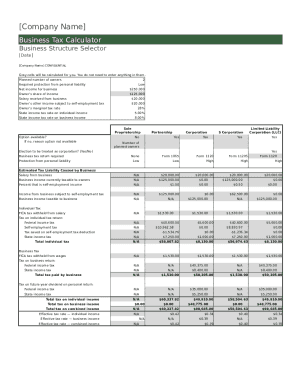
Filling out the Corporate Tax Calculator is essential for understanding your business's tax obligations. This guide provides clear, step-by-step instructions to help you effectively complete each section of the form.
Follow the steps to successfully complete the Corporate Tax Calculator.
- Click the ‘Get Form’ button to access the Corporate Tax Calculator form and open it for editing.
- Begin by entering the planned number of owners in the designated field. This information helps determine potential taxation structures.
- Indicate the required protection from personal liability by selecting the appropriate option. This will inform the structure you may need for your business.
- Fill in your net income for the business. Provide an accurate figure so that calculations can reflect your actual financial situation.
- Record the owner’s share of income along with any salary received from the business. Be sure to capture all relevant income streams.
- Complete fields related to the owner’s other income subject to self-employment tax and indicate the owner’s marginal tax rate.
- Fill out any applicable state income tax rates affecting both individual and business income.
- Choose the business structure that applies to you, such as sole proprietorship, partnership, or LLC, and indicate if you elect to be treated as a corporation.
- Address the areas regarding required business tax returns according to your chosen business structure by marking yes or no appropriately.
- After completing all fields, review your entries for accuracy. Once satisfied, you can save your changes, download the form, print it, or share it as needed.
Complete your Corporate Tax Calculator online to ensure your business remains compliant with tax regulations.
The most straightforward way to calculate effective tax rate is to divide the income tax expenses by the earnings (or income earned) before taxes. For example, if a company earned $100,000 and paid $25,000 in taxes, the effective tax rate is equal to 25,000 ÷ 100,000 or 0.25.