T System account from which a death benefit or life insurance benefit would be payable upon your death, you may file a Beneficiary Designation. Most WRS participants, some alternate payees (former spouses/domestic partners) of participants and some beneficiaries of deceased participants are eligible to file. If no Beneficiary Designation is on file WRS, death benefits and life insurance benefits will be paid according to the statutory standard sequence in effect on the date of death as explained.
Loading

Open form follow the instructions

Easily sign the form with your finger

Send filled & signed form or save
How to fill out the WI ET-2320 online
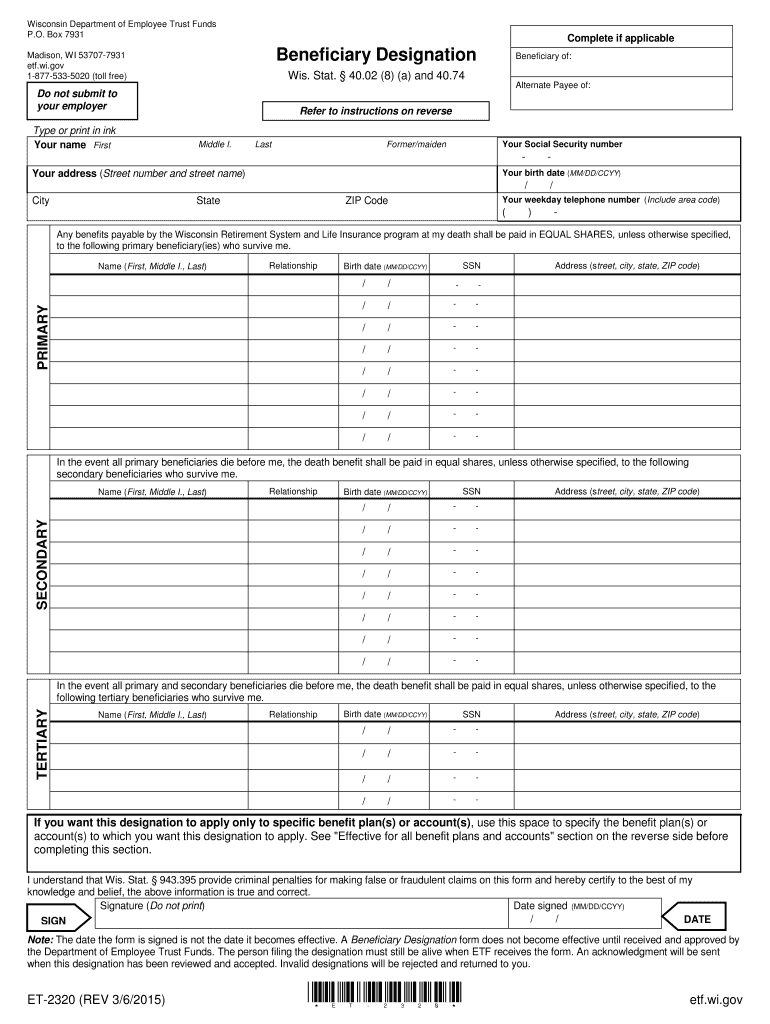
Filling out the WI ET-2320 form, the Beneficiary Designation form for the Wisconsin Retirement System, is an important step in ensuring your benefits are distributed according to your wishes. This guide provides clear and straightforward instructions to assist users through the online process.
Follow the steps to complete the WI ET-2320 online.
- Click the ‘Get Form’ button to access the WI ET-2320 form. This will allow you to view and complete the necessary fields online.
- Begin by entering your personal details at the top section of the form. You must include your name, Social Security number, birth date, address, and weekday telephone number. Ensure all information is accurate and typed clearly.
- Proceed to the primary beneficiary section. List the names, relationships, Social Security numbers, and birth dates of your chosen primary beneficiaries, as well as their addresses. Note that benefits will be paid in equal shares unless specified otherwise.
- Next, if applicable, fill in the secondary beneficiaries’ information. Similar to the primary section, provide their names, relationships, Social Security numbers, and birth dates, along with addresses. Again, they will receive benefits in equal shares unless otherwise stated.
- If you have any tertiary beneficiaries, enter their details in the designated section. Ensure all requested information is complete.
- If you wish to apply your designation to specific benefit plans or accounts, use the space provided to specify which ones. This is important if you want to limit your designation.
- Sign and date the form at the bottom, ensuring the date is current. Unsigned or improperly dated forms will be rejected.
- Finally, review the completed form for accuracy and clarity. Save your changes, then download or print the form. Make copies for your records before submitting the original to the Wisconsin Department of Employee Trust Funds, as instructed.
Complete your WI ET-2320 form online today to ensure your wishes are properly documented for your beneficiaries.
Experience a faster way to fill out and sign forms on the web. Access the most extensive library of templates available.
Related content
Apr 1, 2008 — beneficiary designation must include all of the following information: 1...
Beneficiary Designation Form (ET-2320): Allows you to name primary and secondary...
Ozone and hydrogen peroxide injection is considered to be one of the most aggressive forms...
Get answers to your most pressing questions about US Legal Forms API.
How to fill out a beneficiary designation form?
To efficiently fill out a beneficiary designation form like the WI ET-2320, start by reviewing the form’s instructions to understand each section. Then, enter the specific details of your chosen beneficiaries and clarify your intentions regarding asset distribution. Finally, sign and date the form, and keep a copy for your records while providing one to your beneficiaries to ensure transparency.
How do I fill beneficiary details?
Filling out beneficiary details on the WI ET-2320 form involves providing essential information, such as names, addresses, dates of birth, and Social Security numbers. It is crucial to ensure accuracy as this information directly impacts your beneficiaries' ability to claim what they are entitled to receive. Use clear and legible handwriting or typed text to avoid misunderstandings.
Who should I not name as a beneficiary?
You should avoid naming individuals who may have conflicting interests or may not have the capacity to manage the benefits effectively as a beneficiary. For example, it is often not advisable to name minors or individuals with financial difficulties without clear guidance. Consider the implications of your choices carefully and ensure your selections align with your overall estate planning goals.
What is an example of a designated beneficiary?
A designated beneficiary refers to an individual or entity named to receive benefits upon a person’s passing. For instance, in the context of the WI ET-2320 form, you might name your spouse or child as the beneficiary of a retirement account. This ensures your assets transfer according to your wishes and can help avoid probate complications.
How to fill out a beneficiary designation?
To fill out a beneficiary designation using the WI ET-2320 form, start by clearly identifying the benefits being designated. Provide the full names and addresses for each beneficiary. Be sure to specify the percentage of the benefit each beneficiary will receive. Additionally, double-check your entries for accuracy to ensure your wishes are carried out.
Who is the best person to name as a beneficiary?
The best person to name as a beneficiary typically possesses financial stability and trustworthiness. Family members, close friends, or a trusted advisor can often fulfill this role well. Using the WI ET-2320 form allows you to clearly articulate your choice. Ultimately, select someone who understands your intentions, values your assets, and will act in the best interest of those you leave behind.
What is the best way to designate beneficiaries?
The best way to designate beneficiaries is to use clear, precise language and to avoid ambiguity. The WI ET-2320 form offers a straightforward method to assert your choices. Be specific about primary and contingent beneficiaries, and ensure all relevant details are included to prevent misunderstandings. Regular updates to your designations can keep your wishes aligned with your current situation.
Can I change my beneficiary at any time?
Yes, you can change your beneficiary designation at any time, unless your beneficiary is also the owner of the policy or account. Utilizing the WI ET-2320 form makes this process easier and ensures that your changes are documented. Regularly reviewing your beneficiaries is a smart practice to make sure they reflect your current intentions. This flexibility can provide peace of mind as circumstances change.
How should I designate beneficiaries?
To designate beneficiaries effectively, start by reviewing your assets and existing legal documents. Use the WI ET-2320 form to specify your beneficiaries clearly. Consider both primary and contingent beneficiaries to ensure that your wishes are honored. This approach minimizes disputes and provides clarity for your loved ones.
Why should I not list my trust as a primary beneficiary?
Listing your trust as a primary beneficiary may complicate your estate planning. The WI ET-2320 form can help clarify your intentions and make the process smoother. Trusts can lead to unintended tax consequences and lengthy administrative procedures. Instead, consider listing individual beneficiaries to ensure a more straightforward distribution of assets.
Use professional pre-built templates to fill in and sign documents online faster. Get access to thousands of forms.
If you believe that this page should be taken down, please follow our DMCA take down process here.
This form is available in several versions. Select the version you need from the drop-down list below.