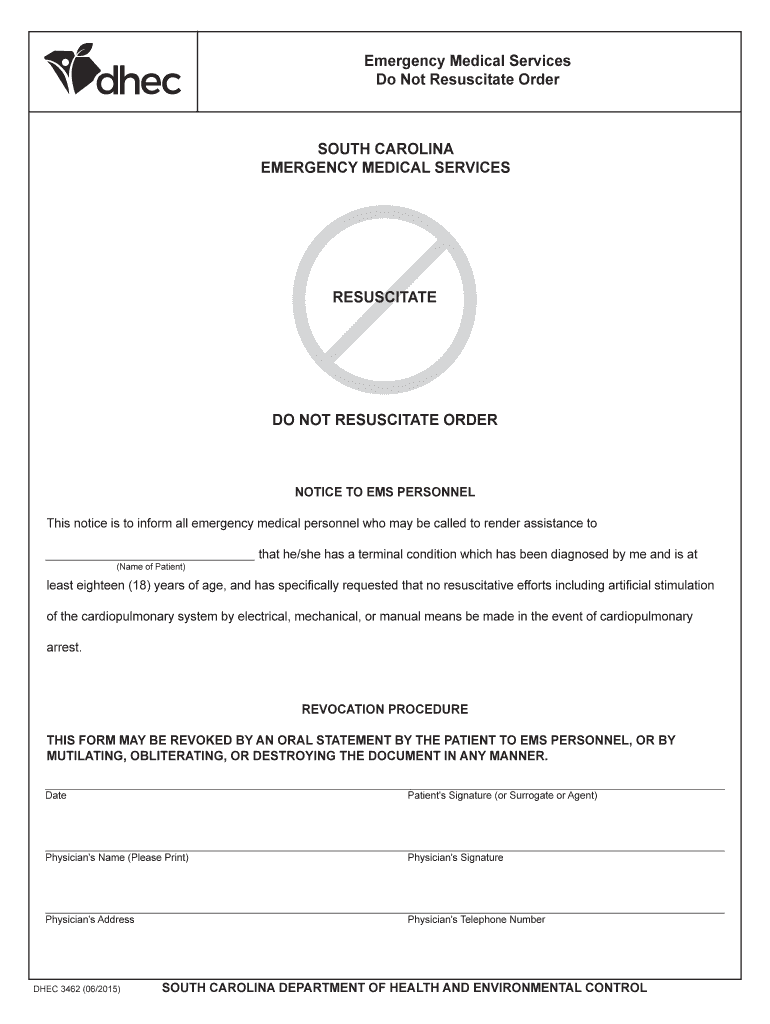
Cluding artificial stimulation of the cardiopulmonary system by electrical, mechanical, or manual means be made in the event of cardiopulmonary arrest. REVOCATION PROCEDURE THIS FORM MAY BE REVOKED BY AN ORAL STATEMENT BY THE PATIENT TO EMS PERSONNEL, OR BY MUTILATING, OBLITERATING, OR DESTROYING THE DOCUMENT IN ANY MANNER. Date Patient's Signature (or Surrogate or Agent) Physician's Name (Please Print) Physician's Signature Physician's Address Physician's Telephone Num.

Open form follow the instructions

Easily sign the form with your finger

Send filled & signed form or save
How to fill out the SC DHEC 3462 online
The SC DHEC 3462 form, known as the Do Not Resuscitate Order, is an important document for individuals who wish to communicate their medical treatment preferences in emergency situations. This guide provides clear, step-by-step instructions on how to fill out this form online to ensure that your wishes are accurately reflected.
Follow the steps to complete the SC DHEC 3462 online.
- Press the ‘Get Form’ button to access and open the SC DHEC 3462 form in your chosen editor.
- Begin by entering the name of the patient in the designated field. Ensure the name is spelled correctly for clarity.
- Indicate the patient's age by checking the appropriate box if the patient is at least eighteen (18) years old. This confirms their eligibility to make this decision.
- The physician must provide their name in the specified area. It is vital for validation and ensuring the order is recognized by medical personnel.
- The physician should then sign the form as required, along with providing their address and telephone number. This information helps maintain a point of contact for any medical follow-up.
- Ensure that the patient or their surrogate or agent signs the document to verify their consent and understanding of the directive, which clarifies their wishes regarding resuscitative efforts.
- Once all fields are thoroughly completed, review the form for any potential errors or omissions before finalizing.
- After reviewing, save your changes and consider downloading or printing the form for your records. Make sure the form is displayed prominently to inform emergency medical services of its existence.
Complete your SC DHEC 3462 online today to ensure your medical preferences are respected in any emergency situation.
Experience a faster way to fill out and sign forms on the web. Access the most extensive library of templates available.
Related content
3462-ENG-DPH (06/2024). SOUTH CAROLINA DEPARTMENT OF PUBLIC HEALTH. Emergency Medical...
Jan 24, 2024 — 843-556-3462. 05/01/19. 04/30/29. Charleston Pain and ... Environmental...
Get answers to your most pressing questions about US Legal Forms API.
What is a DNR form in SC?
In South Carolina, a DNR form is a legal document that outlines a patient's decision to forgo resuscitation in case of a cardiac arrest. The SC DHEC 3462 provides the framework for creating this form and stipulates that it must be signed by a physician. This form is essential for clear communication of your end-of-life wishes with healthcare providers.
What is EMS DNR?
EMS DNR refers to a DNR order that emergency medical services recognize when a patient is in a pre-hospital setting. According to SC DHEC 3462, this order is vital for EMTs and paramedics to understand the patient's resuscitation preferences. Having a clearly defined EMS DNR ensures that medical personnel honors your wishes in emergencies away from the hospital.
How do I report to SC DHEC?
To report to SC DHEC, you can visit their official website, where you will find contact information and reporting guidelines. If you have concerns about DNR orders or need clarity on SC DHEC 3462 regulations, reaching out directly can provide you with specific instructions. They offer assistance through phone or email for more personalized queries.
Can I write my own DNR?
While you may express your wishes verbally, it is essential to follow the official process for creating a DNR order. Writing your own DNR is not sufficient; it must be formally recognized and signed by a physician, following SC DHEC 3462 standards. This ensures that your directive is accessible and legal in a medical setting.
What does a DNR form do?
A DNR form communicates a patient's wishes to healthcare providers regarding the use of CPR and other resuscitation measures. When a healthcare professional sees a valid DNR form as per SC DHEC 3462, they understand not to perform aggressive resuscitation. This allows for a patient-centered approach to end-of-life care, respecting individual values and preferences.
What are the requirements for DNR?
The requirements for a DNR include a completed and signed DNR form, which demonstrates the patient's wishes regarding resuscitation efforts. The SC DHEC 3462 stipulates that the form must be filled out by an authorized medical professional, alongside the patient's consent. It's critical to keep the DNR form accessible, as emergency services need to see it during a medical emergency.
What is required for a DNR order to be valid?
For a DNR order to be valid, it must be signed by a physician and include the patient's name, date of birth, and the specific directives for resuscitation. According to SC DHEC 3462 guidelines, the order should also be on a recognized DNR form. Additionally, the document must meet state regulations to ensure it is legally enforceable.
Do not resuscitate DNR order?
A Do Not Resuscitate order explicitly instructs medical staff not to resuscitate an individual in the event of cardiac arrest. It is crucial for ensuring your healthcare preferences are honored during emergencies. The SC DHEC 3462 form serves as the legal foundation for this order, making it essential to have it in place.
What does DNR mean in medical terms?
In medical terms, DNR stands for Do Not Resuscitate, which indicates a patient’s wish not to undergo CPR or other life-saving measures in the event of cardiac or respiratory failure. The SC DHEC 3462 form formalizes this decision, ensuring that medical teams respect the patient's choices. It's a vital part of advanced care planning, allowing individuals to maintain control over their medical treatments.
What happens if an EMT revives someone with a DNR?
If an EMT mistakenly revives someone with a DNR, this can lead to emotional distress for both the family and healthcare providers. The SC DHEC 3462 is designed to prevent such situations by ensuring that the patient’s wishes are clear and documented. It's essential for individuals to communicate their DNR status to family members and medical professionals, providing peace of mind.
Use professional pre-built templates to fill in and sign documents online faster. Get access to thousands of forms.
If you believe that this page should be taken down, please follow our DMCA take down process here.