Loading
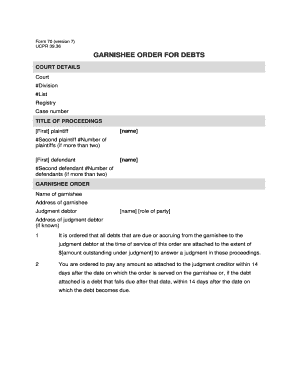
Get Garnishee Order For Debts Nsw
How it works
-

Open form follow the instructions
-

Easily sign the form with your finger
-

Send filled & signed form or save
How to fill out the Garnishee Order For Debts Nsw online
Filling out a garnishee order for debts in New South Wales is a straightforward process that ensures the proper handling of outstanding debts. This guide provides clear, step-by-step instructions to help users complete the form with confidence and clarity.
Follow the steps to complete the garnishee order online.
- Use the ‘Get Form’ button to access the garnishee order for debts form and open it in your preferred format.
- Enter the court details in the designated section, including the court name, division, list, registry, and case number.
- Fill in the title of proceedings by listing the first plaintiff's name and, if applicable, the second plaintiff’s name along with the number of plaintiffs.
- Provide the defendant information, including the first and second defendant’s names and their total count, if necessary.
- In the garnishee order section, input the name and address of the garnishee. Be sure to specify the judgment debtor's name and their role in the matter.
- Detail the address of the judgment debtor, if known, followed by the amount that is outstanding under the judgment, ensuring accuracy in all entries.
- Review the notice to garnishee section, which outlines the responsibilities of the garnishee concerning the attached debt, ensuring all aspects are understood.
- In the issuing details part, fill in the date the garnishee order was made, the location where it was issued, and the issuing officer's signature and capacity.
- Complete the judgment creditor’s details with the name, address for service, telephone, fax, and email information as required.
- Once all sections are filled out correctly, save your changes, then download, print, or share the garnishee order as needed.
Complete your documents online to streamline the process.
A garnishee order for wages or salary is a court order that requires an employer to garnish (withhold) part of their employees' wages or salary to repay a debt. The employer is required to leave the employee with a minimum amount of money to live on, called a weekly compensation amount.