Nce with Chapter 64E-5, Florida Administrative Code, and Chapter 404, Florida Statutes. Authorized Representative of Facility Date Upon completion of this form, send to: Department of Health Bureau of Environmental Health / Radon Program 4052 Bald Cypress Way, Bin #A12 Tallahassee, FL 32399-1720 You may scan the report and email it to RadonReports@FLhealth.gov For Assistance in Completing this Form call 1-800-543-8279 .
Loading

Open form follow the instructions

Easily sign the form with your finger

Send filled & signed form or save
How to fill out the FL DH 1777 online
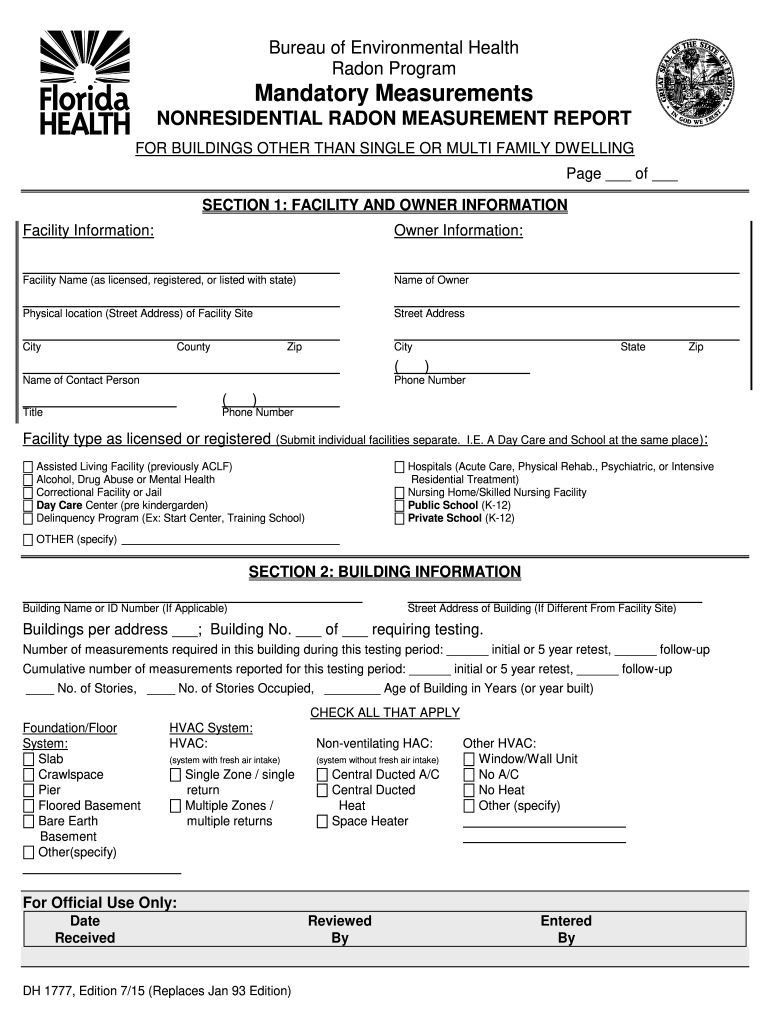
This guide provides a comprehensive overview of how to fill out the FL DH 1777 form online. The form is crucial for reporting nonresidential radon measurements and ensures compliance with state regulations. Follow these steps to complete the form efficiently and accurately.
Follow the steps to complete the FL DH 1777 online.
- Click ‘Get Form’ button to obtain the form and open it in the editor.
- Begin by filling out Section 1, which includes facility and owner information. Provide the facility name as registered with the state, along with the physical location details such as street address, city, county, and zip code. Additionally, include the owner's name and contact details.
- Move on to Section 2, which covers building information. If applicable, add the building name or ID number and the street address if different from the facility. Indicate the number of stories and age of the building, checking all relevant options regarding the foundation and HVAC system.
- Proceed to Section 3, labeled Results. Here, select measurement type and enter the dates of measurement. Include the name of the person who performed the measurement, along with the results, units, and device used.
- If measurements were performed by a radon measurement business, complete Section 4 by providing the business name and certification number, along with the specialist's details and signature.
- If measurements were performed by the facility's staff, finish Section 5 by certifying the report with the authorized representative’s name and date.
- Once all sections are completed, you can save changes, download the form, print it, or share it as needed.
Complete the FL DH 1777 form online today to ensure timely compliance with radon measurement reporting.
Experience a faster way to fill out and sign forms on the web. Access the most extensive library of templates available.
Related content
May 9, 2025 — DH Form 1777 and 1778 Supplemental page. Supplemental page to report...
A digital humanities project that allows for browsing, searching, and filtering recipes...
Do not store or use gasoline or other flammable vapors and liquids in the vicinity of this...
Get answers to your most pressing questions about US Legal Forms API.
Is radon testing necessary in Florida?
Radon testing is essential in Florida to ensure safe living conditions for homeowners. Many homes are at risk of elevated radon levels, thus testing allows for early detection and action. Conducting radon tests routinely allows residents to maintain a healthy environment. To learn more about testing options, consider exploring FL DH 1777 for comprehensive guidelines and resources.
Is radon gas disclosure required in Florida?
Yes, radon gas disclosure is required in Florida when selling or renting properties. Sellers must inform potential buyers about the presence of radon or any previous testing results. This requirement promotes buyer awareness and helps individuals make informed decisions regarding their living spaces. Utilizing resources like FL DH 1777 can assist homeowners in meeting disclosure obligations.
What is the statute 768.0425 in Florida?
Statute 768.0425 in Florida pertains to the liability of property owners concerning radon gas exposure. It outlines how property owners must disclose known radon levels to potential buyers or renters. Compliance with this statute supports transparency and encourages safer living environments. Adhering to FL DH 1777 guidelines can aid property owners in navigating these responsibilities.
Is radon inspection necessary in Florida?
Radon inspection is highly recommended in Florida due to the state's geographical conditions. The potential for radon gas accumulation exists in many homes, making inspections vital for homeowner safety. Regular radon inspections help identify and mitigate risks early, ensuring peace of mind for families living in homes associated with FL DH 1777. Protecting your home from radon should be a priority.
What is the statute 404.056 in Florida?
Statute 404.056 in Florida addresses the regulation of radon gas and its potential health risks. It emphasizes the importance of radon testing in buildings, especially those used for residential purposes. By following this statute, homeowners can ensure safer living conditions and comply with state regulations. Understanding this law is essential when dealing with FL DH 1777 matters.
Is Florida a high radon state?
Florida has some regions classified as having higher potential for radon accumulation. While levels vary across the state, certain areas are known to have elevated radon risks. It's essential for residents to stay informed about local radon levels. The FL DH 1777 program provides crucial information to help you make informed decisions.
Should you test for radon in Florida?
Testing for radon is advisable for all Florida homeowners. Since radon is an odorless gas, the only way to know its presence is through testing. Regular testing helps identify and address radon issues promptly. FL DH 1777 offers resources to make radon testing easier and more accessible.
Is radon a problem in Florida homes?
Yes, radon can be a significant issue in Florida homes. Research indicates that radon levels in some areas may exceed safe limits. Therefore, homeowners should be aware of the potential risks associated with radon exposure. Utilizing tools like FL DH 1777 can help you assess your home’s radon levels and ensure safety.
How to fill out Florida Form 82040?
Filling out Florida Form 82040 involves several clear steps. Start by ensuring you have accurate radon testing results on hand. Next, provide property details, including the address and current owner information. For assistance with the process and to ensure compliance, you might reference the FL DH 1777, which provides guidance for accurate disclosures.
Does Florida have a radon problem?
Yes, Florida faces a radon problem, particularly in certain areas with higher natural radiation levels. While it may not affect all properties, it is crucial to be proactive in testing your home. The FL DH 1777 can help you assess whether your home requires remediation steps. Understanding and addressing radon levels contributes to a safer living environment for everyone.
Use professional pre-built templates to fill in and sign documents online faster. Get access to thousands of forms.
If you believe that this page should be taken down, please follow our DMCA take down process here.