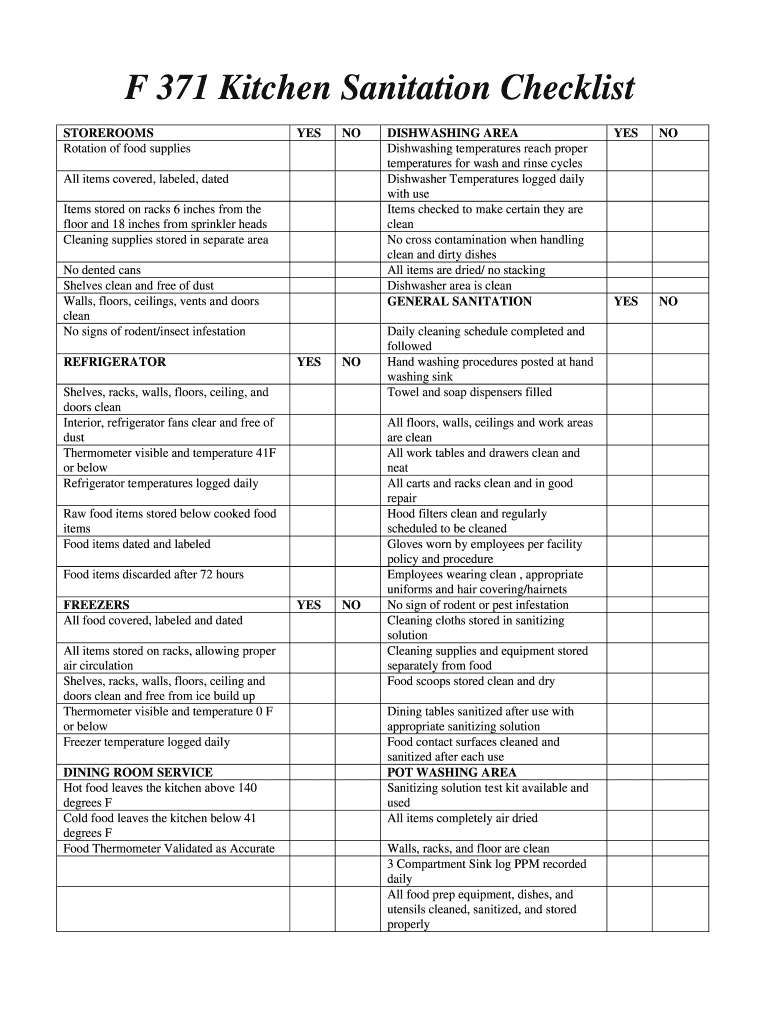
Eaning supplies stored in separate area No dented cans Shelves clean and free of dust Walls, floors, ceilings, vents and doors clean No signs of rodent/insect infestation REFRIGERATOR YES NO Shelves, racks, walls, floors, ceiling, and doors clean Interior, refrigerator fans clear and free of dust Thermometer visible and temperature 41F or below Refrigerator temperatures logged daily Raw food items stored below cooked food items Food items dated and labeled Food items discarded after 72 hours .
Loading

Open form follow the instructions

Easily sign the form with your finger

Send filled & signed form or save
How to fill out the F 371 Kitchen Sanitation Checklist online
The F 371 Kitchen Sanitation Checklist is an essential tool for maintaining food safety and sanitation in kitchen environments. This guide will provide you with clear instructions on how to complete the checklist online efficiently.
Follow the steps to fill out the F 371 Kitchen Sanitation Checklist online.
- Click the ‘Get Form’ button to access the checklist and open it in your online editor.
- Begin by filling out the 'Storerooms' section. Ensure you address each item regarding food supply rotation, cleanliness, and pest control. Select 'YES' or 'NO' for each statement based on your observations.
- Next, complete the 'Refrigerator' section. Similar to the previous section, confirm the cleanliness, temperature logging, and proper food storage hierarchy. Again, respond 'YES' or 'NO' for each item.
- Proceed to the 'Freezers' section. Here, assess the same factors as in the refrigerator assessment, ensuring items are properly covered and logged.
- Fill out the 'Dining Room Service' section, focusing on food temperature guidelines and the accuracy of your food thermometer.
- Complete the 'Dishwashing Area' section, checking temperatures, cleanliness, and procedures to prevent cross-contamination.
- In the 'General Sanitation' area, confirm adherence to cleaning schedules and proper handling of cleaning supplies.
- Continue with the 'Pot Washing Area', ensuring testing kits are available and all items are air dried.
- Review the 'Kitchen Work Area', making sure all food contact surfaces and equipment are properly cleaned.
- After filling out all sections, add any relevant comments and necessary actions to be taken at the bottom of the form.
- Finally, save your changes, and choose to download, print, or share the completed checklist for your records.
Complete your F 371 Kitchen Sanitation Checklist online today to ensure compliance and maintain a safe kitchen environment.
Experience a faster way to fill out and sign forms on the web. Access the most extensive library of templates available.
Related content
Observe for: Frozen foods thawing at room temperature;. Foods in the refrigerator/freezer...
Nov 13, 2004 — The system shall be of sufficient capacity to furnish enough hot and cold...
Feb 1, 2016 — Environmental Checklist for Monitoring Terminal Cleaning. Non-porous...
Get answers to your most pressing questions about US Legal Forms API.
What are the 10 hygiene rules in the kitchen?
The ten hygiene rules in the kitchen cover hand washing, cleaning surfaces, and proper food storage, among others. Ensure hands are washed before and after food preparation, and keep raw and cooked foods separate. Regularly clean your kitchen and store food at safe temperatures. Referencing the F 371 Kitchen Sanitation Checklist can help ensure that you consistently follow these hygiene standards.
What are the rules for kitchen sanitation?
The rules for kitchen sanitation include maintaining a clean environment and preventing cross-contamination. Regularly wash hands, surfaces, and utensils between food handling tasks. Store food correctly and ensure temperatures are monitored. To simplify adherence to these rules, consider using the F 371 Kitchen Sanitation Checklist for daily guidance.
What are the 4 rules of sanitation?
The four rules of sanitation include clean, separate, cook, and chill. These rules ensure food safety by preventing contamination. Start by cleaning hands and surfaces, separating ingredients, cooking food to safe temperatures, and chilling leftovers promptly. The F 371 Kitchen Sanitation Checklist serves as a helpful reminder for these essential practices.
What are the basic kitchen sanitation guidelines?
The basic kitchen sanitation guidelines focus on cleanliness and safety. Begin by washing hands frequently and thoroughly. Regularly sanitize surfaces, utensils, and equipment that contact food. Following the F 371 Kitchen Sanitation Checklist can help you implement these practices effectively.
How do you clean a kitchen checklist?
Daily kitchen cleaning checklist Wash the dishes (all of them!). ... Wipe out and clean the sink after each use. ... Empty dishwasher. Clean dishwasher, as necessary. ... Wipe and sanitize countertops with multipurpose cleaner. Wipe down the stovetop and clean burners. ... Sweep floor. ... Tidy up stray items and countertop clutter.
How do you prepare checklist for cleaning kitchen premises?
Everyday Kitchen Cleaning Spray and wipe the countertops and range top. Don't forget to clean splatters from the vent hood. Sweep the floor and wipe up spills. Scrub the sink with a general-purpose cleaner and wipe dry. Deal with dishes. ... Tidy up and put away stray items.
What will be included on a cleaning program checklist?
Cleaning Schedule Template Wash dishes. Clear and wipe the tables. Wipe countertops, sink and stove. Sweep the floor. Shake or vacuum rugs. Take out trash. Dust blinds and vacuum curtains. Wipe the windows.
How do you professionally clean a commercial kitchen?
0:57 2:03 Cleaning Your Professional Kitchen - YouTube YouTube Start of suggested clip End of suggested clip And cause the exterior to corrode. So make sure you're using the right products for the job. Don'tMoreAnd cause the exterior to corrode. So make sure you're using the right products for the job. Don't forget the oven hood.
What are included on the commercial kitchen cleaning checklist?
Commercial Kitchen Cleaning Checklist Wipe down food preparation areas between tasks with anti-bacterial cleaner. Empty bins once they are full. Disinfect waste areas. Wash and sanitise all chopping and cutting boards and surfaces. Brush and clean the grill and griddle. Clean the flattop. Clean out fryers.
What is a cleaning schedule in a kitchen?
A cleaning schedule allows your employees to record what needs to be cleaned, how often it should be cleaned, when it is cleaned, and who cleaned it. You can create a cleaning schedule by walking through your establishment and making note of what needs to be cleaned.
Use professional pre-built templates to fill in and sign documents online faster. Get access to thousands of forms.
If you believe that this page should be taken down, please follow our DMCA take down process here.